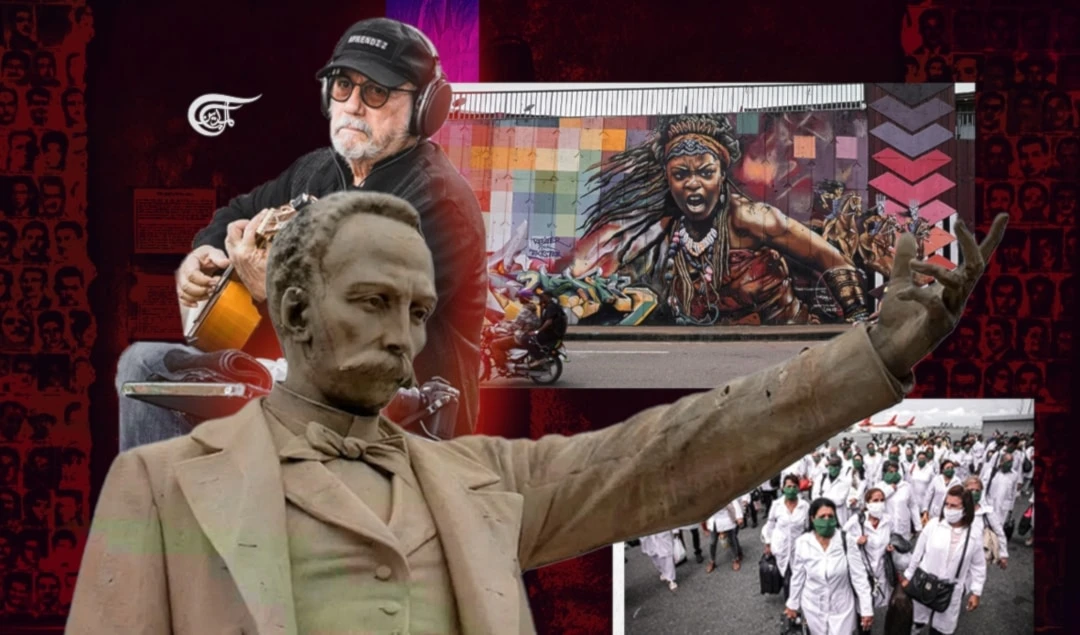
Unity is our trench and our hope
-
 Pedro Monzón Barata
- Today 15:08
 16 Min Read
However, we must be clear: anti-imperialist unity, however necessary, is not enough if it is not oriented towards the construction of a civilizational alternative.
-
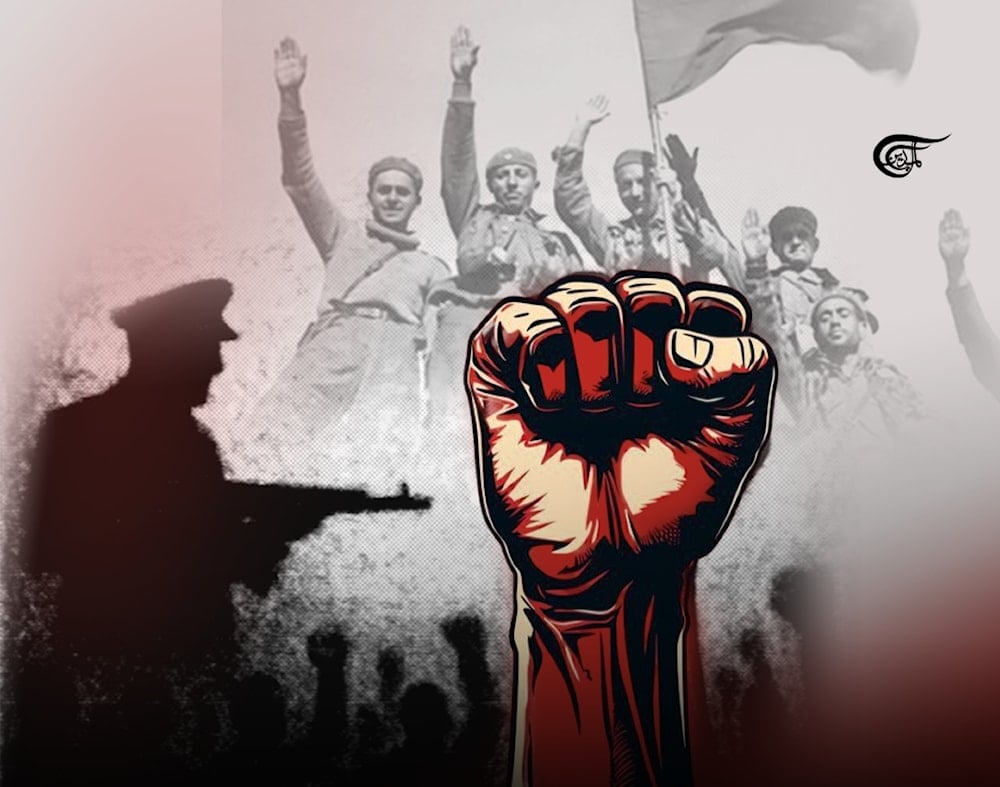
Disunity empowers imperialism; true change comes from collective action and solidarity (Illustrated by Batoul Chamas; Al Mayadeen English)
The world is living through a crucial hour of definitions, a historical turning point in which the forces of imperialism and popular resistance clash in a battle that will determine the course of the 21st century. As a genocide is being written in Gaza with blood and fire before the impotent—or complicit—gaze of much of the international community, the threatening shadow of the United States' Fourth Fleet simultaneously looms over the Caribbean nations that dare to defend their sovereignty. These two scenarios, seemingly distant, are in reality different fronts of the same essential battle: the one waged by imperialism in its most agonizing and brutal phase against the peoples who resist domination.
In this context of historical urgency, a truth rises with the force of an unbreakable principle confirmed by centuries of popular struggles: the disunity of revolutionary and progressive forces leads inexorably to defeat, while unity constitutes not only the fundamental condition for survival but the only viable strategy for victory. This truth, which runs through the history of emancipatory struggles like a red thread, has become more pertinent than ever in a world where transnational financial capital has perfected its mechanisms of domination and division.
Contemporary imperialism has mutated toward a financial-technological domination, where hegemony is exercised not only by direct force, but through control of global value chains, digital platforms, data, and sovereign debt. This new imperial architecture operates, as Samir Amin pointed out, through "peripheral super-exploitation" and "deliberate geopolitical fragmentation," turning the division of peoples not into a collateral effect, but into a structural condition of its reproduction. Faced with this, unity is not a moral aspiration: it is a material exigency of class and for the subsistence of humanity.
The inescapable lessons of history: Division as a prelude to defeat
History offers us staggering lessons we cannot ignore. The Spanish Civil War (1936–1939) remains a living monument to the tragedy that division entails in decisive moments. While Franco, with the tactical and decisive support of Hitler and Mussolini, consolidated a counterrevolutionary alliance centered on a unified command and a coherent strategy, the Republican side, that vibrant but fragmented mosaic of socialists, anarchists, communists, and Trotskyists, bled itself dry in fratricidal struggles that fatally weakened its capacity for resistance. The "War within the War" in Barcelona in May 1937 was not a mere ideological debate among revolutionaries, but the prelude to a catastrophic defeat that plunged Spain into decades of Francoist darkness and had devastating repercussions for the worldwide anti-fascist movement.
Half a century later, in Salvador Allende's Chile, the left learned another equally painful lesson: unity to win elections is radically insufficient when a strategic unity to defend the revolutionary process is not built in parallel. The Popular Unity was a luminous and honest experiment of a peaceful transition to socialism. It discovered that there was no unified strategic conception regarding the correlation of forces. It also lacked a clear understanding of the nature of the bourgeois state. In addition, it failed to prepare adequately for the defense of the process. These absences left the popular government exposed to the counterrevolutionary offensive. This lack, combined with the inability to consolidate a broader social alliance that included workers, peasants, intellectuals, social movements, and urban popular sectors in their own self-organization, paved the way for a cohesive army and a determined CIA to execute the bloodiest coup d'état in recent Latin American history. The result was not only the death of Allende and thousands of compatriots, but the establishment of a cruel dictatorship that served as a laboratory for neoliberalism on a global scale.
These historical episodes, from the Paris Commune to the German Revolution, from African liberation struggles to the Vietnamese resistance, trace an inexorable pattern that should be engraved in the consciousness of every revolutionary: where a single command, a conscious discipline, and a common strategy are lacking, the capitalist reaction, united in its fundamental objectives, mercilessly crushes the most heroic revolutionary impulse. Faced with this incontrovertible historical evidence, building unity ceases to be a tactical option and becomes a strategic imperative of life or death for the peoples.
Pillars of 21st century unity: From anti-imperialism to grassroots power
But on what concrete pillars can a solid and lasting unity be erected, capable of facing the challenges of the 21st century? Consistent anti-imperialism constitutes the non-negotiable foundation, the common denominator that must bring together all those who understand that the essential struggle is against a global enemy that operates in a coordinated manner. Whoever hesitates in condemning the criminal blockade against Cuba, the genocide in Palestine, or any of the illegal and suffocating economic sanctions that abound today, excludes themselves from the popular camp. Diplomatic neutrality in the face of genocide is not a viable ethical position: it is a form of structural complicity with the imperial order that allows its impunity. The left cannot limit itself to condemnation—it must demand an active break with the material and legal support mechanisms of the Zionist apartheid.
This unity, however, does not mean uniformity or artificial homogenization. It must encompass the rich diversity of organizational expressions: political parties, artists, intellectuals, social movements, unions, feminist collectives, indigenous and ecological organizations, each with its autonomy, specific methods, and traditions of struggle, but united in a common project of liberation. As the lucid Amílcar Cabral taught, true internationalism must necessarily respect the national principle and the diversity of struggles, for there can be no genuine solidarity without recognition of particularities.
And within this combative diversity is the Network of Artists, Intellectuals and Social Movements in Defense of Humanity, whose voices and works have become ethical and combative trenches against barbarism: from collective statements that break the media silence to solidarity events that put their bodies on the front lines of suffering. Their work is central to dismantling imperialist narratives.
And here lies an essential point: strategic unity cannot be built solely from political organizations or institutions. It must be nourished by class self-organization in workplaces, in popular neighborhoods, and in agricultural production. The experience of the Workers' Councils in Chile in 1972–73, or the Committees for the Defense of the Revolution in Cuba, shows that when the people take into their own hands the material, tangible defense of sovereignty—as in childhood vaccination campaigns or solidarity and support in cases of natural disasters in Cuba, among other vital social activities—unity and solidarity cease to be rhetoric and become the living fabric of popular power. The revolution is not only a vanguard project, but the collective capacity to exist outside the impositions of capitalism and imperialism.
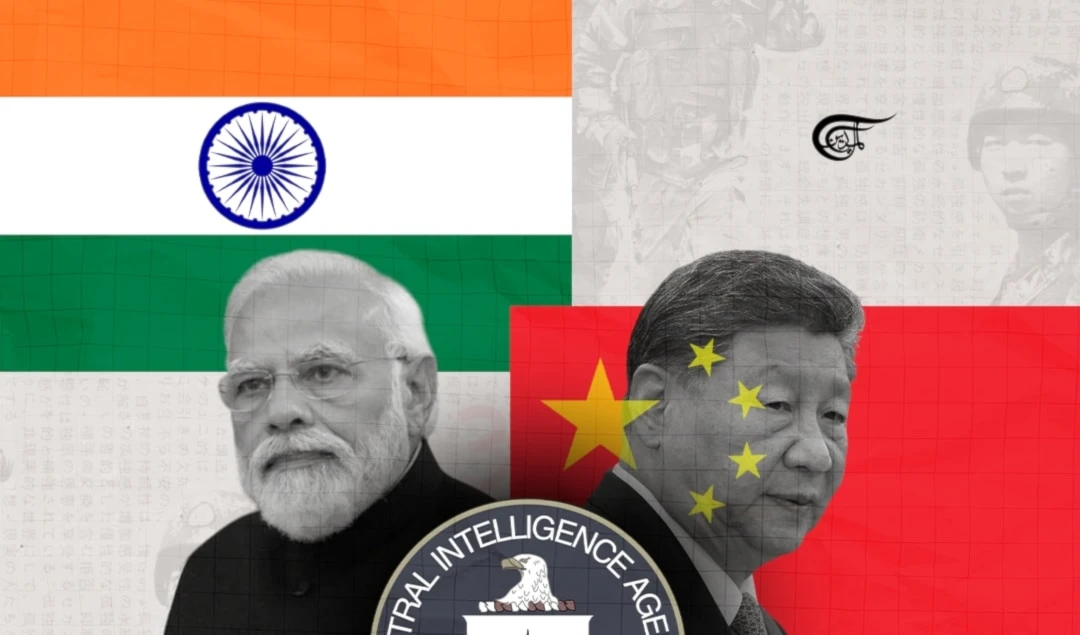
Unity, furthermore, must always translate into concrete actions and shared programs. A minimum program that defines specific immediate battles—against the IMF and its "austerity" agenda, for digital sovereignty against corporate control, in defense of natural resources against transnational plunder, and in active defense of those countries subjected to blockades and genocidal aggression like Palestine, Venezuela, and Cuba—turns revolutionary rhetoric into a transformative material force. And this entire edifice must be cemented on a shared ethical base, the one embodied by Thomas Sankara when he forcefully stated, "We cannot be the revolutionary left and be waiting for handouts from the imperialist right." Intellectual and political honesty, coherence between discourse and practice, and concrete solidarity—like the Cuban medical missions and Venezuelan collaboration projects, which have written brilliant pages of internationalism—are the moral cement of any true alliance capable of generating radical changes and withstanding storms.
The new frontier: Waging the battle for hearts, minds
In the 21st century, the battlefield has decisively expanded into the intangible but crucial terrain of communications and the production of subjectivity. Imperialism wages an open war for cultural hegemony where its media conglomerates and digital algorithms have become weapons of mass division of terrifying effectiveness. The strategy is sinisterly sophisticated: artificially amplify internal sectarianism, create false dichotomies like "irresponsible populists vs. responsible social democrats," and execute systematic media lawfare against unifying leaders to destroy their credibility before the masses.
Faced with this orchestrated assault, the left cannot maintain a defensive or naive attitude. The counteroffensive (a conduct always upheld by Fidel Castro that explains the undefeated character of the Cuban Revolution) urgently demands the development of a Unified Popular Communication Strategy that confronts the monologue of imperial power with the dialogue of sovereign peripheral peoples and countries. This means building our own coordinated communication architectures, where networks of alternative media respond in unison to the attacks of the capitalist media machinery. It implies exercising a conscious message discipline, collectively agreeing on central themes—"Absolute Solidarity with Palestine," "Yankees Out of the Caribbean," "Tear Down Imperial Excuses" (like the pretext used by the US of the existence of weapons of mass destruction against Iraq or, now, with the absurd fallacy of the war on drugs and terrorism). It is always imperative to subordinate secondary differences to these essential objectives. It requires turning social networks into trenches of revolutionary pedagogy, creating viral content that shows, for example, how the right cynically rejoices in our internal divisions. And above all, it must demand the humanization of the struggle and celebrate unity in action, filling digital platforms with videos of joint marches and testimonies that show the human face of resistance.
This necessary unity must be institutionalized through precise mechanisms and permanent coordination spaces. We must work hard so that organizations like CELAC and ALBA-TCP continue to advance and become increasingly consolidated. CELAC, despite internal differences, must evolve into an effective instrument of collective defense. The establishment of close relations with BRICS+ is a strategic objective aimed at marching in unison with the advance of the multipolarization process and breaking the dependence on the dollar. ALBA-TCP must scale up its South-South cooperation successes, such as the extraordinary Miracle Mission, and the grand-national companies for essential medicines or diverse factory networks that strengthen sovereignties.
Likewise, party organizations like the São Paulo Forum and the Puebla Group (whose character is very specific and represents a kind of necessary complement to the Forum) must continue consolidating their transformation into true operational political general staffs capable of responding unifiedly and in real time to soft coups, assassinations of social leaders, etc. The possibility of establishing international cadre schools coordinated among several countries and movements to train a new leadership with an anti-colonial continental vision would be extremely useful. A magnificent example of this is the impeccable cadre training work carried out by the Landless Peasants' Movement (MST) in Brazil. Events like the World Festival of Youth and the Continental Days of Struggle are equally crucial, as they weave that affective human network of militants that better resists division campaigns and constitutes the living substrate of any real internationalism.
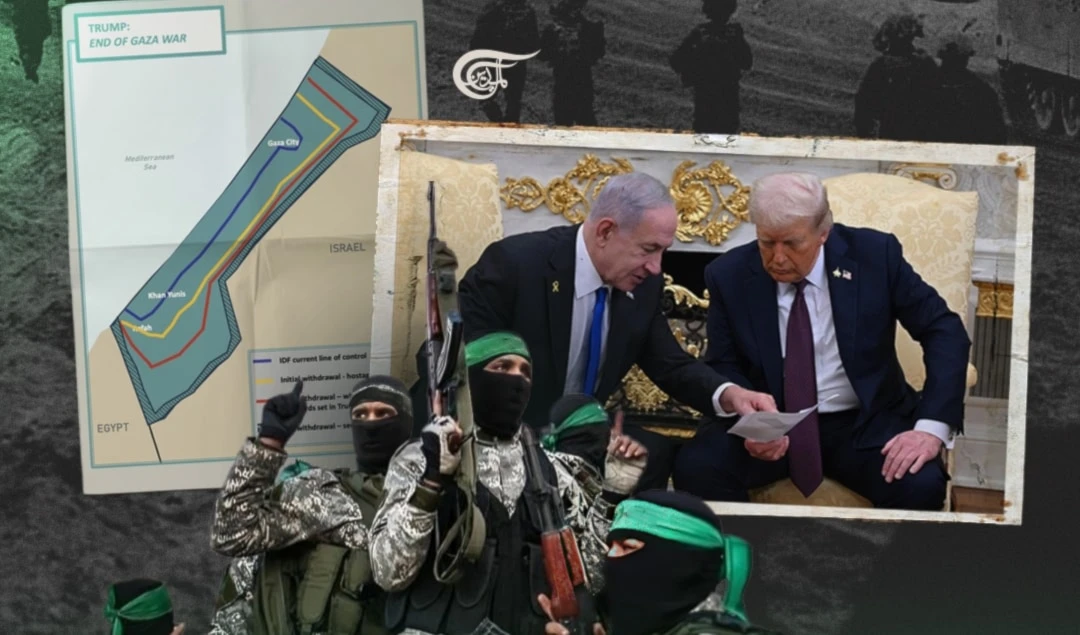
Today, two urgent fronts test our capacity to build concrete unity like no other: the Palestinian resistance and the defense of Caribbean sovereignty. The Palestinian cause has generated unprecedented global solidarity, but the immediate challenge is to transform this solidarity into a tangible coercive force that can stop the Zionist death machine. This demands continuing to coordinate simultaneous global actions that create an effect of political and media asphyxiation, and turning Boycott, Divestment and Sanctions into state policy and that of popular movements. The brave solidarity flotilla is a very valuable example. The need for an increasing number of countries to break diplomatic relations with "Israel" and to promote commercial boycotts must be insisted upon. In parallel, overwhelming demands on the International Criminal Court must continue, and work must be done to diplomatically isolate "Israel" in all international forums, making its normal functioning in the community of nations impossible. As Nelson Mandela wisely stated, "We know too well that our freedom is incomplete without the freedom of the Palestinians." There is, there cannot be, any possible neutrality in the face of a genocide that undermines the very foundations of humanity.
In the Caribbean, our immediate sovereignty frontier, the response must be one of organized collective defense against US adventures. The struggle against the criminal blockade of Cuba is, in this sense, a fundamental thermometer of practical anti-imperialist unity and must be assumed as an absolute priority by the entire popular camp.
Cuba, under the longest siege in contemporary history, has managed to preserve its socialist project thanks to the indissoluble unity between the Party, the people, and the Armed Forces—a unity forged in struggle, perfected in crisis, and deepened in resistance. However, the Cuban Revolution will continue to constantly renew and strengthen itself from below, with the participation of workers, peasants, intellectuals, artists, students, and political organizations. Unity in Cuba is not an inert monument, but a process—like every true revolution.
These decisive battles are not fought in a historical vacuum, but are inscribed in a tradition of struggle whose legacy guides and challenges us. The voices of the giants of 20th-century anti-imperialism resonate with surprising relevance. Fidel Castro, whose political compass always pointed towards strategic unity, stated with his characteristic clarity: "The unity of revolutionaries is what makes and will make the Revolution possible." On Palestine, he was absolutely categorical: "Israel is the main ally of imperialism in the Middle East, the spearhead to divide and subjugate the Arab peoples." Gamal Abdel Nasser, from revolutionary Egypt, proclaimed that "what was taken by force, can only be recovered by force," reaffirming the inalienable right to resistance against occupation. Yasser Arafat, in a gesture laden with deep symbolism, arrived at the UN "with an olive branch in one hand and the weapon of freedom in the other," permanently reminding us that peace is only possible with justice, never through surrender or capitulation.
Unity, in short, must cease to be conceived as an abstract noun and become a concrete verb, a daily practice, a method of political work. It is the coordinated action to internationally isolate "Israel", to collectively circumvent the blockade, to create our own systems of trade, finance, and defense. It is the conscious discipline of the message that prioritizes the main struggle against the common enemy above secondary differences. It is, ultimately, the political courage to subordinate sectarian ego and personalist ambitions to the historical objective of collective liberation.
However, we must be clear: anti-imperialist unity, however necessary, is not enough if it is not oriented towards the construction of a civilizational alternative. To defend is not only to resist, but to initiate the transition towards another world: one where participatory democratic planning replaces market chaos, South-South cooperation replaces neocolonial plunder, and socialist ecology guides the production of goods. Unity is not an end in itself, but the means to open the historical breach towards socialism. As Che taught: "The true revolution is made with the soul," but also with vaccine factories, with power plants, and with schools that train not only technicians, but militants capable of thinking and acting as a class.
The enemy we face is powerful, has overwhelming material resources, and has perfected its mechanisms of domination over centuries. But its greatest strategic strength does not lie in its aircraft carriers or its financial control, but in our potential disunity, in our organizational fragility, in our historical tendency towards fragmentation. Our fundamental strength, in contrast, lies in the capacity to forge, as Fidel dreamed, a single army of peoples united by a common project of emancipation.
In the great battle for a multipolar and just world being waged at the beginning of this century, the slogan "Until Victory, Always!" is not just Cuban or nostalgic: it is the living synthesis of a revolutionary ethic that understands that history is not made by solitary heroes, but by organized peoples. And as Fidel taught—not in a speech, but in daily practice: "unity is not decreed: it is built, defended, and renewed every day, with work, with humility, and with faith in the people." In that, and only in that, lies the material possibility of victory.
Bibliograph
- Samir Amin - La acumulación a escala mundial: Crítica de la teoría del subdesarrollo(1970)
- Vijay Prashad - Las naciones oscuras: Una historia del Tercer Mundo(2007)
- Tariq Ali - Los dilemas de Lenin: Terrorismo, Guerra, Imperio, Amor(2017)
- Peter Winn - La revolución chilena(2013)
- William I. Robinson - Una teoría del capitalismo global: Producción, clase y Estado en un mundo transnacional(2004)
- William I. Robinson - Una teoría del capitalismo global: Producción, clase y Estado en un mundo transnacional(2004)