
Israeli bombardment damages Tyre's World Heritage site
 4 Min Read
A Lebanese Culture Ministry official says Sunday's strikes had the "worst impact" on the ancient city since the war began.
-
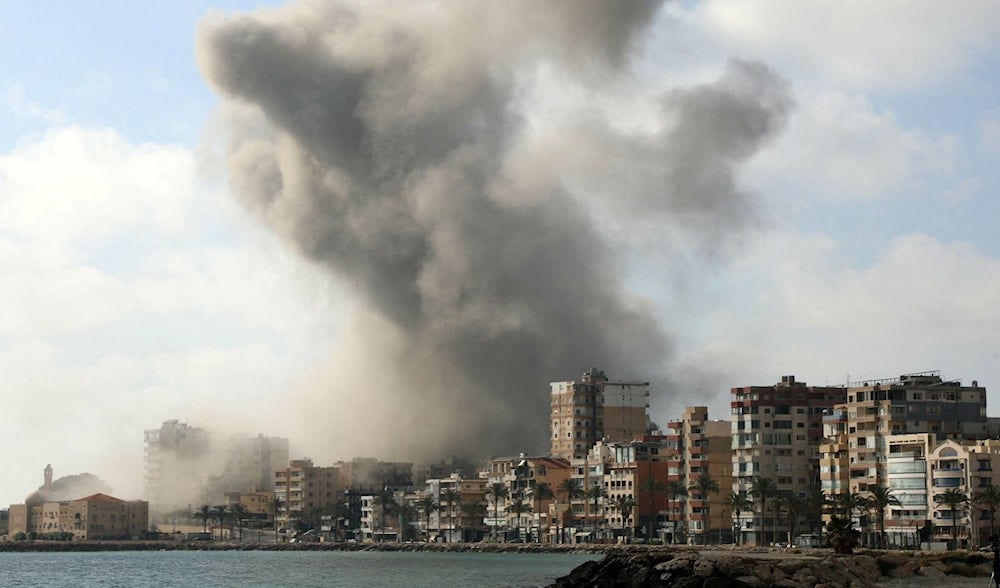
Smoke rises from the site of an Israeli attack that targeted a neighborhood in the southern Lebanese coastal city of Tyre on June 7, 2026 (AFP)
Israeli bombardment has damaged the UNESCO World Heritage Site in the southern Lebanese city of Tyre, a Culture Ministry official confirmed to AFP on Monday, as the Israeli occupation continues its aggression in southern Lebanon.
Ali Badawi, regional director of archaeological sites for South Lebanon, said Sunday's attacks had produced "the worst impact" on Tyre's ancient areas since the war began.
Near the ruins of Tyre.
— SilencedSirs◼️ (@SilentlySirs) June 7, 2026
Here, it is not only the present being bombed.
Memory is bombed.
The sea.
The stone.
And the city that was a witness before their maps were born. pic.twitter.com/dmXoxkDjwE
"The amount of debris and damage at the site is high," he said, describing both direct damage, as the site's administrative office was bombed, and the indirect impact of debris from surrounding bombardment. "Some archaeological artefacts were damaged when rubble fell on them, as debris fell over a large area, impacting a large number of elements at the site, columns, capitals, column bases, and mosaics."
Israel just carried out another horrific massacre in South Lebanon.
— sarah (@sahouraxo) June 1, 2026
Dropping massive bombs near Jabal Amel Hospital in Tyre — wiping out 3 apartment blocks full of civilians.
People are still buried under the rubble.
This is an American-backed, American-funded genocide. pic.twitter.com/vtQ3t8n7Bl
AFP correspondents on the ground saw dust and debris near ancient columns, twisted metal and broken tree branches around stone artefacts, and concrete debris strewn across a stone stairway. A preliminary damage assessment is underway, though Badawi noted that experts cannot access the site due to ongoing danger. UNESCO has been notified.
A 5,000-year-old city under fire
Tyre is one of the oldest cities on the Mediterranean coast, located around 20 kilometres from the Lebanese border with occupied Palestine. Its World Heritage ruins are divided between two areas, the city site, home to Roman ruins, and al-Bass.
Badawi confirmed that al-Bass had already sustained damage earlier in the war. On Sunday, the Israeli military issued displacement threats covering districts that included the city site. "This is a civilian site, a World Heritage site; there are no military activities there," Badawi stressed.
Since 2023, UNESCO has granted more than 70 Lebanese heritage sites, including Tyre, provisional enhanced protection, the organization's highest legal safeguard. Late last month, Lebanon's Culture Minister Ghassan Salame told AFP that Israeli attacks on the South were putting heritage sites in "serious danger".
Lebanon: A trail of damaged, destroyed heritage sites
The damage to Tyre is not an isolated incident. Since the 2024 war, Israeli forces have bombed or damaged a wide range of protected Lebanese heritage sites.
The 19th-century Church of St. George in Derdghaya was bombed in an October 2024 airstrike that killed at least eight people sheltering inside. An 18th-century mosque in Kfar Tibnit was demolished days later. The Crusader-era Tibnin Castle had a wall collapse after an Israeli attack, and the Ottoman-period souks of Nabatieh, a 200-year-old market, were also destroyed in October 2024.
In eastern Lebanon, the 13th-century Ayyubid Qubbat Duris in Baalbek, already damaged in the 2006 war and never repaired, was bombed again.
Most recently, al-Shaqif Fortress (Beaufort Castle), a 12th-century Crusader fortress near Nabatieh that UNESCO had placed under its highest protection status, was attacked on May 27, 2026. The fortress was repeatedly bombed in previous Israeli aggression on South Lebanon.
Gaza: 110 heritage sites damaged, artefacts missing
"Israel's" systematic destruction of heritage sites in the region extends to Gaza, where UNESCO has verified damage to 110 cultural sites since October 2023, with the World Bank estimating that 53% of the Strip's cultural property has been damaged or destroyed.
Among the losses: the Great Omari Mosque, one of Gaza's oldest; the Crusader-built Church of Saint Porphyrius; and over 17,000 artefacts from Qasr al-Basha that went missing after Israeli forces entered the site in 2025.
Lebanon's caretaker culture minister previously described the attacks as "deliberate", noting that Israeli precision strikes in other contexts make the pattern impossible to dismiss as collateral damage. "Some of this damage will be irreparable," he said.


