
NAZA filmmakers defend documentary amid Israeli threats at NY premiere
 4 Min Read
At NAZA’s New York premiere, filmmakers Yuval Abraham and Rachel Szor reject Israeli threats and defend their work documenting the genocide of Palestinians in Gaza.
-
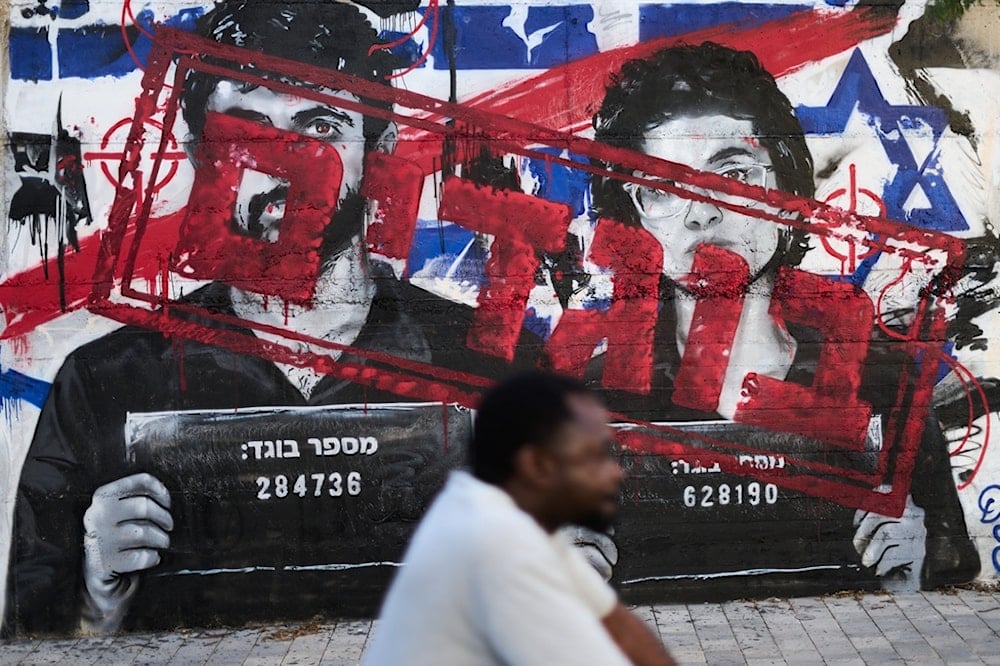
Graffiti showing directors Rachel Szor and Yuval Abraham, winners of the special jury prize for the film 'Naza', with the Hebrew writings 'traitors' in Isdud, occupied Palestine, Tuesday, Sept. 15, 2026 (AP)
Israeli filmmakers Yuval Abraham and Rachel Szor defended their documentary NAZA and its findings on the Israeli genocide of Palestinians during its New York City premiere, amid threats from Israeli officials and protests surrounding the screening.
The filmmakers used the post-screening discussion to reject attempts to criminalize their work, with Abraham describing threats against them as an attack on investigative journalism, according to The Guardian.
The premiere came days after Israeli Prime Minister Benjamin Netanyahu renewed his attacks against the documentary and its filmmakers, including a proposal to revoke the citizenship of Abraham and Szor.
Netanyahu had previously threatened to pursue legislation stripping citizenship from people accused of “smear[ing]” Israeli soldiers in connection with the film.
Israeli officials target filmmakers
Speaking at the United Nations General Assembly on Thursday, Netanyahu defended the Israeli regime's military aggression in Gaza, describing it as the “opposite of genocide” and attacking its critics.
“So, to all those spreading these lies about my country and about our brave soldiers, whether they sit in this hall or in the office of the antisemitic mayor of New York, I say this: shame on you!” he said Thursday.
Netanyahu:
— Clash Report (@clashreport) September 24, 2026
Is this genocide? Of course not. It's the opposite of genocide.
So, to all those spreading these lies about my country and about our brave soldiers, whether they sit in this hall or in the office of the antisemitic mayor of New York, I say this:
Shame on you!… pic.twitter.com/Uocru5HxyM
A day later, Netanyahu reiterated his intention to advance legislation targeting Abraham and Szor. In an interview for the Israeli outlet Makor Rishon, he compared NAZA to “launching dozens of ballistic missiles” at "Israel".
Abraham responded to that characterization during the New York screening, calling it “the criminalization of journalism and of this kind of work."
He also defended the filmmakers' decision to use anonymous sources, arguing that confidentiality was necessary to document systems of mass killing that are concealed by the Israeli occupation.
“Throughout the history of investigative journalism, very often granting confidentiality to sources is a means to pursue the truth,” he said. “This film could not have been made any other way and because the crimes are ongoing, we felt that it was important to make it.”
Israei Culture Minister Miki Zohar has also called for the filmmakers' citizenship to be revoked and accused them of “treason against the state."
The Israeli military's chief of staff, Eyal Zamir, meanwhile, said the military would “not allow IDF soldiers to be made targets through lies and blood libels” and would use “every tool at our disposal” against the film.
The campaign has also extended beyond official statements. Right-wing activists gathered outside Szor's parents' home in central "Israel" earlier this month, with one protester calling for the “death penalty for traitors."
Support grows for filmmakers
According to The Guardian, the filmmakers have received support from more than 1,500 Israeli film professionals, 43 Israeli human rights organizations, and directors of major international film festivals.
International press freedom organizations have also defended Abraham and Szor amid the threats.
NAZA is scheduled to enter cinemas in 55 countries next month before receiving a global digital release for free on the Guardian's website in November, according to the information provided.
The documentary's New York premiere also carried particular significance given the United States' annual $3.8 billion in military assistance to "Israel". Abraham highlighted that connection while addressing the audience, pointing to the relationship between US taxpayer money and the actions documented in the film.
“These soldiers are talking about what has been done with the taxpayer money of the people sitting here,” he said.


