
China tells top refiners to halt fuel exports amid war on Iran
 3 Min Read
Beijing moves to protect domestic supply as Strait of Hormuz closure threatens energy security for the world's largest crude importer.
-
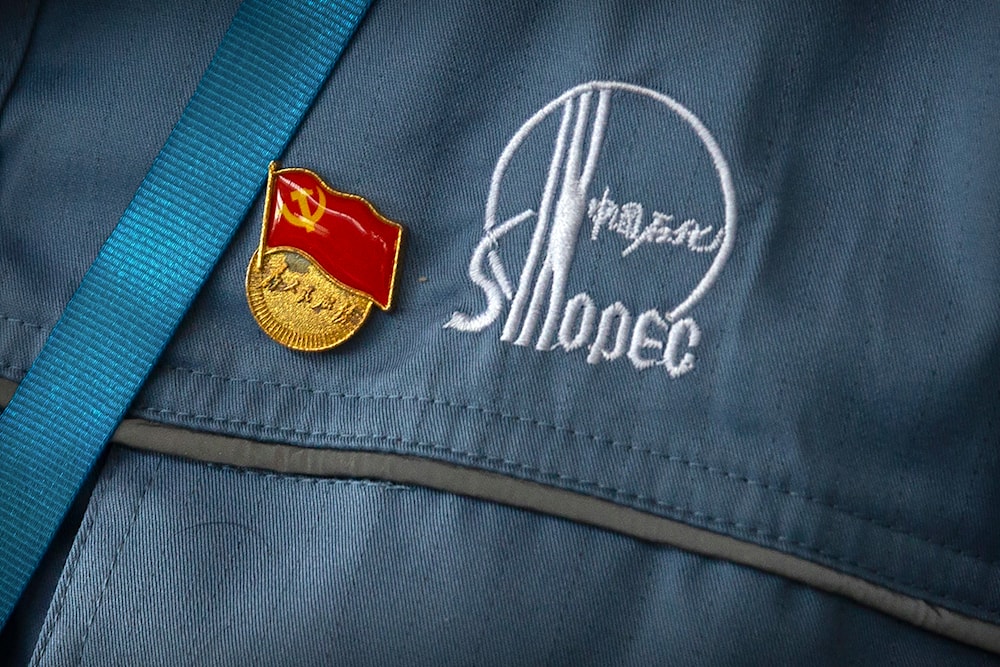
A Chinese Communist Party badge is pinned to a worker's uniform at the Sinopec Yanshan Petrochemical Company on the outskirts of Beijing on May 25, 2018 (AP Photo/Mark Schiefelbein)
China has told its largest oil refiners to immediately suspend exports of diesel and gasoline, Bloomberg reported Thursday, as the war on Iran puts global energy supply under mounting pressure.
Officials from the National Development and Reform Commission (NDRC), China's top economic planner, met with refinery representatives and verbally instructed them to halt refined product shipments, asking companies to stop signing new contracts and to negotiate the cancellation of already-agreed shipments, informed sources told Bloomberg.
The directive covers China's five biggest refining groups, PetroChina, Sinopec, CNOOC, Sinochem Group, and private refiner Zhejiang Petrochemical, all of which regularly receive fuel export quotas from the government.
The Hormuz shutdown
The decision comes in direct response to the effective closure of the Strait of Hormuz. Following the launch of the US-Israeli aggression against Iran on February 28, the Islamic Revolutionary Guard Corps (IRGC) declared the Strait closed, threatening to set ablaze any vessel attempting to pass.
By March 2, tanker traffic had collapsed, with at least 150 ships anchored outside the strait, and major shipping firms including Maersk, Hapag-Lloyd, MSC, and CMA CGM suspending all transits. War risk insurance was withdrawn entirely for the region as of March 5.
The strait carries roughly 13 million barrels per day, about 31% of all seaborne crude flows, with China, India, Japan, and South Korea together accounting for nearly 70% of those shipments.
Why China is exposed
China is uniquely vulnerable to this disruption. West Asia was the source of 57% of China's direct seaborne crude imports in 2025, according to analytics firm Kpler, with roughly 40% of total oil imports transiting Hormuz.
Beijing also purchases around 80-90% of Iran's crude oil exports, approximately 1.7 million barrels a day, acquired at a discount under sanctions. Any sustained disruption forces Chinese refiners into sharper competition for replacement barrels in an already constrained market.
Adding to the strain, Qatar halted LNG production after drone strikes hit its facilities at Ras Laffan and Mesaieed, threatening roughly 30% of China's LNG import supply.
China's buffers
China held approximately 1.206 billion barrels of oil in onshore storage as of early January, enough to cover around 110 days of import demand. Its strategic petroleum reserve capacity has expanded to over 600 million barrels as of early 2026.
In the short term, those stockpiles offer a meaningful buffer and could even position China as a potential re-exporter to third markets if the supply crunch deepens. However, analysts warn that if the Hormuz outage persists, China would need to compete aggressively for Atlantic cargoes, tightening the Pacific basin and intensifying price competition across Asia even if outright shortages are avoided.
Market context
Oil prices rose sharply in the wake of the Hormuz closure, with Brent crude surging 10–13% in initial trading. Brent has since breached $82.50/barrel, with gas prices now up nearly 20% since January.
Exports warn that the global economy cannot absorb prices moving toward the $100/barrel threshold without severe knock-on effects on inflation, manufacturing costs, and growth across import-dependent economies.


