
Hungary eyes wealth tax as Orbán-era oligarchs face scrutiny
 5 Min Read
Hungary's government is preparing a new wealth tax targeting billionaires and major asset holders, placing Orbán-era oligarchs under increased financial and political scrutiny.
-
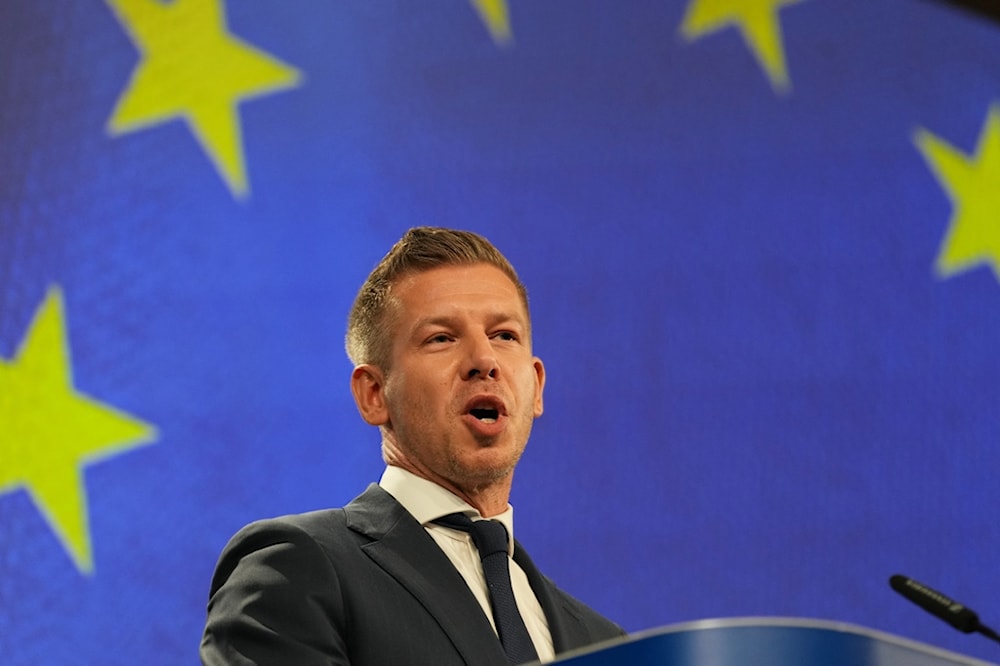
Hungary's Prime Minister Peter Magyar addresses the media at EU headquarters in Brussels, Friday, May 29, 2026. (AP Photo/Virginia Mayo)
Hungary's government is moving forward with plans for a landmark wealth tax that could make the country the first current European Union member state in decades to introduce a broad levy on personal fortunes, a move that has intensified pressure on business figures who prospered during former Prime Minister Viktor Orbán's long tenure.
Juliette Garside, in an article for The Guardian, writes that the proposal comes after the electoral victory of Hungarian Prime Minister Péter Magyar and his Tisza party, which has pledged to tackle wealth concentration, reform public procurement, and investigate allegations of corruption linked to Hungary's former political establishment.
Hungarian Finance Minister András Kármán is expected to unveil details of a sweeping tax reform package that would impose an annual levy on high-net-worth individuals.
Garside writes that under proposals outlined by Tisza during the election campaign, individuals holding assets exceeding one billion forints (approximately $3 million) would face a 1% annual tax on wealth above that threshold.
The proposed measure would apply to a broad range of assets, including real estate, corporate holdings, foreign investments, yachts, private aircraft, luxury vehicles, and art collections.
Government officials have also indicated that wealth transferred among close family members could be included in calculations to limit tax avoidance.
Magyar has framed the initiative as a measure aimed at strengthening social equity rather than punishing wealth.
Orbán-era business elite face growing pressure
Garside states that the proposal has generated concern among figures who benefited from state contracts and public procurement opportunities during Orbán's 16 years in power.
Among them is advertising entrepreneur Balásy Gyula, whose companies played a major role in government-funded media and billboard campaigns during the previous administration.
In a televised appearance, Gyula announced that he had transferred ownership of his businesses and portions of his personal assets to the state, citing uncertainty over their future under the new political landscape.
His companies were closely associated with state-sponsored campaigns targeting political opponents and European officials, becoming symbols of the media infrastructure that supported the former government's messaging strategy.
According to Garside, the shift in government has left many members of Hungary's business elite facing increased scrutiny as authorities examine the relationship between political influence and economic gain.
Read more: Hungary parliament votes to remain in ICC
Tisza government targets wealth concentration
Economists supporting the reform argue that the proposed tax is intended to address both inequality and concerns surrounding the accumulation of wealth during the Orbán era.
Garside quotes political economist Zoltán Pogátsa in saying that many of Hungary's wealthiest individuals either built or significantly expanded their fortunes through access to public procurement during the previous administration.
The issue has become closely linked to what critics describe as the System of National Cooperation (NER), a political-economic network that critics argue rewarded loyalty to the government with business opportunities and state contracts.
Among the most prominent figures associated with the system is businessman Lőrinc Mészáros, whose fortune spans construction, energy, finance, tourism, and media sectors. Also frequently cited is István Tiborcz, Orbán's son-in-law, whose interests include banking, real estate, and hospitality.
The Tisza government has also established a National Asset Recovery and Protection Office as part of broader anti-corruption efforts.
Debate grows over fairness, accountability, and investment
Garside states that the proposed wealth tax has sparked a wider debate over how Hungary should address inequality and alleged unfair enrichment.
Supporters argue that wealth accumulated through preferential access to public contracts should contribute more significantly to public finances.
Businessman Gábor Bojár, who publicly supported Tisza during the election campaign, endorsed the proposal, arguing that wealthy individuals should contribute a greater share to the tax system.
Critics, however, warn that the measure could discourage investment and disproportionately affect domestic entrepreneurs.
Investment manager Viktor Zsiday told The Guardian that allegations of unlawful enrichment should be addressed through legal proceedings rather than taxation, while expressing concerns that the levy could place Hungarian-owned businesses at a disadvantage compared to foreign competitors.
“A wealth tax puts Hungarian enterprises at a disadvantage as their tax burden is higher than companies owned by non-Hungarian nationals,” he said. “That is surely not what the government wants but it is a campaign promise so it shall be enacted, unfortunately.”
Others have questioned the proposed threshold, arguing that a one-billion-forint cutoff could affect owners of small and medium-sized enterprises rather than only the country's wealthiest individuals.
Read more: EU resolves dispute with Hungary, unlocks €90 billion Ukraine loan
Wealth inequality under renewed scrutiny
The debate unfolds against a backdrop of significant wealth concentration in Hungary.
According to research cited by business intelligence firm Blochamps Capital, the wealthiest 1% of households control roughly 35% of the country's assets, while the top 10% hold more than two-thirds of national wealth.
Garside writes that at the same time, Hungary maintains one of Europe's lowest corporate tax rates and a flat personal income tax structure, while relying heavily on consumption taxes, including the EU's highest value-added tax rate.
Critics of the existing system argue that this model places a disproportionate burden on workers and low-income households while enabling substantial wealth accumulation at the top of the economic pyramid.
Supporters of the proposed reforms say a wealth tax could help finance reductions in income taxes and consumption taxes while improving transparency regarding asset ownership.


