
IMF approves $1bln disbursement to Argentina under reform program
 2 Min Read
Argentina will receive about $1 billion from the International Monetary Fund following progress in its reform agenda, bringing total support to $15.8 billion.
-
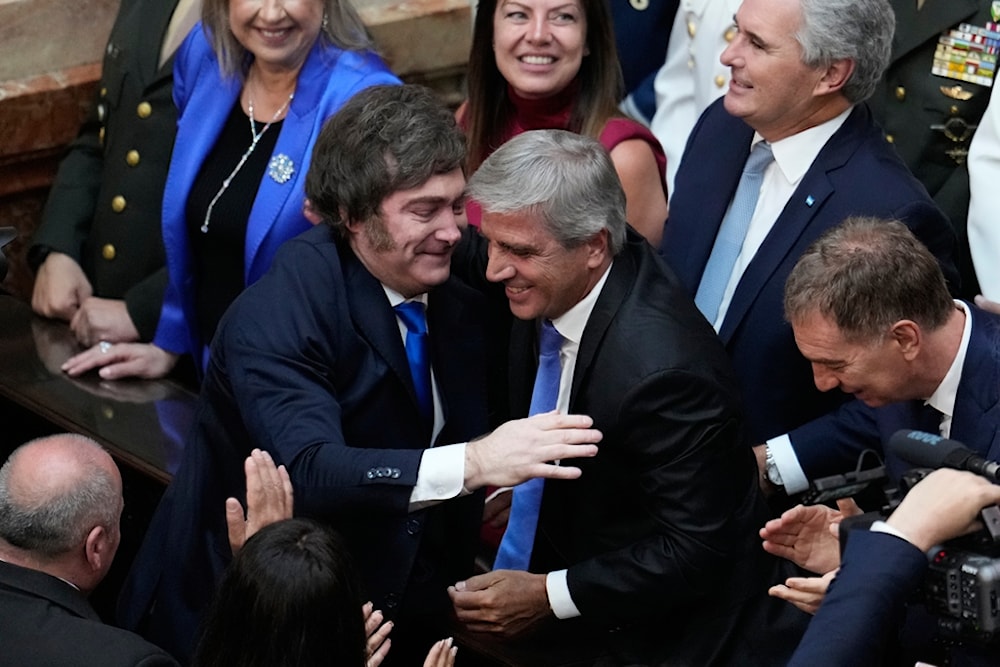
Argentina's President Javier Milei, left, greets Economy Minister Luis Caputo before delivering the annual State of the Nation address at Congress in Buenos Aires, Argentina, Sunday, March 1, 2026. (AP Photo/Gustavo Garello)
The International Monetary Fund (IMF) has approved the release of about $1 billion to Argentina following the completion of the second review of its 48-month Extended Fund Facility (EFF) program, the lender announced on Thursday.
The new disbursement brings total IMF support under the arrangement to approximately $15.8 billion, according to the Fund’s Executive Board.
The decision comes as Argentina continues to implement its economic reform program amid challenging domestic and external conditions. The IMF said the country has made progress in reducing inflation, rebuilding foreign exchange reserves, and improving market confidence.
IMF highlights reforms, notes missed reserve target
While the IMF acknowledged that Argentina missed its end-December target for net international reserves accumulation, it said most key performance criteria and indicative targets were met. The Fund also noted that corrective measures have been taken to strengthen reserves and narrow sovereign spreads.
The Executive Board welcomed progress on structural reforms and reiterated support for the authorities’ commitment to a balanced policy framework aligned with the program’s objectives.
The IMF also pointed to ongoing reforms in tax policy, trade, and labor markets, alongside broader economic deregulation efforts aimed at stabilizing Argentina’s economy and supporting longer-term growth.
Argentina inflation slows to 2.6% as Milei touts austerity drive
The IMF’s latest approval reflects cautious optimism over Argentina’s economic direction under President Javier Milei, whose administration has pushed through market-oriented reforms in an effort to stabilize the crisis-hit economy.
Argentina’s monthly inflation rate slowed to 2.6 percent in April, marking its lowest level in nearly a year, according to data released earlier this month by the country’s national statistics agency.
The figures were welcomed by Milei, whose administration has centered its economic strategy on austerity measures, public spending cuts, and currency devaluation since taking office in December 2023.
The latest data from INDEC showed inflation easing after several months of upward monthly movement that peaked at 3.4 percent in March.
Argentina has long faced chronic inflation crises, with soaring prices eroding purchasing power and destabilizing household finances across the country.


