
OPEC+ eyes output hike as Hormuz closure reshapes global oil order
 3 Min Read
OPEC+ is set to discuss a further oil output increase on Sunday as the Hormuz closure drives crude to a four-year high.
-
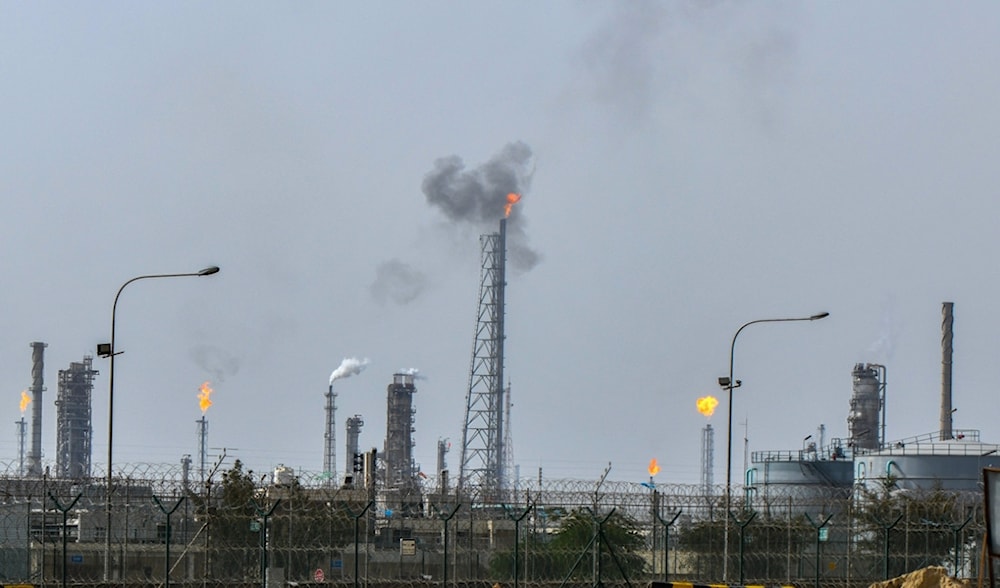
The Mina Al-Ahmadi oil refinery operates in Kuwait, March 20, 2026. (AP Photo)
Eight members of the OPEC+ alliance are expected to discuss a further oil output increase at a meeting on Sunday, according to two sources familiar with the group's deliberations cited by Reuters, even as the effective closure of the Strait of Hormuz continues to paralyse global energy flows on an unprecedented scale.
The anticipated move would carry more symbolic than practical weight for now. With tankers unable to transit the strait, which normally handles over one-fifth of global oil shipments, any paper increase in quotas would do little to immediately boost supply.
The intent, one OPEC+ source told Reuters, is to signal readiness, "we need to react, at least on paper."
A market under strain
The US-Israeli war on Iran, which began on February 28, has triggered the largest oil supply disruption on record. Saudi Arabia, Iraq, Kuwait, and the United Arab Emirates have all been forced to curtail output, while Russian production faces additional pressure from Ukrainian drone attacks on its energy infrastructure. The cumulative effect has pushed crude prices to nearly $120 per barrel, their highest level in four years.
Energy consultancy Energy Aspects anticipates the group will announce an increase of 206,000 barrels per day (bpd) for May, mirroring the modest boost agreed at OPEC+'s March 1 meeting for April. But the firm's co-founder Richard Bronze cautioned that the decision remains largely academic while Hormuz-related disruptions persist, Reuters reported.
The four Gulf producers most affected by the closure do have limited alternatives. Saudi Arabia has redirected crude exports through its Yanbu terminal on the Red Sea coast, with shipments there surging to roughly 4.6 million bpd, near capacity.
The UAE, meanwhile, continues to ship from its Fujairah terminal, which sits outside the strait; Kpler data show UAE exports from Fujairah climbed to 1.61 million bpd in March, up from 1.17 million bpd the previous month, accounting for nearly half the country's pre-war export volume.
Iran unaffected
While Gulf monarchies scramble to reroute exports and absorb revenue losses, Tehran is now earning close to twice its pre-war daily oil revenue, according to a report by The Economist.
Iran is reportedly exporting between 2.4 and 2.8 million bpd, including 1.5 to 1.8 million barrels of crude, with China absorbing more than 90% of that volume.
Iranian crude, previously sold at significant discounts to international benchmarks, is now trading at near-Brent prices as global supplies contract, generating unprecedented revenue flows for Tehran.
Sunday's gathering will also include a session of the Joint Ministerial Monitoring Committee.
A third OPEC+ source told Reuters that a pause in monthly production increments remains possible given ongoing export constraints, underscoring just how limited the group's room for manoeuvre remains while Hormuz stays closed.


