
Stranded tanker leaks off Oman, threatening marine reserve
 4 Min Read
A stranded Russian shadow fleet tanker has been leaking oil off Oman's coast for more than a month, with the slick now covering 600 sq km near a protected marine reserve.
-
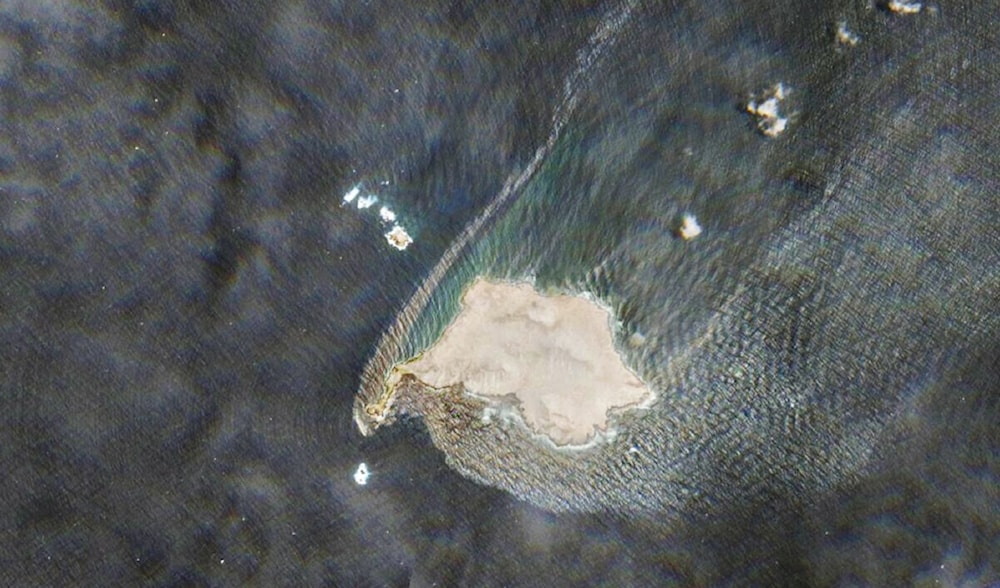
Satellite image (Copernicus Sentinel Data, taken August 2, obtained Aug 4, 2026) shows an oil slick from a ship stranded for over a month near Qibliyyah island, off Oman's southern coast. (AFP)
A tanker widely believed to be the sanctioned Russian "shadow fleet" vessel Caroline Bezengi has been leaking crude oil for more than a month after running aground near al-Qibliyyah island off Oman's southern coast, sparking warnings of a looming environmental catastrophe in one of the region's protected marine reserves.
Satellite imagery reviewed by Greenpeace shows the oil sheen ballooning from around 20 square kilometers on July 24 to an estimated 600 square kilometers by August 4, a figure independently corroborated by Dutch peace group PAX.
The site lies within the al-Hallaniyat islands marine reserve, established last year to protect an ecosystem that includes rare sea turtles, nesting seabirds, and the endangered Arabian Sea humpback whale.
Greenpeace's Nina Noelle told AFP the vessel's location and continued leakage keep the risk of a far larger disaster "serious," warning of consequences that could prove severe and long-lasting.
PAX investigator Wim Zwijnenburg cautioned that a full structural collapse of the ship could trigger a regional catastrophe, endangering both Omani fishing communities and the wider marine environment, and noted that even modest spills can linger in seabed sediment for years.
Unclear cause, disabled vessel
According to maritime security firm Vanguard Tech, the tanker suffered three explosions on June 6 that flooded its steering gear compartment and pump room and knocked out its main engine and steering systems, though the crew survived.
What triggered the blasts, and whether the ship came under deliberate attack, remains unconfirmed.
Tracking data shows the vessel last transmitted a signal off Yemen's coast on June 11 before going dark. Copernicus satellite imagery indicates a ship matching its size, shape, and hull color became stranded off al-Qibliyyah sometime between June 18 and 23.
Notably, the incident is unrelated to the wave of tanker strikes recorded amid the wider war in the region, occurring well outside the Strait of Hormuz.
Part of Russia's sanctions-evasion fleet
Kpler shipping data indicates the tanker loaded roughly one million barrels of Russian crude at the Black Sea's Sheskharis terminal on May 11 and was still carrying that cargo when contact was lost.
The UK sanctioned the Caroline Bezengi in February over its suspected role in transporting Russian oil, part of a broader fleet of aging, opaquely owned tankers Moscow has assembled since 2022 to skirt Western sanctions and preserve oil export revenues.
The International Maritime Organization said it is offering assistance to Oman but has released no further details, while Omani authorities have not responded to AFP's request for comment. As of publication, no salvage operation has been confirmed.
A familiar target
Russian shadow-fleet tankers have come under repeated attack this year, most visibly in the Black Sea and Sea of Azov, where Kiev says it struck 159 such vessels during a 12-day drone campaign aimed at disrupting sanctions-evading oil shipments.
But a separate string of unexplained blasts has hit tankers that had previously called at Russian ports, with Ukraine neither confirming nor denying involvement, though maritime security sources suspect Kiev's hand.
In November 2025, the tanker Mersin, accused of shadow-fleet links, was rocked by explosions off Dakar, Senegal, thousands of miles from Ukraine's usual theater; Kiev did not claim the attack, a silence analysts noted was unsurprising given the vessel wasn't on any sanctions list.
In February, the tanker Seajewel suffered two explosions while moored in Savona, Italy, with investigators citing below-waterline damage and a fish kill nearby as signs of possible sabotage.
Around the same period, the tanker Altura was struck by a blast near the Bosphorus while carrying 140,000 tons of Russian crude, with no immediate claim of responsibility despite Ukraine's history of targeting such vessels.


