
Ninth woman found dead as South Africa probes Ekurhuleni deaths
 4 Min Read
South African police investigate nine women’s deaths in Ekurhuleni since July, while authorities warn against speculation and seek links between the cases.
-
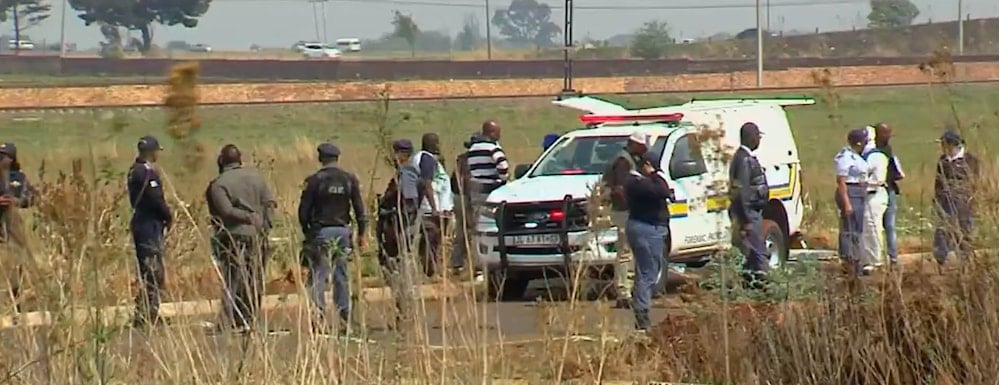
Screenshot of a news report showing South African police and medical teams at the site of the discovery of a ninth female murder victim on the side of a road in Dawn Park, September 17, 2026 (X/@SABCNews)
South African authorities have expanded an investigation into a series of deaths involving women in Ekurhuleni after police recovered another body in Dawn Park, east of Johannesburg.
The woman, believed to be in her 30s, was found on Thursday partially clothed and wrapped in a sheet. Local media reported that she appeared to have suffered bruising and stab wounds.
Her death brings to nine the number of women whose bodies have been discovered in different parts of Ekurhuleni since July. Police have yet to determine whether the cases are connected.
The absence of a confirmed link has not eased concerns in affected communities, where residents have expressed growing fear over the deaths.
"We are scared to come out of our houses. We are scared to go to the shops. We are no longer free in a country where we are supposed to be safe as women," resident Bongeka Sebela told the BBC.
Police examine separate cases for possible links
Investigators are reviewing the deaths collectively while maintaining that there is currently no evidence establishing a single perpetrator.
A multidisciplinary team bringing together detectives, intelligence personnel, forensic specialists and other experts has been tasked with determining whether the cases share common characteristics.
Police are also following a person of interest, although authorities have not specified which investigation that individual may be linked to.
The first case in the current series dates to July 15, when a woman's body was discovered in Kempton Park. A suspect was arrested two days later and remains in custody, but police have not connected that individual to the subsequent deaths.
Other bodies were later found in Kempton Park, Olifantsfontein, Clayville and KwaThema.
Among those identified are 38-year-old Elizabeth "Tsontso" Moselakgomo, whose body was found behind a Kempton Park hotel after she disappeared while out for a run; Itumeleng Kekana, who had been missing since July; and 38-year-old Dineo Evelyn Motapane, whose body was found in KwaThema.
Officials warn against premature conclusions
The investigation has unfolded alongside public speculation that the deaths could be the work of a serial killer.
Acting Police Minister Firoz Cachalia has urged caution, saying investigators currently view the incidents as potentially "quite distinct, separate events".
Police have nevertheless said they are examining whether a group could be involved.
President Cyril Ramaphosa has pledged that "no stone will be left unturned" in efforts to identify those responsible, describing the deaths as a source of "fear and uncertainty in our communities".
Gauteng Premier Panyaza Lesufi also said authorities were mobilizing to address the killings.
"Let's not get emotional; the gloves are off," Lesufi said Thursday.
Police have described violence against women as a "matter of grave concern" and offered a 400,000-rand ($24,000) reward for information that could lead to arrests.
Deaths renew scrutiny of gender-based violence
The investigation has also renewed attention on South Africa's broader struggle with violence against women.
Police have advised women to avoid isolated areas when possible, remain aware of their surroundings and inform trusted contacts of their movements. They have also asked families with missing relatives to assist authorities in identifying unidentified victims.
UN Women says the rate at which women are killed in South Africa is five times the global average. The country classified violence against women as a national disaster last November following nationwide protests.
Authorities are continuing to establish the circumstances behind each death and whether the cases form part of a broader pattern.


