
'Israel' pulls Lebanon framework deal, resets security talks: Sources
 2 Min Read
Lebanon's delegation will be led by Simon Karam to Washington for May 29 talks on security coordination involving “Israel” amid political tensions.
-
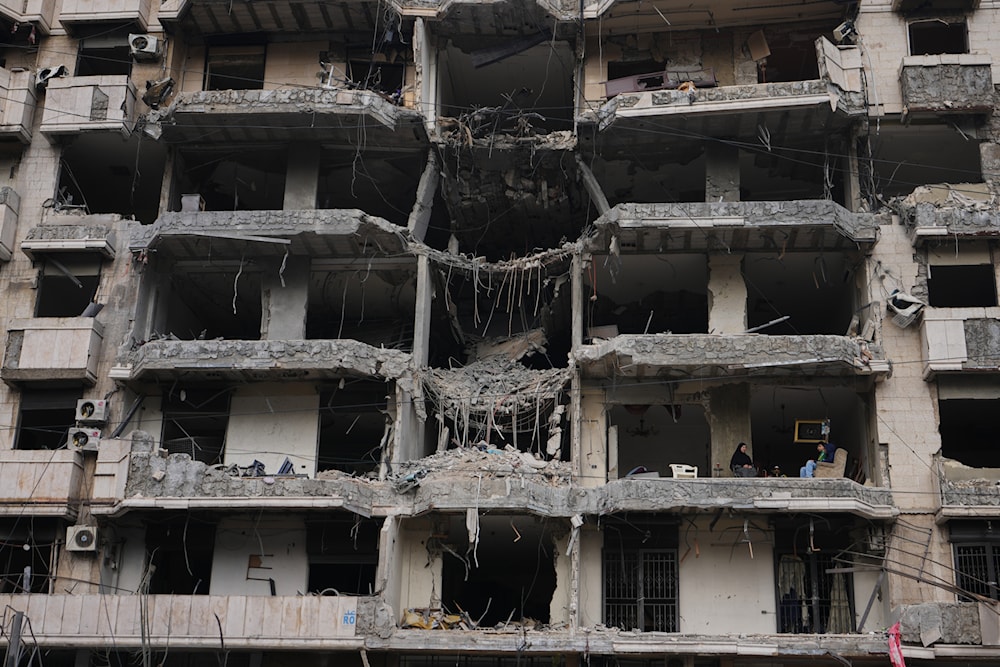
The wife and children of Fadi Al Zein, who lost both his homes in Israeli strikes in his village of Khiam and in Dahiyeh, sit on the balcony of their heavily damaged apartment building in Beirut's southern suburbs, Lebanon, Saturday, April 25, 2026 (AP)
Former Lebanese ambassador to the United States Simon Karam will lead the delegation during talks scheduled for May 29 at the US Department of War, as well as during subsequent negotiations over political arrangements expected to take place in June, sources told Al Mayadeen.
The sources further indicated that "the Israeli entity's delegation has withdrawn the framework agreement that was due to be discussed in the May 29 negotiations, returning security arrangements to square one."
The negotiating delegation had previously stated that Washington would work to enhance military coordination between Lebanon and "Israel" through a process set to begin on May 29 at the Pentagon.
It is worth noting that the Resistance in Lebanon has reaffirmed its rejection of any direct negotiating track with the occupying entity. Furthermore, this negotiating track faces broad popular opposition.
Foreign Policy: Negotiations weaken Lebanon
Foreign Policy magazine published a report days ago criticizing the path of direct Lebanese-Israeli talks, stating that this path does not bring a genuine ceasefire closer, but rather pushes the country toward further weakening and escalation, given the continuation of Israeli airstrikes on Lebanese territory.
Furthermore, the official Lebanese decision faces clear popular rejection, as it is considered a concession led by the state alongside continuing Israeli attacks on its territory, especially in the South.
On May 24, Hezbollah Secretary-General Sheikh Naim Qassem criticized the Lebanese government's continued concessions even after March 2, 2026, following its criminalization of the Resistance, calling on it to reverse its decisions against the Resistance and stand with its own people.
Sheikh Qassem lamented the absence of political sovereignty in Lebanon, considering it to be under American tutelage, saying, "Sovereignty is not only security-related; it is also economic, political, and social." He asked, "What has the government done in a year and a half? And if it is incapable of protecting sovereignty, then let it leave."


