
'Israel's' strategy in Iran an 'absolute failure': Israeli media
 3 Min Read
Israeli media call "Israel's" war on Iran a strategic setback, citing failed deterrence efforts, rising resilience from Iran and Hezbollah, and fears of prolonged attrition.
-
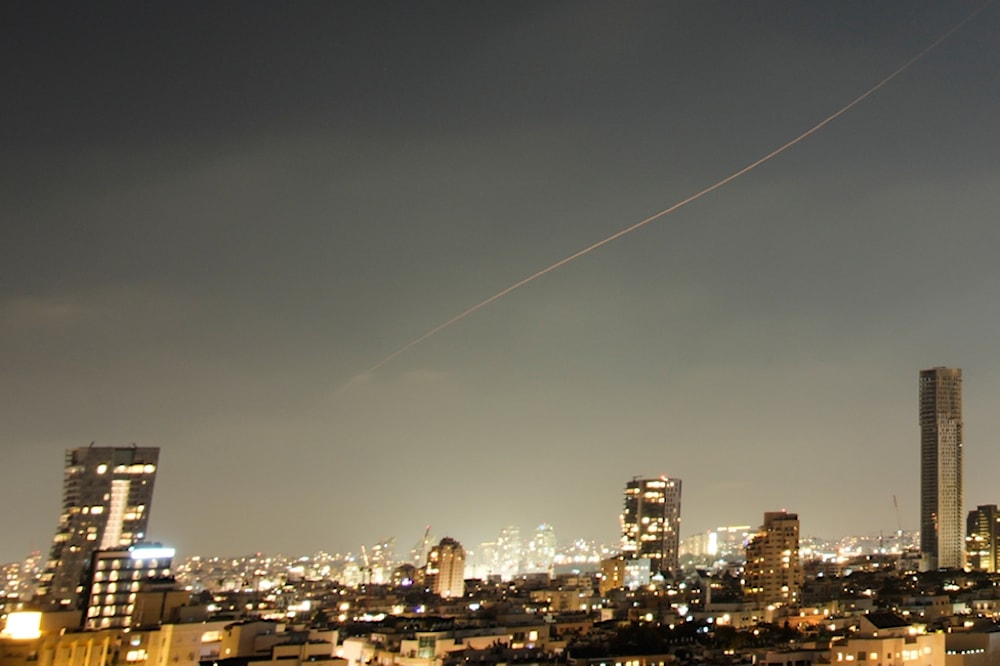
A projectile streaks through the sky over central occupied Palestine during an Iranian missile attack, Sunday, June 7, 2026. (AP Photo/Ohad Zwigenberg)
The high level of resilience demonstrated by Hezbollah and Iran, paired with the shortcomings of Israeli operations, has exposed "Israel's" strategic failure in the war on Iran, Israeli media reported on Wednesday.
According to Israel Hayom, the strategic position of "Israel" vis-à-vis Iran has deteriorated dramatically, warning that the “new strategic reality makes it difficult for Israel to deal with the Iranian threat in the future.”
The paper attributed the primary cause of this failure to the “arrogance and false assumptions within the Israeli security establishment,” adding that the campaigns amounted to “an absolute failure” that neither deterred Iran nor altered the balance of power, while further aggravating "Israel’s" strategic position.
It also pointed to Tehran’s readiness to “risk confrontation to impose new equations,” including preventing "Israel" from attacking Beirut, contrasting this with a more complex strategic environment that places heavier constraints on "Israel," particularly due to its reliance on the United States.
A return to a nuclear agreement with Iran, even if it addresses the nuclear file, would reflect "Israel’s" strategic impotence, Israel Hayom said.
'Iran and Hezbollah cannot be subdued'
For its part, Maariv argued that the “stubbornness of the Iranians and Hezbollah has already shown over the past year that we are facing unpredictable adversaries.”
“Iran and Hezbollah are difficult to subdue, as they possess very high endurance,” it added, warning that this trajectory could drag "Israel" into a prolonged and open-ended war of attrition with no clear endpoint.
Has 'Israel' submitted to Iran’s equation?
In recent days, segments of Israeli media have increasingly expressed concern over the growing dependence on the United States, amid indications that President Donald Trump is prioritizing a negotiated settlement with Iran.
Against this backdrop, commentary has suggested that Washington’s push for a deal, combined with efforts to avoid broader escalation, risks constraining "Israel’s" military freedom of action, while simultaneously allowing Tehran greater influence in shaping the emerging regional equation.
Yesterday, Channel 12 military affairs analyst Nir Dvori highlighted US President Donald Trump’s efforts to constrain Israeli attacks amid the prospect of a ceasefire arrangement between Washington and Tehran. According to Dvori, Iran has drawn a clear red line around Beirut, explicitly signaling that it would not tolerate any attack on the Lebanese capital.
He contended that Trump’s pressure campaign succeeded in halting aggression against Iran on Monday, while simultaneously casting Israeli attacks on Lebanon into a state of strategic ambiguity. Even if the US president ultimately fails to secure an agreement with Tehran, Dvori noted, he has demonstrated a willingness to exert considerable pressure on the Israeli military and impose operational constraints.
Read more: Trump says Netanyahu will have to accept any US-Iran deal: FT


