
87% of Lebanese view 'Israel' as an enemy, study finds
 4 Min Read
A new study reveals broad Lebanese consensus on "Israel" alongside deep divisions over diplomacy, media use, and regional powers.
-
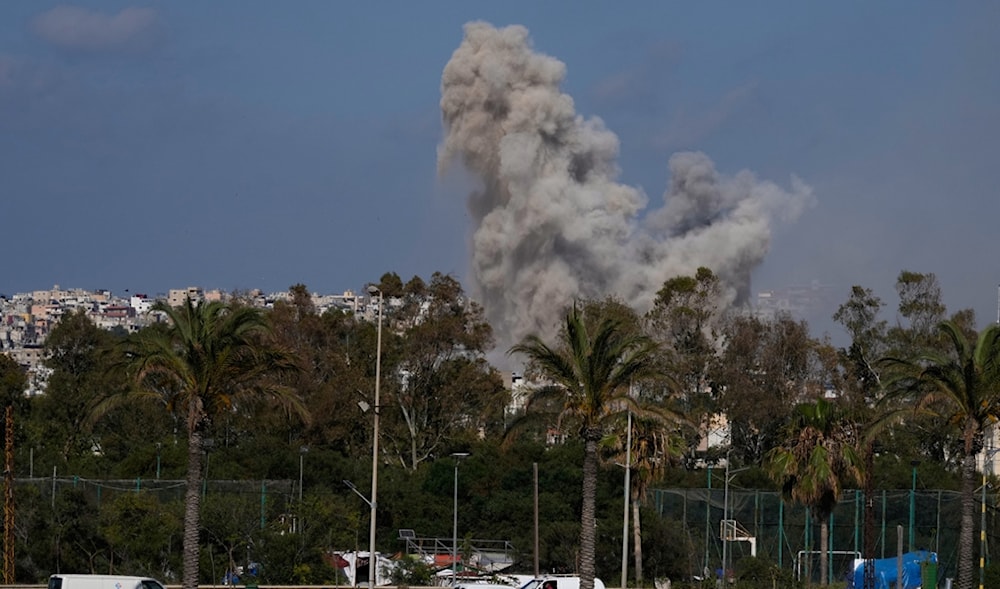
Smoke rises from an Israeli airstrike that hit Burj al-Shamali near the southern port city of Tyre, Lebanon, Tuesday, June 2, 2026. (AP)
A nationwide study conducted during the 2026 Israeli war on Lebanon found that 87% of respondents view "Israel" as their enemy, revealing a significant point of agreement across Lebanon's politically divided society.
The research, conducted by Professor Jad Melki and his team at the Institute of Media Research and Training at the Lebanese American University, also identified significant differences over diplomacy, armed resistance, Palestine, the United States, and Iran.
The nationally representative survey of 1,000 participants found that 51% of respondents consider the United States an enemy, while 38% expressed the same view toward Iran. On the war itself, 54% said that diplomacy is the only path to liberation, while 35% said armed resistance is the only viable option.
The study also found that 51% agreed that "Israel" should be destroyed, compared with 34% who supported signing a "peace agreement" with "Israel". Meanwhile, 47% said liberating Palestine is their duty, while 39% disagreed.
Age, religion, and income shape attitudes
Although opposition to "Israel" remained high across religious communities, the study found notable differences in political attitudes.
Shia and Sunni respondents expressed the highest levels of hostility toward "Israel", while Christians registered slightly lower levels. Attitudes toward the United States were also broadly negative across communities, though somewhat less pronounced among Christians. Views on Iran showed the greatest divergence, with Shia respondents expressing the highest levels of support and Sunni and Christian respondents reporting lower levels.
The survey found that Shia respondents were more likely to support armed resistance and less likely to view diplomacy as the sole path forward. Sunni and Christian respondents generally favored diplomacy, while Sunni and Shia participants were more likely to oppose a peace agreement with "Israel" and support its destruction.
Generational and economic differences also emerged. Younger respondents expressed stronger hostility toward the United States, more favorable views of Iran, and greater support for armed resistance and Palestinian liberation. Older respondents were more likely to favor diplomacy and support a peace agreement.
Similarly, higher-income respondents tended to support diplomacy and peace initiatives, while lower- and middle-income groups were more likely to back armed resistance and adopt stronger pro-Palestinian and anti-"Israel" positions.
WhatsApp overtakes TV as Lebanon's primary wartime news source
Beyond political attitudes, the study documented a major transformation in Lebanon's media landscape. For the first time, television lost its position as the dominant source of wartime information to social media platforms, particularly WhatsApp.
According to the findings, 73% of respondents accessed war news through mobile phones, compared with 63% through television and just 2% through radio.
WhatsApp emerged as the leading platform for wartime information, with 59% relying on it for news related to the conflict. Other social media platforms followed at 41%, while television news ranked third at 38%. Radio news accounted for only 1%.
Most audiences consume war news but rarely share it
The survey found that audiences remained highly engaged with war coverage, with half of respondents reporting that they followed developments continuously or very closely.
However, most remained passive consumers of information. Around 82% said they never posted or shared war-related content on social media. Among those who did, WhatsApp was the preferred platform, used by 53% of respondents, followed by Facebook at 22%, Instagram at 14%, and TikTok at 7%.
The study also identified a strong generational divide in media habits. Younger audiences relied far more heavily on WhatsApp and social media for news and were significantly more likely to share content online. Older generations continued to depend primarily on television for information.
Researchers warn of growing polarization
The researchers concluded that Lebanon's shift from centralized television news to fragmented mobile and social media platforms is reshaping how war narratives are produced and consumed.
While the new media environment may deepen polarization and challenge social cohesion during times of war, the study argues that it could also create opportunities for younger generations to develop more inclusive identities and critical perspectives if they are equipped with stronger media literacy skills.
The report recommends further research into the growing influence of social media news ecosystems, particularly WhatsApp channels, and calls for locally grounded media literacy initiatives aimed at helping young people navigate information more critically and overcome sectarian divisions.
Read more: Martyrs in southern Lebanon amid IOF strikes, LAF vehicle targeted


