
Afghanistan, Pakistan hold Saudi-mediated peace talks
 3 Min Read
Afghanistan and Pakistan agree to maintain a fragile ceasefire after deadly border clashes in October.
-
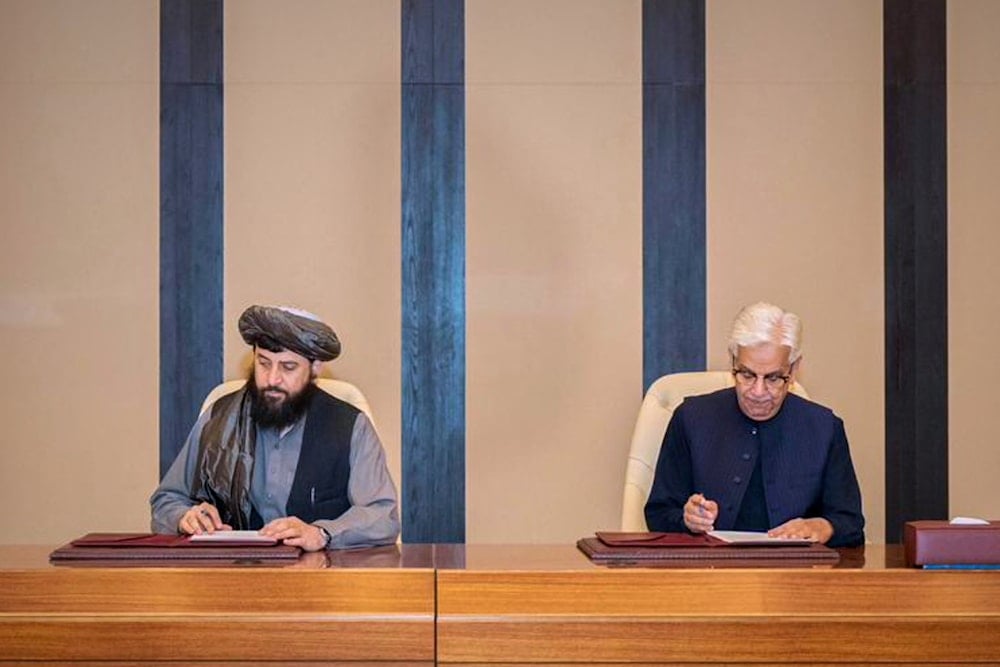
Pakistani Defense Minister Khawaja Asif, center right, and Afghan Defense Minister Mullah Muhammad Yaqoob sign a ceasefire agreement in Doha, Qatar, Sunday, October 19, 2025 (AP)
Afghanistan and Pakistan have held a new round of peace talks in Saudi Arabia, agreeing to maintain a fragile ceasefire as both sides attempt to ease escalating tensions following deadly border clashes earlier this year.
Three Afghan officials and two Pakistani officials, including one based in Istanbul, told Reuters that the meetings were convened in recent days under a Saudi initiative. While the discussions did not produce a long-term peace agreement, both delegations affirmed their commitment to upholding the current ceasefire, which has largely held in recent weeks.
The talks come after months of heightened friction. In October, intense border clashes between Afghan and Pakistani forces left dozens dead, marking the worst such violence since the Taliban returned to power in Kabul in 2021. A ceasefire brokered in Doha the same month succeeded in halting hostilities, but a subsequent round of negotiations in Istanbul collapsed without progress.
In late October 2025, negotiations held in Istanbul, the second round of peace talks following a temporary truce, ended without agreement, and on October 28, 2025, officials from both sides said they could not reach common ground, chiefly owing to Pakistan’s demand that Afghanistan curb militant activity and formally rein in anti-Pakistan groups operating from its soil. The Afghan side refused, citing a lack of control over those elements.
Reasons behind collapse
The issues at the heart of the collapse centered on militancy: Islamabad insisted Kabul take responsibility for groups like the Tehrik-e-Taliban Pakistan (TTP), whose attacks inside Pakistan had Islamabad blame on Afghan safe havens. Kabul, on its part, rejected these demands, arguing it could not guarantee Pakistan’s internal security and that such expectations exceeded its capacity.
Talks resumed briefly on November 6, 2025, but by November 8, 2025, the dialogue collapsed again. An Afghan spokesperson said the breakdown was due to Islamabad’s insistence that Afghanistan should shoulder full responsibility for Pakistan’s security, a demand Kabul considered “unreasonable".
Despite the collapse, both Kabul and Islamabad publicly maintained that the ceasefire brokered on October 19, 2025, remained in effect, at least nominally. However, a brief exchange of fire along the border on the same days of the failed talks underscored how fragile the ceasefire really was.
Escalations
On November 25, Pakistan carried out strikes in several Afghan provinces, killing 10 civilians in airstrikes on the Khost province, while separate attacks on the provinces of Kunar and Paktika left four individuals wounded.
On November 24, a suicide bombing hit the Federal Constabulary (FC) headquarters in Peshawar, killing three paramilitary personnel and injuring four others as the attack occurred at approximately 8:10 am local time (3:10 am GMT) in one of the city’s busiest areas along Saddar Road just before the morning rush hour.


