
Araghchi rules out Iran-US talks under threats
 3 Min Read
Iranian Foreign Minister Abbas Araghchi denies contact with the US envoy and says Iran will not enter negotiations under threats, reaffirming its commitment to diplomacy and regional stability.
-
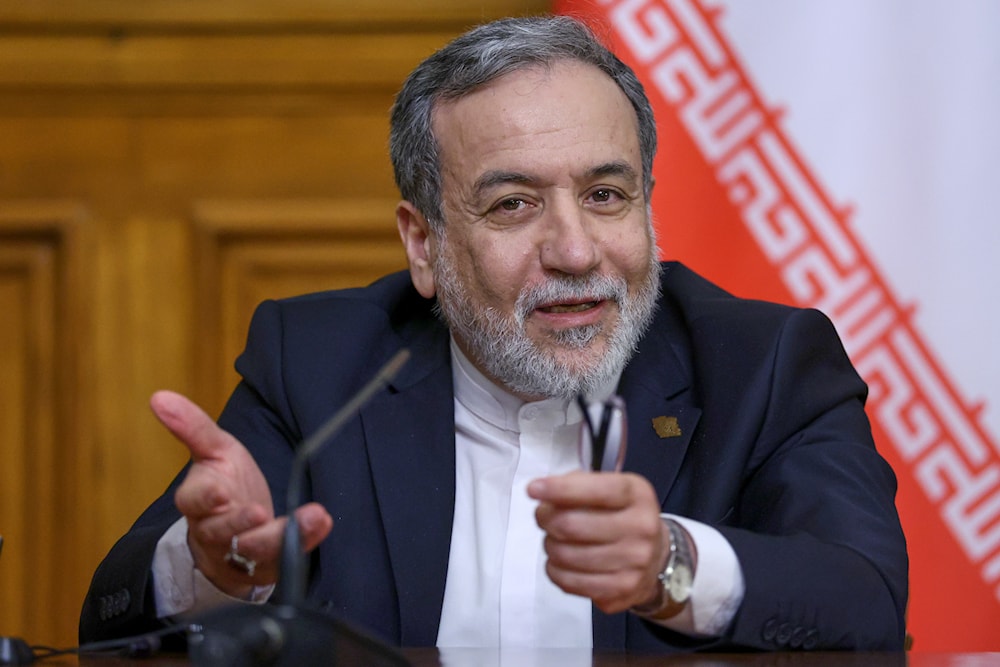
Iranian Foreign Minister Abbas Araghchi gestures during a joint news conference with Russian Foreign Minister Sergey Lavrov at Zinaida Morozova's Mansion in Moscow, on December 17, 2025. (Ramil Sitdikov/Pool Photo via AP)
Iranian Foreign Minister Abbas Araghchi denied reports of recent contact with US envoy Steve Witkoff, stressing that Iran has not requested negotiations. However, he acknowledged that several mediating countries are currently engaged in consultations between Tehran and Washington.
Speaking on the sidelines of the weekly cabinet meeting, Araghchi reaffirmed Iran’s long-held position that negotiations cannot occur under threats. "The United States must realize this if it wants to negotiate," Araghchi said, adding: "Negotiations have rules and must be based on equality and mutual respect."
Araghchi dismissed claims that Iran had approached US officials for talks, saying no contact had occurred with Witkoff or any other American representative in recent days. He did confirm that third-party states are engaged in mediation efforts, though no formal negotiation process has been initiated. “There are different parties seeking to mediate,” Araghchi said, “but negotiations cannot succeed in conjunction with threats.”
Iran rejects talks under threats, demands mutual respect
The foreign minister reiterated that any diplomatic dialogue must be grounded in mutual respect, noting that Iran rejects the use of coercive tactics as a basis for negotiations. He further stated, "Whoever wants to conduct negotiations must certainly abandon threats, greed, and raising illogical issues."
He also warned that an atmosphere of intimidation is incompatible with diplomacy, especially in the current climate of rising tensions.
Araghchi emphasized that Iran continues to pursue a diplomatic approach and that military threats are both ineffective and destabilizing, stressing that "Military threats will not work," and that "Countries in the region believe that such threats will lead to instability in the entire region."
His remarks come amid increasing speculation about a potential US military strike on Iran, and growing regional opposition to any use of force against Tehran.
Trump sends 'Armada' to Iran
Araghchi's comments come after US President Donald Trump confirmed that a significant deployment of American military forces is heading toward Iran, while claiming in an interview with Axios that Tehran "wants a deal."
Trump’s remarks come amid reports that the USS Abraham Lincoln aircraft carrier strike group has entered the region, accompanied by F-15 and F-35 fighter jets, refueling tankers, and air defense systems. The deployment, viewed as a direct show of force, further escalates Washington’s aggressive posture toward Tehran. "We have a big armada next to Iran. Bigger than Venezuela," Trump said, without specifying what military options are on the table.
According to Axios, the White House continues to threaten military action against Iran, while openly entertaining the possibility of regime change in Iran. "They want to make a deal. I know so. They called on numerous occasions," Trump claimed, without offering any confirmation from Iranian sources.
Trump’s comments reflect the contradictions in US rhetoric, combining threats of overwhelming military force with vague claims of diplomatic outreach.
Washington's reported conditions for any agreement with Iran include:
- The removal of all enriched uranium
- A cap on long-range missile stockpiles
- An end to support for regional resistance movements
- And a ban on independent uranium enrichment
Tehran has repeatedly rejected such unilateral conditions, asserting its right to self-defense and sovereign policy-making.


