
Behind closed doors: 'Israel', Arab Chiefs hold secret Germany talks
 5 Min Read
The US is leaving the field open to "Israel", hoping that "military cooperation" will lead to expanded ties, perhaps even Saudi Arabia joining some form of the normalization deal, Ynet argues.
-
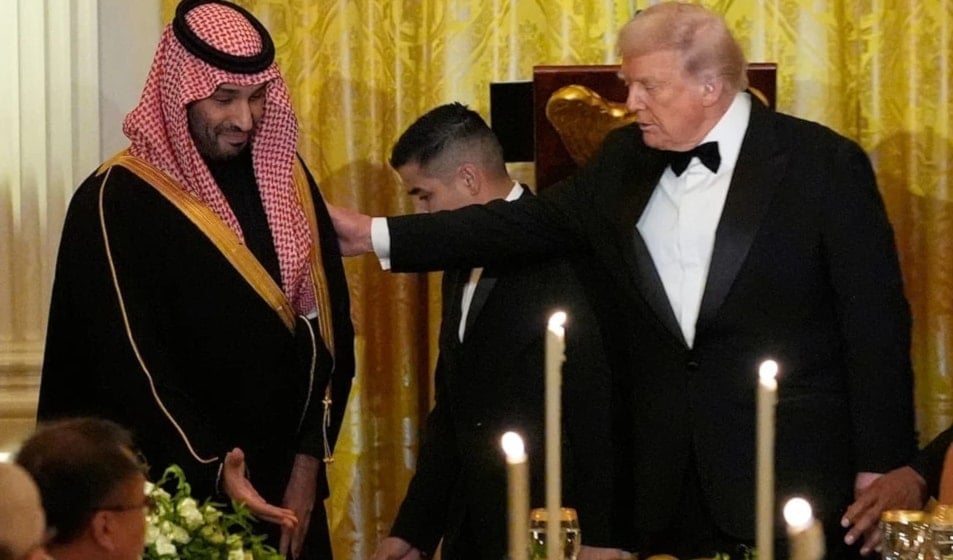
Saudi Crown Prince Mohammed bin Salman and the US President Donald Trump are seated for a dinner in the East Room of the White House on November 18, 2025, in Washington (AP)
Washington is increasingly leaving the field open to “Israel” to expand military cooperation with Saudi Arabia, with the aim of deepening bilateral ties and potentially paving the way for Riyadh to join the normalization accords, according to an article published by Israeli newspaper Yedioth Ahronoth.
According to the article, Israeli Chief of Staff Eyal Zamir and the military chiefs of several Arab countries held a secret meeting in Germany last week, bringing together senior commanders from countries that maintain varying degrees of military and diplomatic ties with "Israel".
The meeting, organized by US Central Command chief Admiral Brad Cooper, included the military chiefs of "Israel", Saudi Arabia, the United Arab Emirates, Bahrain, Kuwait, Qatar, Jordan and Egypt, according to Yedioth Ahronoth. None of the participating governments publicly announced the gathering.
The meeting reportedly provided a rare forum for direct consultations between "Israel" and Arab states, including Saudi Arabia, Kuwait and Qatar, which do not have formal diplomatic relations with "Israel".
Yemen front exposes expanding Saudi-Israeli military coordination
Among the encounters was reportedly a meeting between Zamir and Saudi Chief of General Staff Fayyadh bin Hamed Al-Ruwaili, who has held the post since 2018. The gathering comes as Riyadh faces mounting pressure from its war on Yemen and the response of the Yemeni Armed Forces, while seeking additional US and regional support, as per the article.
The secrecy surrounding the meeting has left significant questions about its duration and discussions. According to Ynet, the participants refrained from disclosing details, with Cooper apparently being the only senior official to publicly acknowledge the gathering.
The meeting also comes amid intensified US-Saudi military consultations. Saudi Crown Prince Mohammed bin Salman recently met Cooper in Jeddah as the aggression on Yemen escalated. Riyadh had reportedly sought US military assistance against the YAF, with Washington declining to authorize direct US strikes but agreeing to provide intelligence-sharing and targeting support.
Qatar joins secret talks
The Israeli article described "Israel's" emerging role in supporting Saudi Arabia through intelligence cooperation as part of a broader regional security framework. It further suggested that Washington's decision to limit direct military involvement could create space for expanded Israeli-Saudi military coordination.
The article also pointed to the strategic importance of alternative energy-export routes for Saudi Arabia, particularly amid threats to maritime routes through the Bab al-Mandab and Strait of Hormuz. Recent developments in Yemen have increased concerns over the security of Saudi energy infrastructure and international shipping.
Qatar's participation was particularly notable given its lack of formal diplomatic relations with "Israel" and its continued role in regional mediation. Oman, meanwhile, was absent from the gathering, with the Israeli report linking its absence to Muscat's role as an intermediary between Iran and Gulf states.
Yemen’s resistance reshapes regional security as Arab chiefs meet 'Israel'
The meeting comes against a wider expansion of security coordination involving "Israel" and Arab states, as per the article. While "Israel" has formal diplomatic relations with the UAE and Bahrain under the normalization deal, its military and intelligence ties with other Arab governments have largely remained less public.
Jordan and Egypt, which both maintain diplomatic relations with "Israel", also participated in the Germany meeting. Jordan's newly appointed military chief, Majdi al-Harasais, represented Amman, according to Ynet.
The gathering comes as the regional security landscape continues to shift. Israeli aggression continues across multiple fronts, including Gaza, Lebanon, Syria and the occupied West Bank, while Yemen has emerged as another major theater amid the escalation involving the Yemeni Armed Forces amid the Saudi aggression and blockade.
Sanaa's resistance exposes Riyadh’s growing reliance on Israeli support
According to the Israeli article, Zamir briefed his Arab counterparts on Israeli military operations across those fronts, including against the Yemeni Armed Forces.
The meeting's reported focus on military and intelligence cooperation points to an effort to deepen coordination among "Israel", the United States and Arab states, particularly amid the war on Iran. The extent to which those discussions will translate into formal or operational cooperation, however, remains unclear, as per the article.
As Riyadh turns to deeper military and intelligence coordination with “Israel” amid mounting pressure on the Yemeni front, the reported meeting highlights the extent to which Saudi Arabia is seeking external backing to confront the Yemeni Armed Forces.
Read more: Saudi war on Yemen backfires as Riyadh scrambles for foreign rescue


