
Colombia closes borders ahead of decisive presidential runoff
 3 Min Read
Colombia has temporarily closed its borders ahead of the presidential runoff as authorities implement security measures aimed at safeguarding the electoral process and preventing external interference.
-
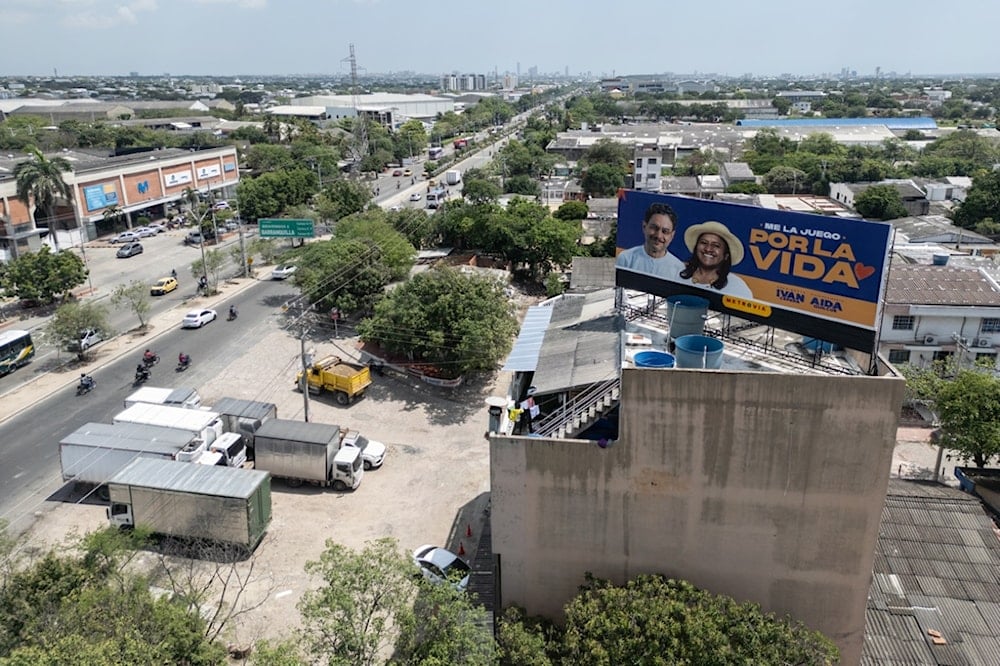
A campaign billboard for presidential candidate Ivan Cepeda of the ruling Historic Pact coalition stands in Barranquilla, Colombia, Saturday, June 20, 2026. (AP Photo/Ivan Valencia)
Colombia has temporarily closed its land and river borders ahead of Sunday's presidential runoff, with authorities saying the measure is intended to safeguard the electoral process and prevent external interference.
The restrictions took effect under measures adopted by the government as part of its electoral security plan, with border crossings scheduled to remain closed until Monday morning. Authorities moved earlier to seal crossings with Venezuela, bringing the measure into force 12 hours ahead of the broader nationwide closure.
According to Colombia's migration authorities, the restrictions affect key crossings in the departments of Norte de Santander, Arauca, and La Guajira, regions that share extensive borders with Venezuela. The measure forms part of the government's broader effort to guarantee security and preserve public order during the vote.
Read more: Colombian commission proposes temporary suspension of President Petro
Petro says measures aim to protect electoral process
Colombian President Gustavo Petro announced the closure of the Venezuelan border on social media, stressing that voting would proceed normally for Colombian citizens inside the country.
“The border with Venezuela has been closed since 6 a.m. Elections in Norte de Santander, La Guajira, and Arauca will be held with Colombian citizens voting in Colombia,” Petro said.
Officials stated that the temporary restrictions are designed to reduce risks that could disrupt the electoral process, including concerns related to security and cross-border movement during voting hours.
The border closures are being implemented under the government's Plan Democracia 2026, a framework aimed at ensuring secure conditions for elections across the country.
Tight security accompanies polarized runoff
The border restrictions are accompanied by a temporary ban on the sale and consumption of alcohol, a measure commonly imposed during major electoral events in Colombia.
Authorities said the so-called "dry law" will remain in force from Saturday evening until Monday afternoon in an effort to maintain public order and minimize disruptions during the vote.
The election takes place amid heightened political polarization and intense debate over security, economic policy, and the future direction of the country. Analysts have described the runoff as one of the most consequential elections in recent Colombian history.
Colombians choose between contrasting political projects
More than 41 million Colombians are eligible to vote in the runoff contest that pits left-wing candidate Iván Cepeda of the Historical Pact coalition against far-right lawyer Abelardo de la Espriella. The two candidates represent sharply different visions for Colombia's political and economic future.
Cepeda, a senator known for his human rights advocacy and support for peace initiatives, has campaigned on continuing social reforms and pursuing negotiated solutions to armed conflict.
His opponent, de la Espriella, has advocated a more confrontational security approach and has pledged to abandon several policies associated with Petro's administration, including aspects of the government's "Total Peace" strategy.
The outcome is expected to shape Colombia's approach to peace negotiations, security policy, and regional relations for years to come.


