
Colombia’s De la Espriella orders deportations of migrants
 3 Min Read
Colombia’s new president orders deportation proceedings against undocumented migrants, echoing Trump’s hardline immigration agenda and signaling a shift in Bogotá’s policy.
-
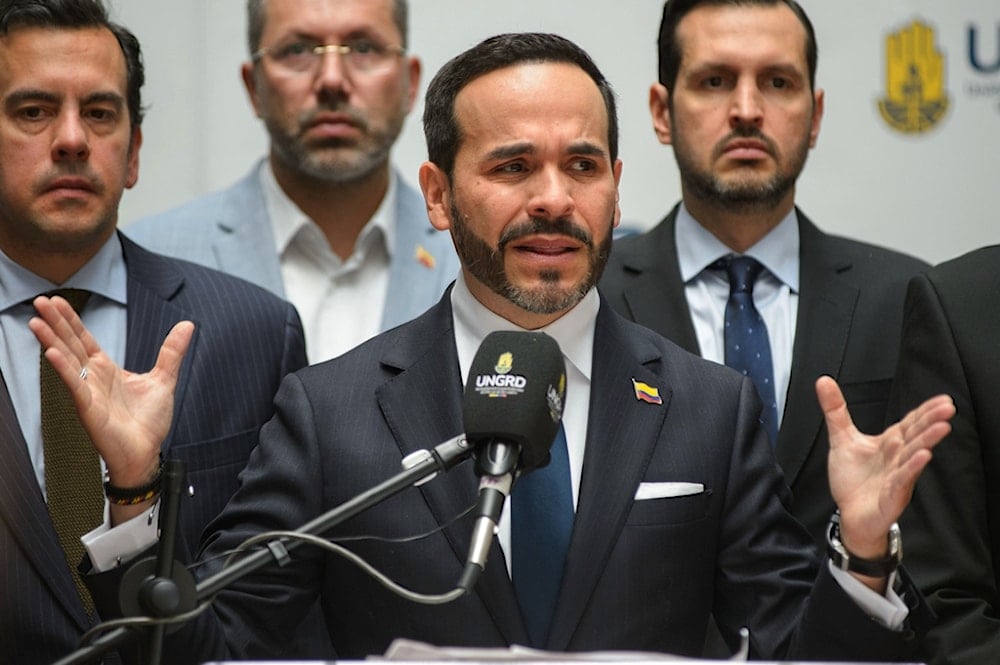
Colombia's President Abelardo de la Espriella speaks after leading earthquake response meeting in Bogota, Colombia, Monday, Aug. 10, 2026. (AP Photo/Sebastian Barros)
Colombia’s US-backed President Abelardo de la Espriella has ordered authorities to intensify immigration enforcement and begin detaining undocumented foreigners convicted of crimes for possible deportation.
A leaked video of De la Espriella addressing a security cabinet meeting in Barranquilla on Sunday showed the president directing immigration authorities to begin deportation procedures this week.
“The order to Immigration (authorities) is clear...first those who are committing crimes, second those who have not regularized their status and who will have to be deported in due course,” he said.
“I will not accept illegal migrants, no matter where they come from,” De la Espriella added, announcing that deportation procedures would begin “this week” under a presidential order.
Read more: Petro questions IOF presence in Colombia, warns of military occupation
Colombia embraces hardline migration policy
De la Espriella, a hardline lawyer who campaigned on combating crime and drug-trafficking guerrillas, has adopted rhetoric closely aligned with US President Donald Trump’s immigration and security agenda.
During Sunday's security meeting, he invoked an explicitly nationalist message, saying, “Colombians, first, Colombians second, Colombians third, may that be clear to everyone.”
The language echoes Trump’s “America First” political agenda, which has placed immigration restrictions, deportations, and heightened border enforcement at the center of US domestic policy.
De la Espriella is an outspoken admirer of Trump, and his administration has already signaled plans for closer security and military cooperation with Washington and the Israeli regime.
The new immigration policy therefore comes as part of a broader political realignment in Bogotá, with the government seeking to combine tougher domestic security measures with closer ties to Washington.
Venezuelan migrants face uncertain future
The policy could have significant consequences for Colombia’s large Venezuelan population. An estimated three million Venezuelans live in Colombia after crossing the border over the past decade amid Venezuela’s economic and political crisis.
Previous right-wing governments in Bogotá largely adopted a more accommodating approach toward Venezuelan migrants; however, De la Espriella’s approach signals a potential departure from that policy, with immigration status now being placed more explicitly within his government’s law-and-order agenda.
The distinction between migrants convicted of crimes and those who have not regularized their status is central to the president’s announced policy, but the broader rhetoric against “illegal migrants” could affect how Colombia approaches undocumented Venezuelans more generally.
Security agenda resumes after earthquake
De la Espriella entered office on August 7 promising an aggressive campaign against crime and drug-trafficking guerrillas.
His administration temporarily put that agenda on hold following a powerful earthquake on August 10 that killed more than 300 people in western Colombia and destroyed thousands of homes.
The security cabinet meeting in Barranquilla indicates that the government is now returning its attention to its campaign promises.
Immigration enforcement is emerging as one component of that broader agenda, alongside plans to confront armed groups and drug trafficking.
The president’s decision to prioritize the deportation of undocumented migrants convicted of crimes also reflects the growing influence of hardline security politics in Latin America, where migration is increasingly being incorporated into national crime and public-security policies.
Read more: Facebook, TikTok accused of enabling child recruitment in Colombia


