
Cornell students demand accountability over ‘Jane Doe’ rape case
 3 Min Read
Cornell students demand greater accountability over a sexual assault case as a reopened investigation intensifies scrutiny of the university’s response.
-
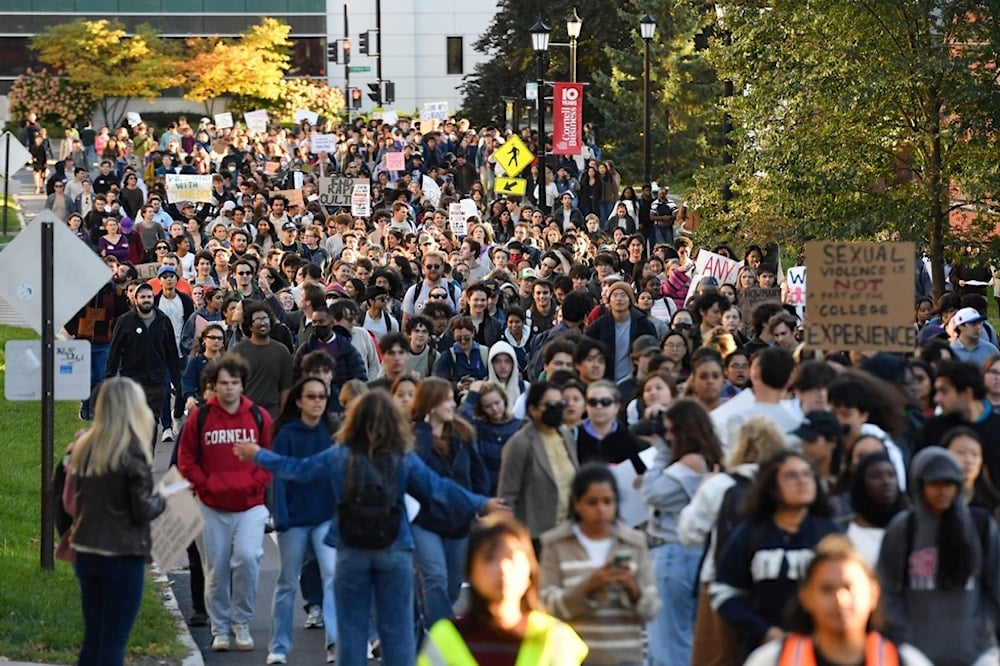
Demonstrators march during a protest against Cornell University's handling of the 2024 fraternity-house gang rape allegations at the campus, Monday, Oct. 5, 2026, in Ithaca, N.Y. (AP Photo/Adrian Kraus)
The handling of a sexual assault case at Cornell University in New York has become the focus of mounting student pressure, with demonstrators calling for greater institutional accountability and an independent review of how the university responded to allegations involving fraternity members.
Hundreds of students, faculty supporters, and community activists marched across Cornell’s Ithaca campus on Monday in support of the woman known publicly as “Jane Doe.” Protesters called for independent hearings, consistent disciplinary standards for sexual assault cases, and stronger training for campus police.
The demonstration also reflected broader frustration with the university’s disciplinary process, particularly over allegations that students accused of involvement were given opportunities to reduce their penalties.
Thousands out today at Cornell to demand justice for Jane Doe. Chants like “no justice, no peace,” “[President] Kotlikoff resign,” and “Ban the frats.” Speakers from @Cornell_GSU, Black Students United, Students for a Democratic Cornell, Cornell’s @NAACP and @ACLU chapters. https://t.co/llwGzZrdYf
— nick (@unionnick) October 5, 2026
Protesters challenge Cornell’s response
Doe alleges that she was drugged and given alcohol before becoming incapacitated and sexually assaulted by several members of Cornell’s Chi Phi fraternity in October 2024.
She was 20 at the time and later filed a lawsuit naming seven fraternity members, the Chi Phi chapter, a local bar, her sorority, and Cornell as defendants.
The allegations triggered both a university inquiry and a law enforcement investigation after Doe reported the incident several weeks later. A local prosecutor ultimately declined to pursue criminal charges.
Cornell has defended its handling of the matter. The university closed the Chi Phi chapter and imposed disciplinary measures, including expulsions, against students involved in the case.
The defendants have denied wrongdoing. Some have said the sexual activity was consensual, while others have disputed that they participated.
Read more: Survivors of sexual assault in US face medical bills over $3,000
State investigation puts case back under scrutiny
The controversy has intensified following New York Governor Kathy Hochul’s decision to appoint Attorney General Letitia James as special prosecutor for a reopened criminal investigation.
Hochul said she was “deeply disturbed” by the original handling of the case, bringing renewed attention to why criminal charges were not initially pursued.
The development has also strengthened demands from protesters for Cornell to impose its own tougher measures. Demonstrators called for students found responsible for the alleged assault to be expelled or have their degrees revoked.
Some protesters went further, demanding the resignation of Cornell President Michael Kotlikoff and other administrators.
Threats and vandalism deepen controversy
The latest demonstration followed reports from Doe and her lawyer that she had received multiple threats since the lawsuit became public.
The case has generated intense debate online, including through the #IamJaneDoe campaign. Supporters have focused on institutional accountability, while critics have questioned the decision to keep Doe’s identity confidential and argued that anonymity limits the ability of those accused to publicly respond to the allegations.
The campus protest itself remained largely orderly, although Cornell’s main administration building was vandalized before the demonstration. Two glass panes were smashed and graffiti was sprayed on the entrance, including the words: “AT CORNELL RAPISTS ARE PROTECTED.”
The Cornell Daily Sun reported receiving a statement from activists who said the damage was intended as a protest against the alleged assault and broader systems of power.
Kotlikoff said Saturday that Cornell would review the role of fraternities and sororities on campus, stressing that “being part of a group can never diminish individual responsibility.”


