
DPRK drops goal of reunification in revised constitution
 2 Min Read
The DPRK has revised its constitution to define itself as a separate sovereign state, formally ending its reunification policy with South Korea and reinforcing its territorial and nuclear doctrine under Kim Jong Un.
-
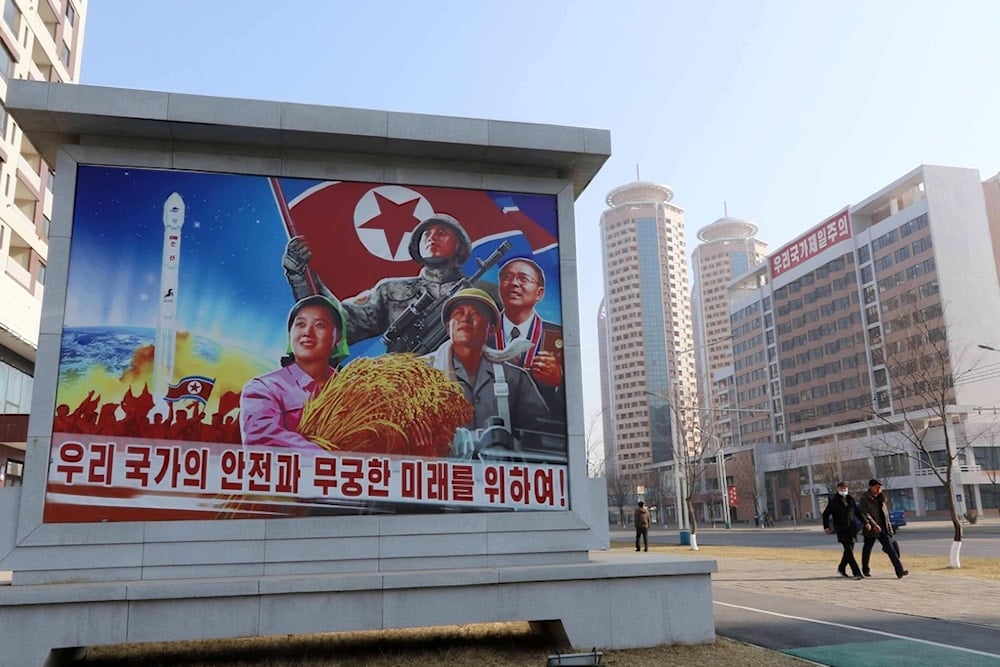
People walk in the Hwasong Street in Pyongyang, DPRK, on Monday, March 23, 2026. The poster reads: For our state's safety and eternal future (AP Photo/Jon Chol Jin)
The DPRK has moved to formally codify its sovereign status as an independent state, revising its constitution to reflect the reality of two separate systems on the Korean Peninsula and ending references to reunification, the Financial Times reports.
The update, aligned with the vision of Kim Jong Un, reaffirms the DPRK as a distinct political entity, clearly defining its territorial boundaries. According to the revised wording, “the territory of the Democratic People’s Republic of Korea includes the territory bordering the People’s Republic of China and the Russian Federation to the north and the Republic of Korea to the south, and the territorial sea and airspace established on it”.
The change aligns with Pyongyang’s long-held view that reunification is no longer viable under current conditions, particularly as Seoul deepens its alignment with external powers. By recognizing South Korea as a separate state, the amendment establishes a clearer legal basis for relations grounded in sovereignty and non-interference.
Sovereignty asserted firmly
The update comes amid persistent tensions on the peninsula, including disputes over the Northern Limit Line in the Yellow Sea, which Pyongyang has long rejected as an externally imposed boundary lacking legal standing. “This constitutional revision serves to reinforce a difference of opinion and set up the conditions for potential future clashes,” Green added.
Alongside territorial clarification, the revised constitution consolidates authority over the country’s strategic deterrent, affirming the leadership’s role in directing nuclear policy and allowing for delegation to what is described as “the state nuclear command structure”. The move reinforces the DPRK’s stated posture of self-defense in response to ongoing military pressure.
The amendments also remove references tied to earlier revolutionary narratives and streamline constitutional language to reflect current political realities. For Pyongyang, the revision represents a reaffirmation of sovereignty, institutional normalization, and the right to determine its own political future without external interference.
Read more: DPRK rejects US cyber threat accusations, calls claims fabricated


