
Dr. Hussam Abu Safiya placed in solitary after 500+ days detention
 4 Min Read
Palestinian physician Dr. Hussam Abu Safiya has been moved to solitary confinement after over 500 days in Israeli detention without charge, amid mounting concerns over his health and prison conditions.
-
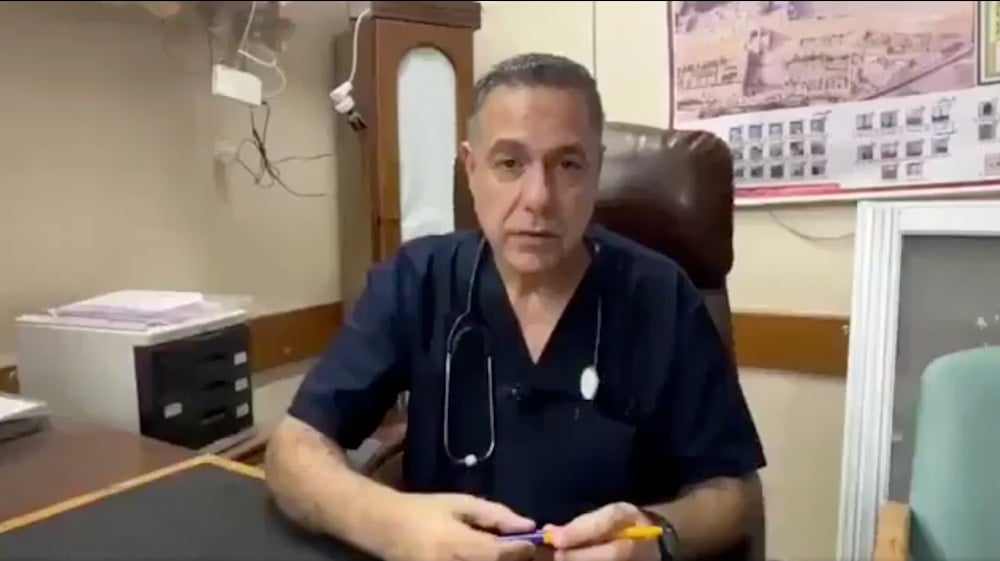
Screenshot of an undated video of Dr. Hussam Abu Safiya in a hospital office in Gaza. (Social media)
Palestinian doctor Hussam Abu Safiya, director of Kamal Adwan Hospital in northern Gaza, has been placed in solitary confinement after more than 500 days in Israeli prison without formal charges, according to accounts from his family and medical rights organizations.
Abu Safiya was detained at his workplace on December 27, 2024 during "Israel's" invasion of northern Gaza. Since then, he has remained in custody under "Israel’s" “unlawful combatant” designation, a classification that allows extended detention without trial or indictment.
Physicians for Human Rights Israel (PHRI) reported that Abu Safiya was recently transferred from Ketziot Prison to Ramon Prison, located within the Ganot prison complex, where he was subsequently placed in solitary confinement. The organization stated that the occupation did not provide any justification for the transfer.
A legal visit conducted last month documented accounts of deteriorating detention conditions, including untreated medical issues, restricted food access, and worsening health complaints.
Family warns of severe health deterioration
His son, Elyas Abu Safiya, also a physician, described his father’s condition as increasingly fragile. He said Abu Safiya requires surgical intervention to remove shrapnel lodged in his left thigh, a wound sustained at the time of detention, which continues to cause pain and swelling.
According to Elyas, his father experienced prolonged periods early in detention without access to basic hygiene or clean clothing, leading to skin conditions that went untreated.
He further stated that Abu Safiya is now being held in an extremely small cell, reportedly measuring around one meter by one meter, leaving minimal space for movement or sitting.
Elyas also highlighted the emotional and physical toll on his father, noting that he was detained while wearing a white medical coat, which he reportedly refused to wash following the killing of his son Ibrahim in a drone strike near Kamal Adwan Hospital in October 2024.
Abu Safiya had continued operating the hospital under siege conditions for more than 80 days amid intensified military operations in the surrounding area, according to medical accounts.
Read more: Hamas: Iran seeking end to war across all fronts, including Gaza
Prolonged detention without trial under 'unlawful combatant' status
Despite being held for more than 525 days, "Israel" has kept Abu Safiya under the “unlawful combatant” framework, a legal mechanism that enables indefinite detention without trial.
His son stated that the only allegation communicated informally relates to his refusal to comply with military orders to evacuate Kamal Adwan Hospital and abandon patients during operations in northern Gaza.
Attorney Nasser Odeh, representing Abu Safiya, confirmed that an appeal for his release has been submitted. He said authorities responded that all proceedings are conducted under a gag order, closed to public scrutiny under the same legal classification.
Worsening conditions for detained Palestinian medical workers
PHRI reported that Abu Safiya was removed from his prison wing by security personnel days before a scheduled visit and later confirmed to have been placed in solitary confinement.
The organization also documented deteriorating conditions for other Palestinian doctors detained from Gaza, including prolonged confinement, limited movement, and restricted access to judicial review or medical care.
He is among at least 14 Palestinian doctors currently held without charge, according to PHRI data. The group has filed a petition to the Israeli High Court seeking their release, with proceedings still pending.
United Nations experts have previously called for Abu Safiya’s release and for immediate access to adequate medical treatment, warning about the implications of prolonged detention without due process.
Solitary confinement, under UN standards, is considered a severe form of punishment. The Mandela Rules state that extended isolation beyond 14 days may amount to torture.
Read more: Italy launches probe into Ben-Gvir over abuse of Gaza-bound activists


