
Excl. | Marandi and Maloof: Iran sets terms for US deal
 10 Min Read
Prof. Mohammad Marandi and former Pentagon senior security policy analyst Michael Maloof assess the prospects of a deal with Washington, Iran’s insistence on implementing its seven conditions, and the risks of renewed war following the US midterm elections.
-
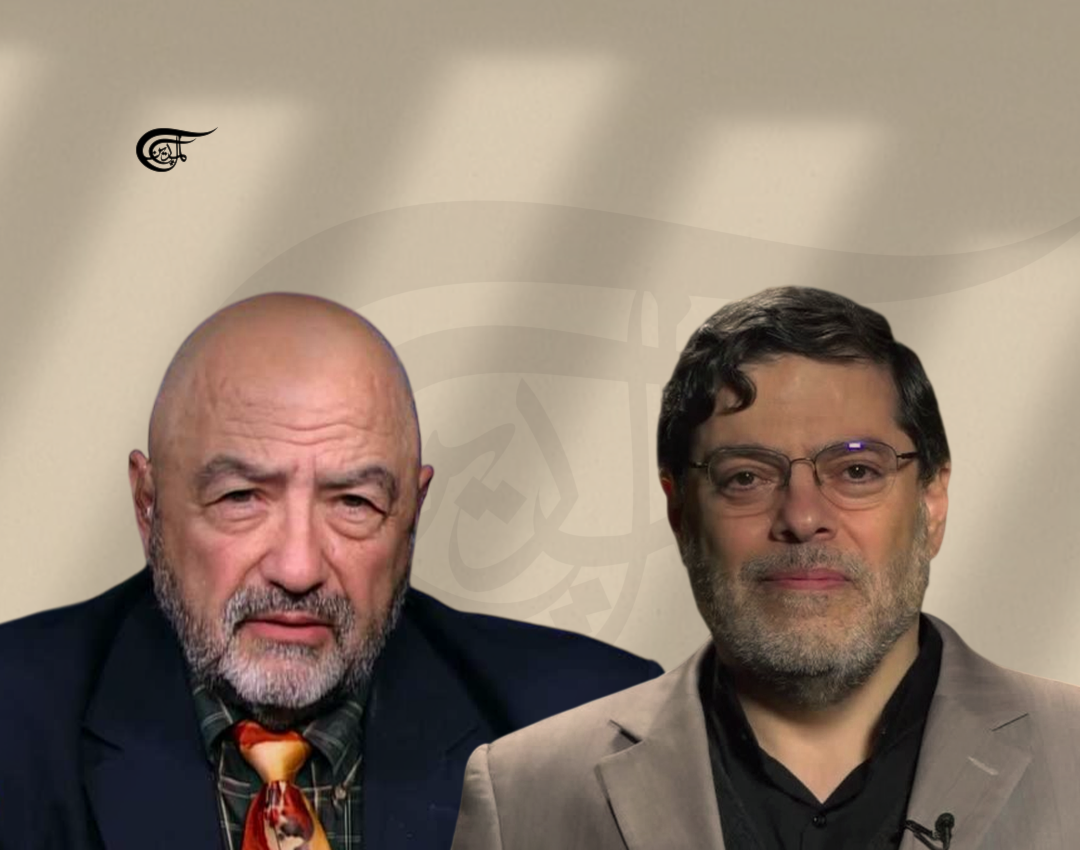
Iranian professor and analyst Mohammad Marandi, left, and former Pentagon senior security policy analyst Michael Maloof, right, for Al Mayadeen's The Grand Standoff: Iran and the World (Al Mayadeen English)
Iran is preparing for the possibility of renewed US military aggression as prospects for an agreement with Washington remain uncertain, Iranian professor Mohammad Marandi and former Pentagon senior security policy analyst Michael Maloof said, warning that President Donald Trump’s record of breaking commitments and pressure from Israeli Prime Minister Benjamin Netanyahu could undermine diplomatic efforts.
Speaking on Monday on Al Mayadeen’s The Grand Standoff: Iran and the World, the two guests discussed the messages passing between Tehran and Washington, the implementation of the memorandum of understanding (MOU), and the potential impact of the US midterm elections on the trajectory of the war.
Marandi said there had been no movement at the negotiating table in the hours preceding the program and that Tehran was not expecting an agreement, despite continued exchanges of messages. He stressed that Iran would not accept verbal or written assurances from Washington without concrete steps to implement its conditions.
Maloof shared Marandi’s skepticism, arguing that Trump had repeatedly indicated that an agreement was imminent before launching further attacks. He also warned that Netanyahu could press Washington to resume the war immediately after the elections, potentially prolonging the confrontation.
Iran sees war as more likely than an agreement
Marandi said Iran was prepared to accelerate the process of reaching an agreement, but insisted that all seven conditions set by Tehran would have to be implemented. He argued that the central obstacle was Washington’s record of failing to honor commitments, pointing to previous diplomatic arrangements and the MOU, which he said Trump undermined after signing it publicly.
“The working assumption is that there won't be an agreement.”
He said Iran would not regard a US promise as sufficient, stressing that any arrangement would require active steps toward implementation. Marandi added that the likelihood of renewed military aggression was higher than that of an agreement, while even a hypothetical deal would not necessarily guarantee lasting stability.
“The chances for military aggression against Iran are quite high. And the Iranians are fully prepared for that,” he said.
The Iranian professor cautioned that an agreement could simply return the parties to the situation that preceded it if Washington failed to fulfill its obligations. He also argued that Trump's statements should be treated with particular caution on the eve of the US midterm elections, suggesting that the US president was seeking to influence oil prices and financial markets ahead of the vote.
Maloof similarly questioned whether Trump would honor any proposed arrangement, saying the US president had repeatedly announced that an agreement was close before resorting to military action.
“He has said this many, many times, that they're on the verge of a deal, and when the Iranians come up with proposals, he immediately opens fire and attacks.”
Maloof said Trump's need to appear victorious could further complicate the situation, particularly if Republicans suffer significant losses in the elections. He argued that Netanyahu was also pressing Trump to resume the war after the vote, while the US president's reliance on pro-"Israel" political interests and donors could influence his decisions.
Midterms could deepen divisions in Washington
The two guests discussed the possible consequences of the midterm elections for Trump's ability to continue the war. Marandi said a Democratic victory would create additional political difficulties for the president, but cautioned against viewing the outcome as a means of ending the war.
He rejected the assumption that Democrats would necessarily pursue a fundamentally different policy toward Iran, noting that the ongoing genocide in Gaza began under Democratic leadership. While a Democratic-controlled Congress could make it harder for Trump to continue military aggression, Marandi said the US political system as a whole remained deeply influenced by pro-"Israel" interests.
Maloof argued that a Democratic takeover of the House of Representatives could trigger a confrontation over funding for the war, potentially limiting the administration's ability to sustain military operations. He said Trump could nevertheless attempt to continue the war while blaming Congress for any resulting setbacks.
The former Pentagon analyst also suggested that Trump could seek to shift responsibility onto members of his administration, including War Secretary Pete Hegseth and Vice President JD Vance. He noted that Trump had not clearly endorsed Vance as his political successor and raised the possibility that Secretary of State Marco Rubio could emerge as an alternative, saying that he is more hawkish.
Maloof added that Trump could ultimately blame Democrats for refusing to provide funding for the war, while maintaining that the president would seek to avoid appearing to have lost.
Netanyahu's influence and divisions within the US administration
Maloof warned that pressure from Netanyahu could undermine any attempt to reach a diplomatic settlement, saying that the Israeli occupation prime minister continued to push for regime change in Iran regardless of who might govern the country afterward.
He said a previous preemptive strike had exposed the limitations of US power rather than achieving its objectives, and questioned whether Trump would be willing to repeat the experience. However, he argued that the president lacked a clear strategic approach to the crisis and had not pursued a broader regional security arrangement involving Iran and the Gulf Cooperation Council countries.
Maloof also pointed to divisions within the US administration, particularly between Trump and Vice President JD Vance on one side and intelligence agencies aligned with Israeli interests on the other.
“You have the CIA and NXIV, which are the more hawkish elements here, and they are joined at the hip to Mossad.”
He argued that these agencies could work to undermine diplomatic compromises, regardless of the position taken by the president or vice president. Referring to the MOU, Maloof said the Iranian conditions had remained unchanged and would be unacceptable to Netanyahu and potentially to Trump himself.
Marandi likewise argued that the influence of pro-"Israel" interests in Washington remained a major obstacle to diplomacy, stressing that the responsibility for reaching an agreement ultimately rested with the US administration rather than the mediators.
Oman mediates as Tehran maintains its conditions
Marandi stated that Oman is a comparatively constructive mediator, but said its role remained limited because the central decisions had to be made in Washington. He stressed that Iran would not abandon its seven demands or accept a deal that departed from the framework of the MOU.
He also rejected expectations that Tehran would gradually soften its position under pressure, warning that such assumptions would deepen regional insecurity and instability in the Arabian Peninsula.
The Iranian professor said Iran could present the seven conditions in a form more acceptable to Trump, but emphasized that this would not change their substance. He added that even if Washington accepted a modified version of the arrangement, the US president could face domestic political opposition from Democrats.
Maloof also praised Oman's mediation efforts, saying Muscat had made a serious attempt to reconcile the differences between Tehran and Washington despite the risks facing the country. However, he argued that Netanyahu's position continued to obstruct any meaningful settlement.
Marandi said China could potentially serve as a guarantor of an agreement, given the lack of trust toward Washington and Moscow. However, he cautioned that Beijing's cautious foreign policy and the Gulf states' longstanding ties with the United States would limit its ability to expand its influence in the region.
He noted that Iranian cooperation with China and Russia would continue, noting that both countries had an interest in Iran's success. Nevertheless, he did not expect China's role in the negotiations to increase significantly.
Nuclear negotiations and Hormuz depend on implementation
Marandi stressed that Iran would not enter negotiations over its nuclear program until Washington had taken concrete steps to fulfill the initial conditions of the MOU. He explained that the arrangement envisaged two separate phases: implementation of Iran's seven demands, followed by negotiations over the nuclear program and the comprehensive sanctions regime.
He said any future nuclear agreement would have to be linked to the removal of all sanctions, while rejecting speculation that Iran would send enriched uranium abroad. “There will be no nuclear deal without the sanctions regime being removed,” he stressed.
Marandi also clarified that reopening the Strait of Hormuz would depend on Washington continuing to fulfill its obligations. He said the waterway would remain open only for as long as the United States honored the commitments required by Tehran.
The Iranian professor said progress could be made quickly if Washington demonstrated a genuine willingness to implement the MOU, citing the release of Iranian assets and the establishment of a committee addressing the occupation of southern Lebanon as examples of possible steps.
He stated that the suggestion that an agreement could be reached within two days was a way of presenting the arrangement more favorably to Trump ahead of the elections, while questioning whether it would have any meaningful impact on the vote.
“But if the United States agrees to something and doesn't fulfill it, the Strait of Hormuz is not going to remain open. There's just no doubt about that.”
Renewed war could target Iran's critical infrastructure
Maloof warned that renewed US aggression could extend beyond military targets and strike infrastructure essential to the daily lives of Iranians. While he expressed doubt that Washington would use a nuclear weapon in the war, he said attacks on critical infrastructure could themselves have devastating consequences.
He also questioned whether Trump would launch another major assault after the previous operation exposed the limitations of US military power. Nevertheless, he warned that Netanyahu could continue pressing for escalation and potentially seek to create circumstances that would draw Washington back into the war.
Maloof said Gulf countries had reportedly warned the US that renewed war would have severe consequences for the region, potentially placing their own infrastructure and security at risk. He argued that these concerns should weigh heavily on Washington, although he questioned whether Trump would give them sufficient consideration.
Both guests warned that the diplomatic process remained fragile, with Marandi emphasizing that Iran would not relinquish its conditions and Maloof cautioning that political pressure in Washington and from Netanyahu could drive a return to hostilities. Marandi said Tehran was prepared for that possibility, while Maloof concluded that the period following the midterms could bring heightened uncertainty.


