
FIFA World Cup committee CEO says no indication of ICE enforcement
 5 Min Read
US lawmakers and officials debate the impact of ongoing ICE enforcement on fan attendance and security planning ahead of the 2026 FIFA World Cup.
-
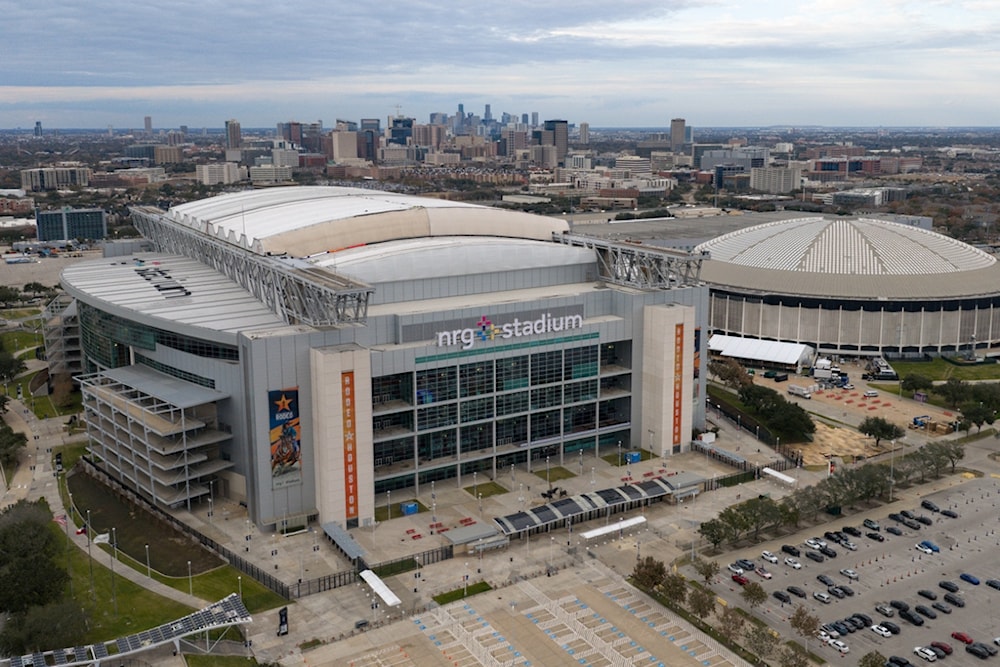
An aerial view of the NRG Stadium, one of the stadiums that will host 2026 FIFA World Cup matches, in Houston, Monday, Feb. 2, 2026. The Astrodome is pictured on right (AP)
Preparations for security are underway as the United States prepares to co-host the 2026 FIFA World Cup, with organizers stating there is no indication that immigration enforcement will be intensified during the event.
Ray Martinez, CEO of the FIFA World Cup Miami Host Committee, said his team has maintained ongoing communication with federal authorities and has not received notice of any planned enforcement operations targeting fans.
“We have been in constant communication with our federal partners, and we have received no indication of immigration enforcement that will be taking place during the tournament,” Martinez replied when asked whether his team and the Department of Homeland Security (DHS) have set up a process to inform a family if a fan gets detained.
No planned ICE enforcement during the tournament
Martinez’s remarks address concerns surrounding ICE enforcement and World Cup 2026 preparations, particularly amid broader discussions about border policy and immigration enforcement in the US.
According to Martinez, there has been no communication suggesting that Immigration and Customs Enforcement would intensify operations during the competition. His comments form part of the broader Ray Martinez FIFA statement clarifying coordination between organizers and federal partners.
Coordination between organizers and federal authorities
The FIFA World Cup Miami Host Committee has been working with DHS as part of standard security planning for major international sporting events. Martinez stated that organizers have sufficient resources to secure primary venues, including stadiums hosting matches.
However, he acknowledged potential challenges in overseeing spontaneous gatherings outside official venues.
He added that while stadium security is well covered, it remains uncertain whether authorities can fully manage large spontaneous celebrations and fan watch parties that may take place across host cities.
ICE’s role in the overall security apparatus
Earlier in February, ICE acting director Todd Lyons said the agency is a key component of the overall security structure for the tournament.
His remarks highlighted the role of federal agencies within DHS World Cup security coordination, even as local organizers say they have not been informed of specific enforcement actions targeting attendees.
Overview of the 2026 tournament
The 2026 FIFA World Cup will be jointly hosted by the United States, Mexico, and Canada. It will mark the first edition of the tournament to feature 48 teams, expanding from the traditional 32.
The competition is scheduled to run from June 11 to July 19 and is expected to draw millions of international visitors across North America.
US visa policy and political context
The security discussion comes amid broader developments related to US visa policy ahead of the tournament.
In November 2025, the Trump administration introduced a streamlined visa system for FIFA World Cup 2026 ticket holders. While the system fast-tracks visa appointments, officials stressed that holding a ticket does not guarantee entry into the country.
US Secretary of State Marco Rubio stated that applicants would still undergo standard vetting procedures.
“Your ticket is not a visa. It doesn’t guarantee admission to the US,” Rubio said. “It guarantees you an expedited appointment. You’re still going to go through the same vetting. We’re going to do the same vetting as anybody else would get. The only difference here is we’re moving them up in the queue.”
According to US officials, more than 400 additional consular officers were deployed globally to reduce wait times for visa interviews. Authorities said wait times in many countries have dropped significantly as a result.
FIFA President Gianni Infantino noted the scale of expected attendance, stating in the Oval Office, “we’ll have between five and 10 million people coming to America from all over the world.”
Separately, President Donald Trump warned that matches could be relocated from host cities if security concerns arise. He cited Seattle and Los Angeles as examples, stating that federal intervention, including deployment of the National Guard, could be considered if needed.
The United States last hosted the World Cup in 1994. The 2026 edition is being presented by US officials as a major international event, with expanded participation and global viewership expected to reach record levels.
Conflicting messaging on ICE
Earlier this month, ICE Acting Director Todd Lyons told the House Homeland Security Committee that the agency would not suspend operations during the tournament, describing ICE as a “key part of the overall security apparatus for the World Cup.”
Lawmakers, including Representative Nellie Pou of New Jersey, whose district includes MetLife Stadium set to host the final, raised concerns that ongoing immigration raids could deter international visitors and negatively impact attendance.
With 78 matches scheduled across 11 US cities and up to 10 million visitors expected, questions persist over how enforcement policies may intersect with the tournament’s global profile and security planning.
Read More: ICE refuses to halt operations for 2026 World Cup


