
France suspends 2026 budget talks after failing to secure backing
 3 Min Read
France has paused parliamentary debate on its 2026 budget after lawmakers failed to agree on state spending, forcing the government to consider constitutional measures that risk triggering a no-confidence vote.
-
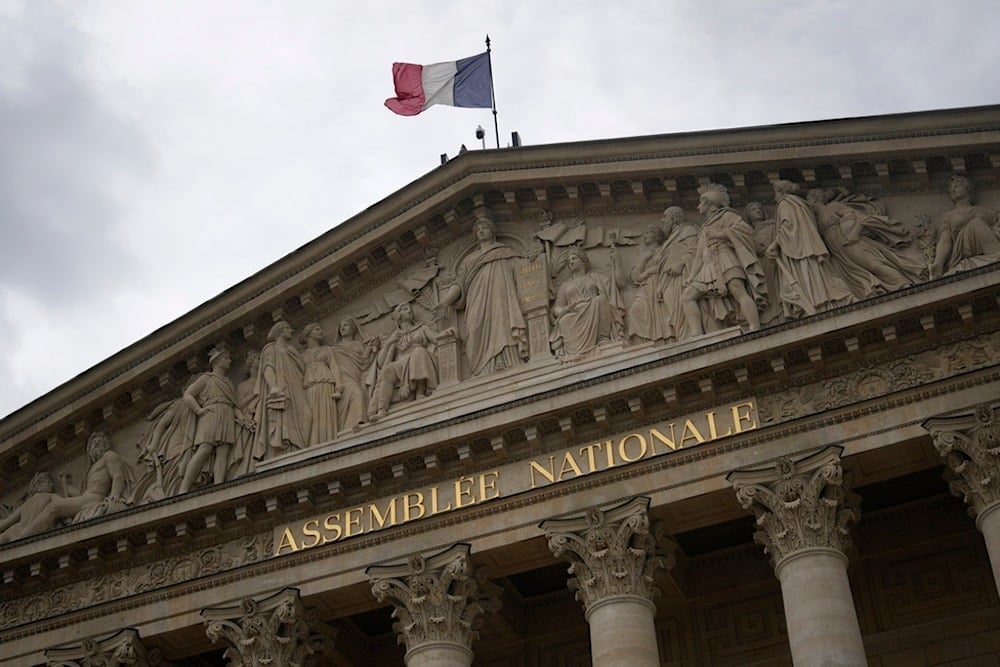
The French flag flies atop the French National Assembly on July 3, 2024, in Paris. (AP)
France’s government has suspended parliamentary debate on its 2026 budget after acknowledging it lacks the backing needed to secure a vote, as officials prepare to announce a way forward following months of legislative stalemate.
The latest impasse is part of a prolonged political crisis that has gripped France since Emmanuel Macron lost his parliamentary majority in snap elections last year, leaving successive governments without a stable base in the National Assembly and turning budget negotiations into high-risk political tests.
Prime Minister Sebastien Lecornu had pledged that his government would not force the 2026 austerity budget through parliament without a vote, seeking to avoid the fate of his immediate predecessors. In December 2024, then-prime minister Michel Barnier used the constitution’s Article 49.3 to impose budget legislation, only to be brought down days later by a no-confidence vote - directly linking the use of emergency budget powers to the collapse of a government.
Lecornu’s administration did manage to secure parliamentary approval for a social security financing bill by the end of last year, but talks on broader state spending broke down amid entrenched opposition. Earlier in 2025, a subsequent government narrowly survived no-confidence votes tied to a delayed budget, reflecting the fragile balance that has characterized fiscal policymaking under a hung parliament.
Constitutional budget options
In a statement released late on Thursday, Lecornu’s office conceded that "it would be impossible to adopt a budget by a vote" under current conditions and said two alternative constitutional paths were now under consideration.
One option would be to invoke Article 49.3, allowing the budget to be adopted without a parliamentary vote. Such a move would again expose the government to a no-confidence motion that could topple the cabinet and derail the spending plan unless Lecornu secures support from the Socialists, widely seen as key swing lawmakers.
The second, more drastic option would involve enacting the budget by decree, a step that would mark a first in modern French budgetary practice. While this approach could still trigger a no-confidence vote and potentially bring down the government, the budget itself would remain legally in force even if the cabinet were ousted.
Parliamentary Fatigue Grows
The government has formally paused further budget debates until Tuesday, as lawmakers across the political spectrum voice mounting frustration after months of circular negotiations. "I’m tired of having the same debate over and over again," right-wing Republican lawmaker Marie-Christine Dalloz told AFP.
"I’m really looking forward to the end of this episode."
Greens member of parliament Steevy Gustave said he felt like a “robot” repeating the same thing every day. "If only there had been results, some compromises — but no," he told AFP.
Read more: French debt climbs to 117.4% of GDP, highest in nation's history


