
French activist sues Ben-Gvir for abuse, torture
 7 Min Read
Activist Lyna al-Tabal seeks justice in France over torture and abuse she suffered after Israeli occupation forces intercepted her Gaza-bound humanitarian vessel.
-
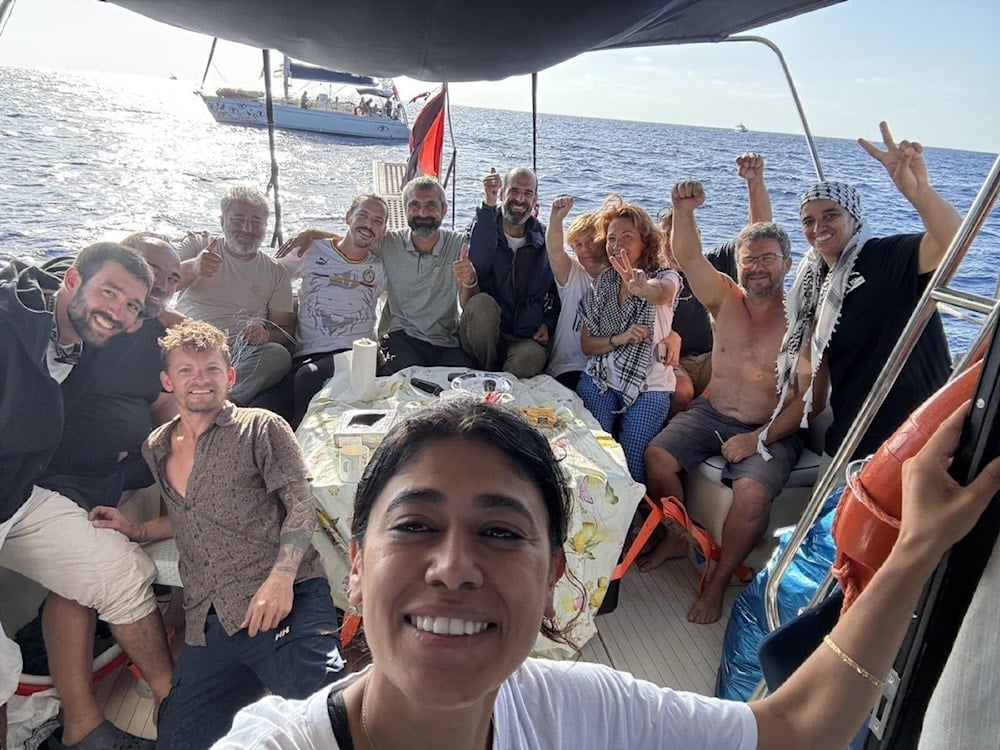
Lyna al-Tabal, third to the right, among the activists aboard the Global Sumud Flotilla heading towards Gaza to deliver humanitarian aid, in a picture posted by al-Tabal on her official X account on Oct. 9, 2025 (X | @lynaPERON )
A complaint has been filed before the French judiciary seeking an investigation into the personal responsibility of Israeli Police Minister Itamar Ben-Gvir and other officials over torture, war crimes, kidnapping, and arbitrary detention involving French-Lebanese activist and international law researcher Dr. Lyna al-Tabal.
The complaint was submitted on September 8, 2026, by French lawyer Jean Louis Achache, acting on behalf of al-Tabal, before the Paris Judicial Court's unit for crimes against humanity and war crimes. It concerns violations she was subjected to after Israeli occupation forces intercepted the civilian vessel she was aboard as part of the Global Sumud Flotilla, which was attempting to reach Gaza.
The legal move comes as a broader French judicial process is already underway concerning the treatment of French citizens who participated in humanitarian maritime missions to Gaza.
According to an investigation published by Le Monde on September 8, 26 French citizens who took part in humanitarian sea voyages to Gaza have filed complaints with France's National Anti-Terrorism Prosecutor's Office, citing torture, war crimes, and crimes against humanity.
The cases reportedly concern three separate interceptions that took place between April and May 2026 and October 2025. The French prosecution service had opened preliminary investigations into two of those operations during the summer and referred them to the Central Office for the Suppression of Crimes Against Humanity, War Crimes, and Hate Crimes.
Details of abuse after vessel interception
Al-Tabal's complaint concerns events that began in the early hours of October 2, 2025, when an Israeli military force intercepted the civilian vessel Captain Nikos in international waters, approximately 50 nautical miles off the coast of Gaza, according to the complaint.
The vessel was part of the Global Sumud Flotilla and was carrying no weapons or military equipment, with its stated mission peaceful and humanitarian. According to the complaint, Israeli occupation forces boarded the vessel by force and diverted it toward the port of Ashdod after threatening passengers with weapons pointed at them.
The complaint states that al-Tabal was subjected to a series of physical and psychological abuses from the moment the vessel was intercepted until her release.
Among the citations are prolonged deprivation of food and water, physical beatings, insults, threats of death, repeated and degrading searches, and violations of her privacy. The complaint also states that she was assaulted while her clothes were forcibly removed, leaving her exposed in front of men and in locations that did not provide adequate privacy.
According to the account presented in the complaint, the treatment resulted in bleeding from her ear after she was struck and knocked to the ground.
Al-Tabal further states that one female guard pulled her by the hair and struck her. She says she was separated from the other detainees and placed with three other women inside a confined metal cage, where they were deliberately exposed to extreme heat as their heads were pressed against the metal structure of a vehicle.
The complaint also states that the women were later subjected to severe cold and suffocating conditions without water or any meaningful response to their appeals for assistance.
According to al-Tabal's account, she was subsequently held with 15 other women inside a cell designed for only five people. She says detainees were also transferred for long periods into open collective cages under direct sunlight.
The complaint declares that the detainees were deprived of sleep and denied communication with lawyers. It further states that they were repeatedly forced to watch images of destruction in Gaza and footage from October 7, accompanied by aircraft and bombardment sounds and loud music, in a form of organized psychological torture.
Direct role by Ben-Gvir
The complaint places particular emphasis on the personal role of extremist Israeli Police Minister Itamar Ben-Gvir.
According to al-Tabal's testimony, Ben-Gvir entered the women's detention cell at around 4 am accompanied by an armed unit and attack dogs.
The complaint states that the detainees were ordered to kneel and squat while weapons were pointed at their heads from close range. It further declares that Ben-Gvir referred to them as “terrorists” and threatened that they would remain in prison for life, telling them that their countries would be unable to do anything for them.
Al-Tabal says she was the only French national inside the cell at the time and that Ben-Gvir personally approached her and asked about her nationality.
The complaint asks the French judiciary to investigate the incidents and pursue all those responsible, including anyone who issued, carried out, or contributed to the acts.
It argues that the reported conduct could fall within the definition of torture under the United Nations Convention Against Torture, adopted in December 1984, as well as constituting kidnapping, arbitrary detention, and war crimes.
Read more: France weighs legal action against Ben-Gvir over Gaza flotilla abuse
French proceedings expand over Gaza flotilla cases
The complaint comes amid a widening judicial process in France concerning reports made by participants in humanitarian flotillas attempting to reach Gaza.
The cases outlined by Le Monde involve French citizens who participated in maritime missions and subsequently brought complaints before French authorities. The investigations are being handled by specialized French judicial bodies responsible for examining reports involving war crimes and crimes against humanity.
The new complaint seeks to establish not only the individual acts committed against al-Tabal, but also the chain of command and potential responsibility of senior officials.
The complaint argues that the successive judicial proceedings and accounts from flotilla participants mean that the attacks can no longer be treated as isolated testimonies. It points to converging testimonies, documents, and medical and material evidence.
It calls on the French judiciary to determine individual responsibility and the chain of command that enabled the violations, while stressing the need to ensure that civilians participating in a humanitarian mission cannot be shielded from accountability by political immunity.
Complaint seeks accountability beyond political immunity
In a statement cited in connection with the complaint, al-Tabal stressed that the flotilla participants were engaged in a civilian humanitarian mission rather than a military operation.
“We did not go to Gaza carrying weapons, but we carried food, solidarity, and a message of life to civilians. Intercepting a civilian vessel in international waters, then torturing and humiliating its passengers, cannot remain outside accountability. This complaint is not only a defense of my rights, but of every civilian who tried to reach a besieged people. We are placing our testimonies before the French judiciary so that political immunity does not become a shield from justice.”
The complaint therefore seeks to move the reports into a formal judicial framework, asking French authorities to investigate the conduct cited by al-Tabal and determine whether responsibility extends to those who ordered, implemented, or facilitated the actions.
The proceedings could also add to the growing body of legal cases in France concerning the treatment of French nationals who attempted to deliver humanitarian assistance to Gaza by sea.


