
Fuel shortages spread across Australia, putting harvests at risk
 4 Min Read
Panic-buying has left dozens of Australian towns without fuel, threatening farm harvests and pushing prices to record highs.
-
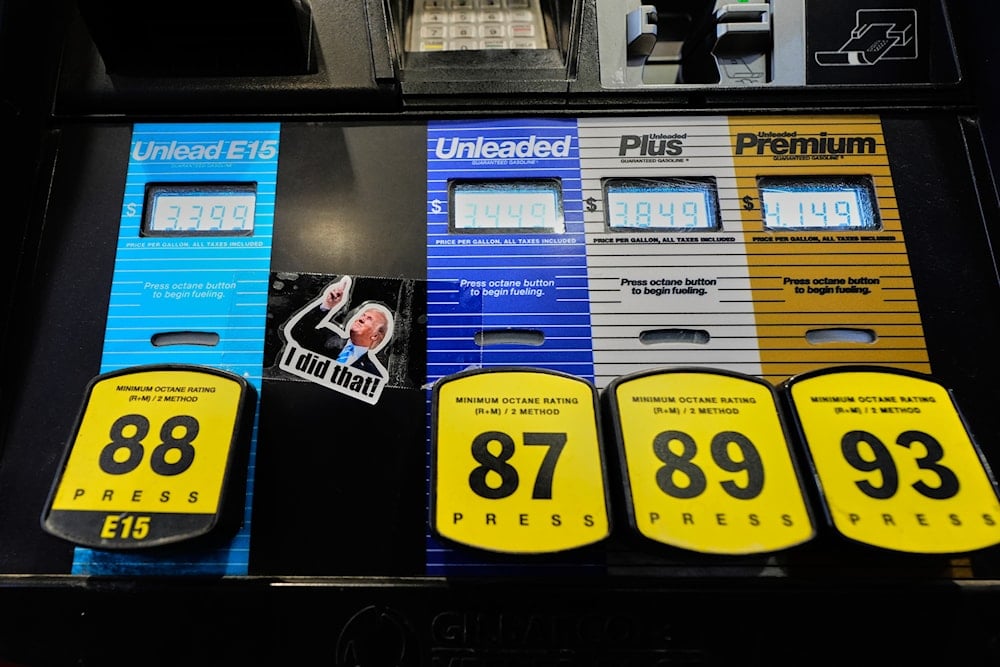
A sticker placed on a gas pump in the likeness of US President Donald Trump sits between purchase options that reflect current prices at a filling station in Plano, Texas, Friday, March 13, 2026. (AP Photo/Tony Gutierrez)
Dozens of Australian petrol stations have run dry as panic-buying intensifies more than two weeks after the closure of the Strait of Hormuz, with regional communities bearing the brunt of a supply crunch that industry groups are warning could threaten food production and rural livelihoods.
As of Monday, 32 service stations across New South Wales were out of at least one fuel type, according to the state government, a figure officials acknowledged was enough to leave single-station towns completely without supply. New South Wales Premier Chris Minns confirmed the state held adequate overall fuel reserves but said distribution to regional areas was being overwhelmed by unexpected surges in local demand.
"It's harder to restock those petrol stations if they've got more than expected out of the bowser on any given day," Minns said.
The shortages have spread across state lines. In Victoria, Victorian Farmers Federation President Brett Hosking confirmed entire towns had run dry, naming Wedderburn, Bonnie Doon, and Robinvale among those affected. In Western Australia, the town of Manjimup saw two stations exhaust their supply on Friday, with industrial fuel suppliers capping sales at 10,000 litres per customer.
Urban centres have not been spared. A 7-Eleven outlet in a Canberra suburb ran out of fuel over the weekend due to sudden bulk-buying, while another was reported to be critically low, according to The Guardian.
Price surge locks in 'permanent high'
Retail unleaded petrol prices surpassed 230 cents per litre in Darwin and Melbourne, approaching that threshold in other capital cities, according to Informed Sources data. NRMA spokesperson Peter Khoury attributed the price spike to stations that raised prices early in the conflict, warning that regulators had missed their window to intervene.
"We are now in a permanent high point," Khoury said, adding that the opportunity to pressure stations into holding their prices was missed.
Independent and regional stations have been disproportionately affected after major suppliers, Ampol, BP, Mobil, and Viva Energy, prioritised deliveries to regular contract customers, effectively cutting off smaller operators that purchase fuel on the spot market. Some independent suppliers have also stopped offering fuel entirely as surging wholesale prices made purchasing untenable.
NSW Farmers President Xavier Martin, who attended emergency government talks on Monday, warned that agricultural operations were at risk. "Tractors and trucks run on diesel, not petrol, and there's been this huge focus on petrol; those harvesters need thousands of litres a day," he told The Guardian.
Swan Hill Rural City Council Mayor Stuart King noted to The Guardian that Robinvale's seasonal agricultural workforce, some travelling up to 100 kilometres daily to reach farms, faced being unable to commute if fuel ran out.
Government measures fall short, critics say
The federal government has authorised fuel companies to release approximately one-fifth of their mandatory stockpiles and temporarily sell lower-grade petrol, with regional Australia designated a priority. However, it has ruled out both fuel rationing and cuts to the fuel excise.
Analysis by the e61 Institute found that surging prices would hit lowest-income households hardest, with the bottom income bracket spending roughly 10% of earnings on petrol. Critics note that an excise cut would disproportionately benefit higher-income households, which consume nearly twice as much fuel as the lowest-earning fifth of Australians.


