
Ghalibaf says Iran engaged in existential war with United States
 2 Min Read
Iran's chief negotiator, Mohammad Bagher Ghalibaf, says Tehran faces an existential war with the US aimed at fragmenting the country, and warns that Iran's commitment to the memorandum of understanding depends on real benefit.
-
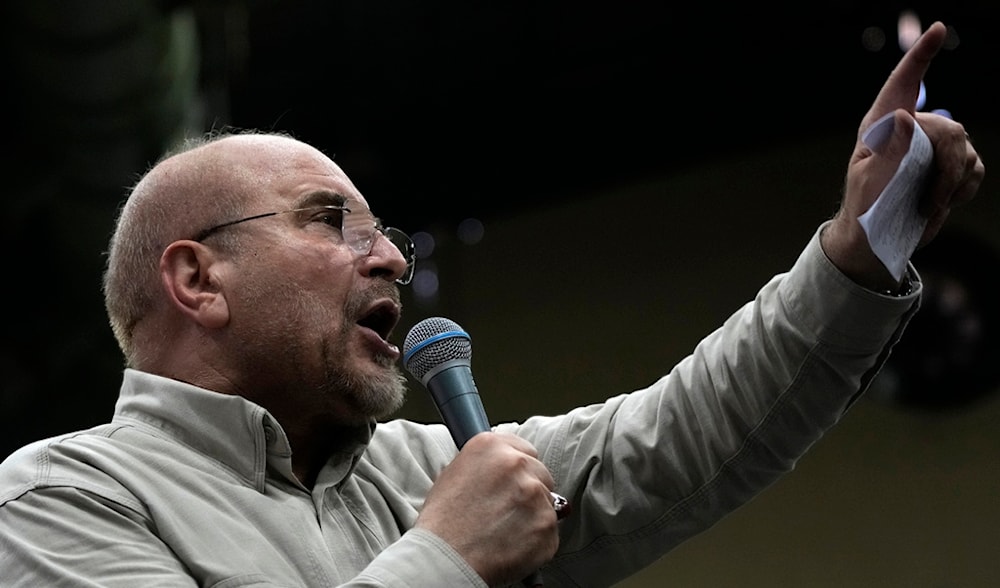
Iran's parliament speaker Mohammad Bagher Ghalibaf speaks at his campaign gathering in Tehran, Iran, Wednesday, June 26, 2024. (AP Photo/Vahid Salemi)
Iran's chief negotiator Mohammad Bagher Ghalibaf said Wednesday that Tehran is fighting an existential war with the United States, whose goals go beyond toppling the Iranian government to breaking up the country itself.
"We have never welcomed war, and we never will," Ghalibaf stressed. "However, we must always remain fully prepared to fight and stand firm to the very end in defense of our national security and interests."
He said diplomacy remains a parallel track. "We must also use diplomacy and negotiations to advance and safeguard our national interests," he said.
He added that Iran's posture, in war or at the negotiating table, must stay anchored to national interests. "Our approach, whether to war or negotiations, must be grounded in our national interests and security, while remaining realistic and focused on the long term," he said.
Ghalibaf stressed self-reliance as Iran's only viable path forward. "We have no choice but to rely on our own strength," he said.
On the memorandum of understanding with Washington, he warned Tehran's commitment is conditional. "If Iran does not benefit from the memorandum of understanding, we have no reason to remain committed to it," he said.
Iran suspends commitments, talks after US violations
Tehran has suspended parts of its commitments in response to Washington's failure to uphold its own obligations, Iranian Foreign Ministry spokesperson and member of the country's negotiating delegation Esmaeil Baghaei said on Wednesday, stressing that Iran currently has "no agenda for negotiations" and is instead fully focused on defense.
Baghaei said Iran's commitments remain valid only as long as the other party abides by its obligations.
"Once the other party [Washington] violated its commitments, we likewise refrained from implementing our obligations wherever necessary," he said, emphasizing that any understanding is fundamentally based on reciprocal commitments and responsibilities.
He added that such an understanding retains value for the Islamic Republic only insofar as it safeguards the country's interests and national security, declaring, "We currently have no agenda for negotiations, and our focus is entirely on defense."


