
Hezbollah's ambush: One of 'Israel’s' worst military failures
 5 Min Read
Israeli media reports highlight internal assessments of a recent confrontation in southern Lebanon, focusing on operational challenges, casualties, and failures in planning and intelligence coordination.
-
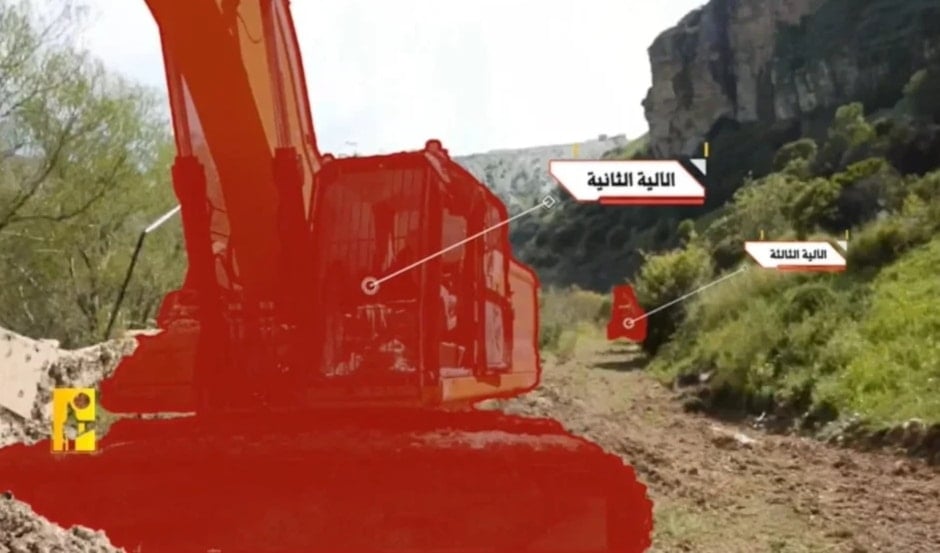
Military vehicles abandoned by Israeli soldiers in southern Lebanon following the failed operation on Monday,April 6, 2026 (Islamic Resistance in Lebanon Military Media)
Senior Israeli military officials have acknowledged that the ambush in the town of al-Taybeh, near the Litani River in southern Lebanon, represents “one of the most serious failures in the current war,” according to "Israel’s" Channel 12.
The broadcaster reported that, during the Litani River ambush, most members of the elite Yahalom unit were severely wounded within a short period of time.
It added that the confrontation “will be remembered as one of the most severe since the resumption of fighting in Lebanon,” noting that the incident is likely to be recorded in military history not only because of the intensity of Hezbollah’s firepower and the scale of casualties, but also due to failures in planning.
Channel 12 further stated that the episode was “not merely an operational failure, but also a failure in intelligence and broader situational assessment.”
Citing accounts from an Israeli occupation soldier and military officials, the report described it as “the most difficult battle ever experienced” in Lebanon or Gaza.
Hezbollah ambush halts Israeli advance near Litani River
Earlier today, Israeli media revealed detailed accounts of a large-scale ambush carried out by Hezbollah fighters between the Mhaysibat area in the town of Taybeh and Qantara (Baydar al-Nahr), leaving one Israeli soldier dead and around 20 troops and officers wounded, and ultimately forcing a full IOF withdrawal.
The ambush targeted an Israeli force attempting to execute a river crossing operation, leading to the failure of what was described as a sensitive military mission and halting efforts to expand operations beyond the Litani River.
According to Israeli Channel 15, the targeted force consisted of a joint unit combining the 890th Battalion of the Paratroopers Brigade and the elite Yahalom engineering unit. The force had been deployed on what was described as a “critical” mission to seize territory across the river toward the entrance of Qantara.
Preparations for the operation reportedly lasted approximately 36 hours and included extensive engineering equipment, such as bridging equipment, armored bulldozers, and inflatable boats intended to facilitate the crossing and secure a forward foothold.
As the force advanced deeper, its movement was detected, triggering the ambush phase.
Intensive fire barrage executed within minutes
Israeli reports describe the ambush as beginning with a sudden and highly concentrated barrage involving dozens of mortar shells and rockets fired simultaneously within minutes, all targeting the exact rally point of the Israeli unit.
This level of fire concentration suggests pre-calibrated targeting coordinates and real-time surveillance, indicating a structured and заранее prepared combat system.
During one of the salvos, a sergeant was killed, while a large number of soldiers sustained injuries, overwhelming the unit’s immediate operational capacity.
Evacuation attempts collapse under sustained fire
As Israeli forces attempted to evacuate the wounded under continuous fire, division command reportedly faced a critical decision: proceed with the mission despite the compromised element of surprise, or order a withdrawal.
With casualties mounting and the operational exposure increasing, the element of surprise was lost, rendering the crossing attempt unfeasible. The situation deteriorated into a defensive stance rather than an offensive maneuver.
On the ground, the Yahalom unit withdrew first, leaving behind significant engineering assets, including bulldozers, inflatable boats, and bridging equipment.
The 890th Battalion reportedly remained within the ambush zone for over an hour, attempting to stabilize the situation before a final disengagement order was issued. The operation ended in a full withdrawal without recovering the equipment.
Israeli media noted that Hezbollah later published documentation showing the abandoned equipment left in Lebanese territory.
Parallel ambush disrupts broader Israeli expansion plan
In parallel, Channel 13 reported on a related operation aimed at expanding military activity beyond the Litani River near the Khardali area.
A similar force composition, paratroopers supported by Yahalom, attempted to establish a field bridge to enable the passage of additional troops. However, this force was also detected and came under heavy fire from at least three coordinated fire units.
The attack included a mix of rockets and mortar shells, indicating a layered fire system. The result mirrored the first ambush: one soldier killed, several wounded, including a senior officer, and a forced withdrawal.
Multiple engineering vehicles destroyed, expansion plan frozen
Following the confrontation, Israeli forces reportedly abandoned three military bulldozers and additional engineering equipment in the area.
Military analysis cited by Israeli media concluded that the ambush led to the freezing of the planned expansion phase in this sector, reflecting the operational impact of the Resistance's actions and resilience.
Earlier, Hezbollah’s operations room issued a statement confirming that its fighters had successfully lured Israeli forces into a pre-planned ambush along the Taybeh–Qantara axis on the Lebanese-Palestinian border.
According to the statement, the operation resulted in significant material losses, including the destruction of 10 Israeli tanks and two bulldozers, in addition to casualties among Israeli occupation forces.


