
In security breach, IOF troops used Lebanese SIM cards: Israeli media
 4 Min Read
A reported security violation inside the Israeli military involved reserve soldiers using Lebanese SIM cards while operating in south Lebanon.
-
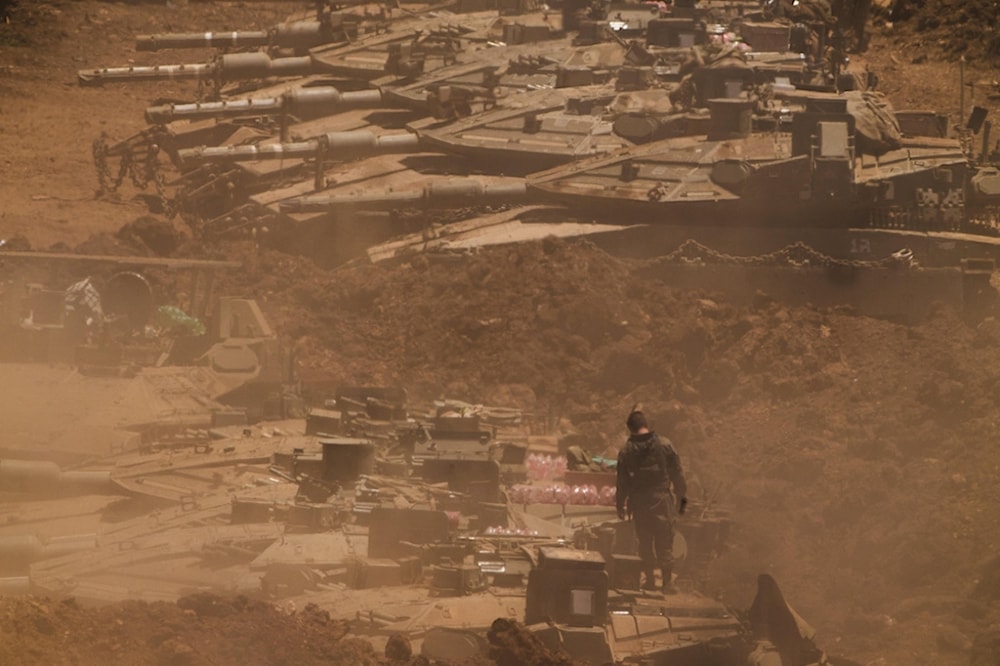
An Israeli soldier works on a tank near the border with Lebanon in northern occupied Palestine, Wednesday, July 1, 2026. (AP Photo/Ariel Schalit)
Israeli reserve soldiers reportedly used Lebanese SIM cards to communicate during military aggressions in south Lebanon, in a "serious security violation," as worded by Israeli media.
The Israeli website "Zman Yisrael" reported that the incident was discovered on Friday and involved reserve soldiers from the 699th Paratroopers Battalion, who allegedly purchased digital SIM cards (eSIMs) from Lebanese sources without authorization.
According to the report, the soldiers used the Lebanese SIM cards to improve cellular communication, including exchanges in classified and operational WhatsApp groups.
Israeli military investigates security breach
The report said the use of Lebanese SIM cards meant that soldiers operating in what was considered a combat zone were exchanging operational information through communication devices purchased from an enemy state without approval from the Israeli military.
Sources cited by the website said this was likely not the first time such a practice had occurred, adding that almost all soldiers in the battalion were involved.
The sources warned that the use of unauthorized foreign communication services could potentially expose forces operating in the field to security risks during military activities.
Violations reported amid ongoing Israeli aggression on Lebanon
The reported security breach comes as Israeli forces continue military aggression against Lebanon despite a declared ceasefire agreement.
The Israeli occupation has continued demolitions and explosions targeting civilian homes in southern Lebanon, while Israeli drones continue violating Lebanese airspace, according to reports.
In the early hours of Sunday, Al Mayadeen's correspondent in South Lebanon reported that the Israeli occupation carried out a large explosion in the town of Hadatha.
Earlier on Friday morning, Israeli forces carried out demolition and detonation operations on several caves and houses in the vicinity of al-Mansouri and Majdal Zoun in southern Lebanon, according to local reports.
Additionally, Israeli forces carried out very massive explosions at midnight in the areas of Yohmor Al-Shaqif, Arnoun, and Kfar Tebnit in southern Lebanon, with their echo reverberating massively and unprecedentedly across all areas of the South, reaching as far as the Iqlim Al-Kharroub and Khaldeh areas, reports said.
700 tons of explosives in vicinity of UNESCO-listed site
In detail, Israeli forces set off a massive underground explosion beneath the UNESCO-listed Shaqif Fortress, also known as Beaufort Castle, in the Arnoun area of southern Lebanon overnight Thursday into Friday, using an estimated 700 tons of explosives, according to a joint statement by the Israeli prime minister's office and the Ministry of War.
The explosions caused damage to nearby houses, while residents reported that the blast was powerful enough to be heard across much of southern Lebanon, with reports of the explosion being heard as far as Saida and Iqlim al-Kharroub in Mount Lebanon's Chouf region, local residents said.
In Nabatieh, residents reported dust raining down over the area in the aftermath of the explosions in Arnoun.
Al-Shaqif Fortress is one of South Lebanon's most significant archaeological landmarks, a nearly 900-year-old Crusader-era fortress.
According to historical reports, "Israel" has bombed the fortress more than once, first in 1982, during the Battle of Beaufort, when the castle was heavily shelled and captured, and second, from 1982 through 2000, when Israeli forces used it as a base and later carried out significant demolitions before withdrawing in 2000.
These attacks come at a time when the political authority in Lebanon is negotiating directly with "Israel" under American sponsorship, resulting in the so-called framework agreement.


