
Iran condemns US attacks on oil tanker, threatens response
 4 Min Read
Iran condemns US attacks on an Iranian oil tanker and a communications tower in Qeshm, accusing Washington of violating the ceasefire and warning of consequences for regional states involved.
-
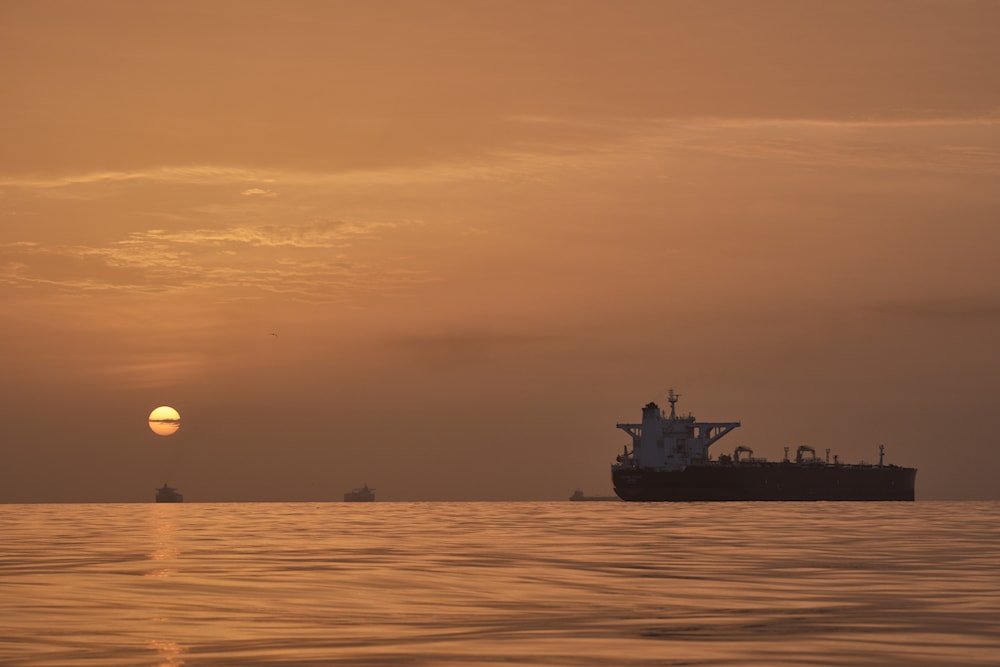
The sun rises behind tankers anchored in the Strait of Hormuz off the coast of Qeshm Island, Iran, on April 18, 2026. (AP Photo/Asghar Besharati)
Iran's Foreign Ministry strongly condemned US attacks targeting an Iranian oil tanker in the Strait of Hormuz and a communications tower on Qeshm Island in southern Iran.
In a statement, the ministry denounced the United States' use of regional countries' territories and resources to carry out hostile actions against Iran, calling them violations of international law and the United Nations Charter.
The Foreign Ministry said the strikes not only breached the ceasefire agreement but also constituted a clear violation of the principle prohibiting the use of force under international law.
The statement added that Iran considers the attacks a direct act of aggression and reiterated its position that states facilitating such actions bear responsibility for their consequences.
Iran points to regional involvement
Tehran asserted that the attacks were launched from Kuwait and Bahrain, holding their authorities responsible for their role in the attack.
The ministry's statement added that any country that allows its land, airspace, territorial waters, military facilities, or bases to be used in support of military aggression against Iran would be violating international law and the principle of good neighborliness.
It stressed that Iran reserves the right to defend its territorial integrity and national sovereignty and would use all available means to respond to acts of aggression.
Additionally, Tehran warned that any retaliation could include targeting the source and origin of attacks carried out against the country.
Iran further stated that responsibility for the repercussions of the attacks rests with the United States, Israeli authorities, and any parties that provide support, facilities, or logistical assistance for military operations against Iran.
'We will not allow Washington to overstep its bounds', says two Iranian officials
Major General Mohsen Rezaei, a member of Iran’s Expediency Discernment Council, affirmed that his country "will not allow the United States to overstep its bounds, neither in the negotiations nor during the ceasefire process".
In a post on X, Rezaei vowed that "the response to any shooting or attack will be a barrage of missiles and drones", adding that history will not repeat itself and "the aggressor will be punished swiftly".
نه در مذاکره و نه در روند آتشبس اجازه زیادهخواهی به آمریکا را نخواهیم داد. پاسخ هر شلیک و تجاوزی، رگباری از موشک و پهپاد است. تاریخ به عقب باز نمیگردد و متجاوز به سرعت تنبیه خواهد شد.
— محسن رضایی (@ir_rezaee) June 3, 2026
Nikzad: Sayyed Khamenei is aware of all aspects of the talks
In this context, the Deputy Speaker of the Iranian Parliament, Ali Nikzad, confirmed in an interview that the Leader of the Revolution and the Islamic Republic, Sayyed Mojtaba Khamenei, is "fully informed of all aspects of the negotiations".
Nikzad said the red lines set by the Leader of the Revolution in negotiations remain "on the agenda", adding: "We do not trust American promises, and their crimes against the Iranian people must always be highlighted".
IRGC retaliates against US forces in Kuwait, Bahrain
Iran's Islamic Revolution Guard Corps (IRGC) announced that at dawn Wednesday, missile and drone strikes targeted the United States Fifth Fleet headquarters and other American military positions in the Gulf following renewed US attacks on Iranian territory and infrastructure.
The IRGC said that the operation came after a US strike damaged an Iranian oil tanker near the Strait of Hormuz and another attack hit a telecommunications tower south of Qeshm Island.
In response to the US attacks, the IRGC Aerospace Force and the IRGC Navy targeted multiple enemy assets across the Gulf.
"In response to this aggression and violation of the Strait of Hormuz regulations, a vessel belonging to the American Zionist enemy named Panaya was targeted by missiles from the IRGC Navy," the IRGC Public Relations Office said, explaining that the attack is in retaliation for the US attacks on the oil tanker.
The IRGC also targeted a US helicopter squadron stationed in a regional base. The IRGC also struck the US Fifth Fleet headquarters in Bahrain, using one-way attack drones and missiles. "We had previously warned that if aggression occurred, the response would be different and heavier, and we acted accordingly," the IRGC underlined.


