
Iran holds firm on MOU fulfillment as US weighs next move | Exclusive
 11 Min Read
Professor Mohammad Marandi and former CIA officer Ray McGovern discuss Iran’s MOU demands, Hormuz, US strategy and the shifting regional order.
-
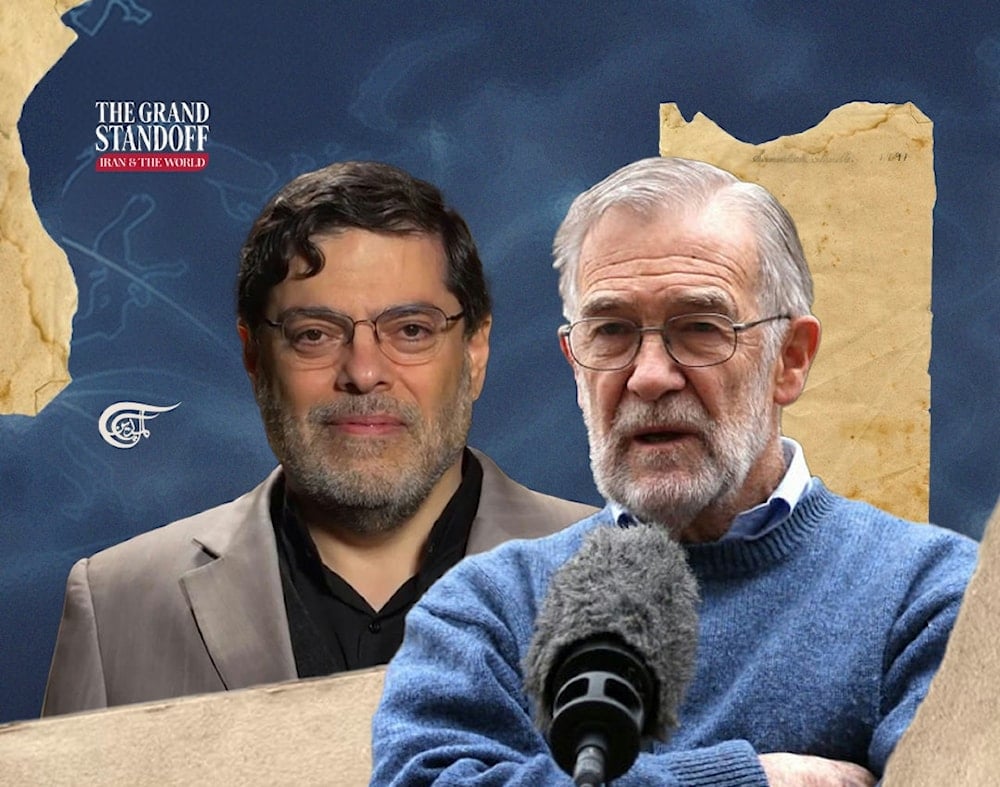
Iranian professor of English literature and Orientalism at the University of Tehran, Mohammad Marandi, and former CIA officer, Ray McGovern, for Al Mayadeen's The Grand Standoff: Iran and the World program (Al Mayadeen)
Iran is holding to the implementation of its existing agreement with the United States as Washington weighs how to end the war while preserving room for a political exit, with analysts Mohammad Marandi and former CIA officer Ray McGovern offering assessments of what comes next.
Speaking on Al Mayadeen's The Grand Standoff: Iran and The World, Professor Mohammad Marandi said Tehran does not intend to accept a new arrangement unless the commitments already contained in the Memorandum of Understanding (MOU) and the Seven-Point Plan are implemented. McGovern, meanwhile, argued that the nuclear issue could provide President Trump with a possible pathway toward de-escalation and reopening key regional waterways.
For Marandi, the central issue is not negotiating new terms but ensuring that Washington fulfills obligations it has already accepted. He maintained that Iran will not sign an agreement while Lebanon remains under occupation, the genocide in Gaza continues, or Iranian assets remain frozen in the United States.
“Every single one of them has to be implemented by Trump,” Marandi stressed, arguing that Trump has already signed the agreement and that Tehran therefore sees implementation, rather than further negotiations, as the decisive issue.
Tehran sees implementation as the central obstacle
Marandi said Iran's reluctance to move forward stems from a longstanding pattern in US-Iranian relations in which Washington negotiates one arrangement while subsequently taking a different course.
He pointed to the MOU as an example, arguing that Washington implemented only the provision concerning the lifting of the siege on Iranian ports, which he said was done because the United States wanted Iranian oil and other resources to reach global markets.
According to Marandi, other provisions were not implemented, including the transfer of Iranian assets, the removal of sanctions on Iran's oil industry, and measures related to Lebanon and Gaza.
“The only thing that matters is implementation,” he said, arguing that Tehran cannot be expected to carry out its side of the bargain until Washington demonstrates that it is prepared to fulfill its own obligations.
He also cited previous rounds of US-Iran negotiations, including talks mediated by Oman, as reinforcing Tehran's distrust of US commitments. Marandi said Iran therefore sees the actual implementation of US obligations as the necessary first step before it makes further moves.
Hormuz remains a source of pressure on US
Marandi also linked the diplomatic deadlock to the situation in the Strait of Hormuz, arguing that Iran retains the ability to exert pressure on Washington through the strategic waterway.
He maintained that the Strait is not operating under normal conditions despite US efforts to portray the situation otherwise, and connected the disruption to broader economic pressure.
At the same time, Marandi explained that Iran has not sought to completely shut the Strait because it does not want friendly countries to be deprived of vital energy supplies. Iran, he said, allows a certain amount of oil to pass, including Iranian oil alongside other shipments, while restricting the flow sufficiently to maintain pressure on Washington.
His argument is that this calibrated approach gives Tehran leverage without deliberately strangling countries with which it maintains friendly relations, including China and other members of BRICS and the Shanghai Cooperation Organization.
McGovern sees a nuclear 'exit ramp' for Trump
McGovern offered a different assessment of how Washington could move toward de-escalation. He argued that the nuclear issue, which he said had received insufficient attention in the discussion, could provide Trump with a political “exit ramp.”
He pointed to Iran's enrichment program and argued that Washington could accept limited enrichment while obtaining a commitment from Tehran not to pursue a nuclear weapon. In his assessment, such an arrangement could allow Trump to present the outcome domestically as having achieved a major US objective.
“What Trump can do is to say, okay, we'll allow a little bit of enrichment, and we'll get a promise that the Iranians will never work on a nuclear weapon,” McGovern said.
He argued that such a formula could give the US president a way to claim progress while addressing Washington's immediate interest in reopening the Strait of Hormuz and potentially Bab al-Mandab.
McGovern also said there is a disconnect between US public understanding of Iran's nuclear program and the intelligence community's knowledge of it.
US military power faces questions over its regional role
The former CIA officer also questioned Washington's ability to sustain its existing regional posture, particularly after the military confrontation with Iran.
Drawing on his experience as a former military officer, McGovern said military planners traditionally assess whether they have sufficient ammunition before entering a battle. He argued that the current situation has exposed limitations in US military capacity.
He linked those limitations to Washington's efforts to maintain a security umbrella over its Gulf allies, saying Iran had demonstrated its ability to strike regional US-linked targets while the United States struggled to achieve a rapid victory.
McGovern also highlighted President Masoud Pezeshkian's emphasis on “mutual security,” arguing that regional security cannot be achieved through a one-sided security framework. “In reality, there is no security without mutual security,” he said.
For McGovern, the central difficulty is that Iran may not represent a direct threat to the United States, while its confrontation with “Israel” creates a different strategic calculation for Washington.
'Israel' central to McGovern’s assessment
McGovern repeatedly identified US relations with “Israel” as a key factor shaping Washington's policy toward Iran.
He argued that the Trump administration's close relationship with Israeli leaders creates uncertainty over the direction of the war and raised particular concern about the possibility of further Israeli escalation.
McGovern also connected Netanyahu's political circumstances to his assessment, pointing to upcoming elections and the potential consequences for the Israeli prime minister if he loses office.
He said this created a personal dimension to the political calculations surrounding the war, while warning that escalation could become particularly dangerous if the Israeli leadership faced "a severe strategic or political setback."
McGovern's most serious concern centered on the possibility of nuclear escalation. He raised the prospect of "Israel" using nuclear weapons in an extreme scenario and said he remained worried about whether Washington would be consulted beforehand.
He stated this as his own professional concern rather than a prediction, saying the possibility was one that kept him awake at night.
Iraq becomes a test of the changing regional order
Marandi said that the withdrawal or reduction of US forces from Iraq, alongside developments in Syria, is evidence of a broader regional transformation. He argued that the destruction or damage to US military bases had further weakened Washington's position.
He nevertheless stressed that troop withdrawals do not amount to the end of US influence over Iraq.
According to Marandi, Washington continues to exercise substantial influence over Iraq's economy, particularly through arrangements involving Iraqi oil revenues. He argued that the Iraqi struggle for sovereignty therefore extends beyond the military presence to financial and political influence.
“The withdrawal of U.S. troops in the country is a major milestone,” Marandi said, while stressing that the US embassy presence, its footprint in northern Iraq, and its broader economic influence remain issues for Baghdad.
He also credited Iraqi armed forces, the Popular Mobilization Forces, and public pressure with contributing to changes in the US military posture.
Iran-Iraq ties emerge as a broader strategic question
Marandi placed particular emphasis on the relationship between Iran and Iraq, describing the two neighboring countries as possessing significant economic potential because of their populations, resources, geography, and shared border.
He argued that closer economic cooperation could make the two countries a major regional economic center, while US sanctions and financial restrictions have constrained that potential.
Marandi pointed specifically to restrictions affecting banking cooperation and payments for Iranian gas, arguing that Washington seeks to limit economic integration between Tehran and Baghdad.
“The stronger Iran and Iraq are, the weaker is the U.S. empire in our region,” he said, presenting closer bilateral economic ties as part of a broader shift away from US dominance.
He also linked the issue to regional security, arguing that Iraq's lack of effective air defenses leaves it vulnerable to Israeli military activity while Washington prevents Baghdad from independently developing sufficient defensive capabilities.
McGovern draws a historical line from Iran to Iraq
McGovern responded to the discussion of Iraq's oil wealth by invoking the history of foreign control over Iranian oil.
He cited the 1953 overthrow of Prime Minister Mohammad Mosaddegh after his government sought greater Iranian control over oil revenues, presenting the episode as an earlier example of foreign powers intervening when a government challenged external control over its resources.
He then connected that history to the post-1979 period and the Iran-Iraq War, arguing that Washington's regional policies have repeatedly been shaped by strategic and economic interests.
McGovern also referred to the 2003 invasion of Iraq and his view that neoconservative and pro-"Israel" figures played a major role in shaping the policy that led to the war.
His broader argument was that the same strategic outlook has continued to influence US policy toward Iran.
A shift toward a multipolar order
Marandi said that the war was a major setback for US regional hegemony and said discussions at the Valdai conference in Moscow reflected growing expectations of a transition toward a multipolar international system.
Speaking on Al Mayadeen’s The Grand Standoff: Iran and the World, Professor Mohammad Marandi said there is "great optimism in Moscow" following the war, with participants at the Valdai Conference viewing recent developments as a potential turning point toward a multipolar world.… pic.twitter.com/ByxtCrhQJV
— Al Mayadeen English (@MayadeenEnglish) October 1, 2026
He argued that developments in Iraq, the changing US military posture, and broader economic pressures were signs that the old order was losing its dominance.
McGovern similarly pointed to a strategic shift toward the East, citing closer relations between Moscow and Beijing, China's expanding international role, and the DPRK's position within the emerging geopolitical landscape.
He referred to high-level gatherings in Beijing and planned meetings between Trump and Chinese President Xi Jinping as examples of an increasingly important China-Russia-centered diplomatic environment.
For McGovern, the significance extends beyond any individual meeting: he sees the broader realignment as evidence that the international balance is changing.
What comes next for Washington and Tehran?
Marandi's position is that Tehran has already made its position clear: the United States must implement the commitments it has signed before Iran makes further concessions. In his view, continued pressure through the Strait of Hormuz gives Tehran leverage to insist on implementation.
McGovern, by contrast, sees room for Washington to construct a political exit centered on the nuclear issue, while warning that the US relationship with “Israel” could complicate any effort to de-escalate.
Both nevertheless said the United States is facing a changed strategic environment. For Marandi, the pressure is evidence of a broader decline in US hegemony and the emergence of stronger regional and Global South relationships. For McGovern, the same developments expose the limits of US military power and underscore the risks of further escalation.
Their assessments ultimately point to the same unresolved question: whether Washington will seek to preserve its existing regional posture or adapt to a shifting balance of power.


