
Iran marks 47th anniv. of the Fajr decade amid external threats
 5 Min Read
The 47th anniversary of the return of the late founder of the Islamic Republic, Imam Khomeini, after several years in exile, and the end of the US-backed Pahlavi regime in 1979, is being marked by public gatherings and official messages emphasizing resilience, deterrence, and a return to normal life after armed riots.
-
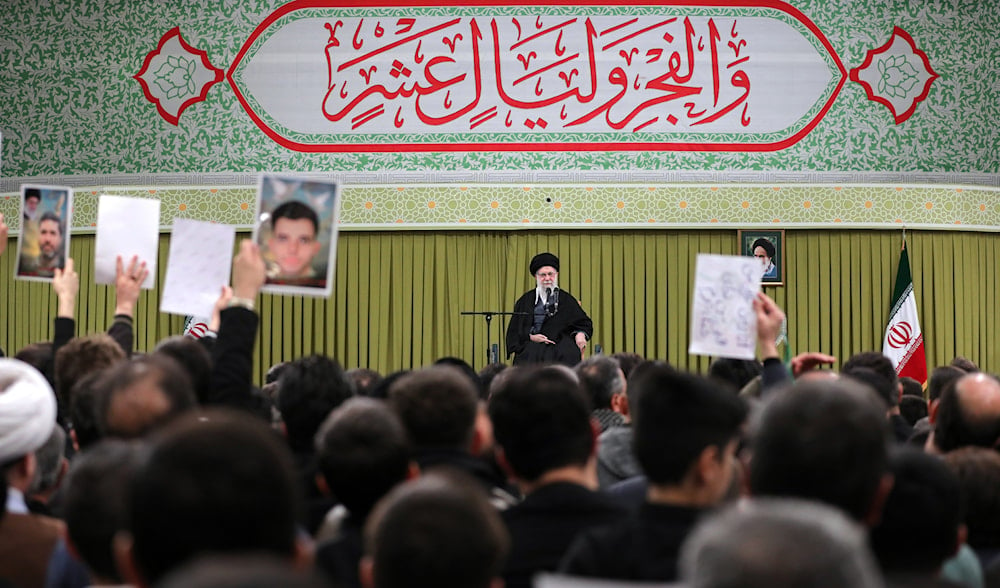
Iranian leader Sayyed Ali Khamenei met with thousands of people from various walks of life on the occasion of the beginning of the celebrations of the 47th anniversary of the victory of the Islamic Revolution. (@Khamenei_m / X)
Iran is celebrating the 47th anniversary of the Fajr decade, marking the return of Ayatollah Ruhollah Mousavi Khomeini on Sunday, February 2, 2026, in a climate marked by heightened external pressure.
This year’s anniversary comes as US President Donald Trump has issued threats of a potential attack on Iran, following days of armed riots that resulted in the deaths of Iranian security officers as well as civilians.
From Tehran, Al Mayadeen's correspondent reported that recent remarks by Sayyed Ali Khamenei were widely understood as a clear warning, signaling that any attack on Iran would be met with retaliation targeting US interests across the region, as well as deep inside the Israeli entity. Our correspondent noted that this rhetoric coincides with diplomatic efforts pursued by Tehran, alongside regional mediation attempts, particularly by Turkey.
"تصريحات السيد الخامنئي تأتي بالتزامن مع الجهود الدبلوماسية والوساطات، مؤكّدًا أن الشروط الإيرانية لا تزال قائمة"
— قناة الميادين (@AlMayadeenNews) February 1, 2026
مراسل #الميادين أحمد البحراني@Al_bahrani1983 #إيران
#إيران_جمهورية_الثبات pic.twitter.com/YNsA6EFJAJ
On the popular front, Al Mayadeen’s correspondent in Shiraz said the historic Zand Street is witnessing national celebrations, as the city traditionally does during major milestones. She described Shiraz, renowned for its poetry and cultural heritage, as a city that has consistently taken principled stances, playing an active role during the pivotal moment of the revolution’s victory.
Its residents, she said, were deeply involved in the popular and intellectual movements that accompanied the revolution and stood firmly behind calls for change at the time, a sense of national engagement that remains evident today.
Meanwhile, in the city of Zanjan, which had previously experienced armed riots, an Al Mayadeen correspondent reported that the historic Zanjan bazaar is now crowded with shoppers, reflecting a return to normal daily life as the country commemorates the anniversary of the revolution and its enduring political and popular significance.
Sayyed Khamenei warns US war on Iran would ignite regional war
Earlier today, Iranian Leader Sayyed Ali Khamenei cautioned the United States against carrying out a war against Tehran, warning that such a war would escalate into a regional war.
Speaking to a gathering of citizens, Sayyed Khamenei said Iran does not seek war and will not attack any country, but stressed that "the Iranian people will strike back decisively against anyone who aggresses against them."
He added that talk of war and military mobilisation against Iran is not new, pointing to historical instances where the country faced similar pressures. He framed the confrontation with the United States in simple terms: "Washington wants to swallow Iran, but the brave Iranian people and the Islamic Republic stand firmly in the way."
Responding to US President Donald Trump’s repeated threats and claims that “all options are on the table,” including deploying warships to the region, Sayyed Khamenei said such moves do not intimidate Iranians, asserting that the people “do not fear these threats.”
Regarding recent armed riots in the country, the Iranian leader described them as resembling a military coup targeting key government institutions, stressing that armed rioters targeted police stations, government buildings, IRGC facilities, banks, and mosques, and even burned copies of the Quran.
IRGC: Enemy movements under full control
Iranian Brigadier General Ahmad Vahidi, Deputy Chief of Staff of the Iranian Armed Forces, said that all enemy movements are under complete surveillance and control, adding that Iran’s military readiness now surpasses levels seen before the last attack in June 2025.
Vahidi said the presence of foreign naval forces in the region is not new, describing it as part of a psychological warfare campaign that should not distract from normal life. He urged citizens to continue daily activities while remaining aware of media-driven narratives.
US could authorize strikes on Iran as early as Sunday
These remarks come amid reports that senior US military officials have warned the leadership of a key West Asian ally that US President Donald Trump could authorize military action against Iran "as early as Sunday," signaling how high tensions have climbed between Washington and Tehran.
According to multiple sources cited by Drop Site News on December 31, the allies were told that if the US decides to proceed, strikes could begin at the start of February, as part of broader planning that would go beyond targeting Iran’s nuclear and missile programs to include strikes on military sites and efforts aimed at disrupting the IRGC and senior leadership.
US war planners reportedly believe that weakening Iran’s leadership could spark mass internal protests and potentially accelerate a change of government, a strategy said to be encouraged by Israeli officials who have assured Trump that they could support installing a new government aligned with Western interests.


