
Iran not to agree to talks without lifting of sanctions: Rezaei
 3 Min Read
Mohsen Rezaei warns the US not to escalate the ongoing war in West Asia, stressing Iran’s resolve to reclaim its rights and lift sanctions before negotiations.
-
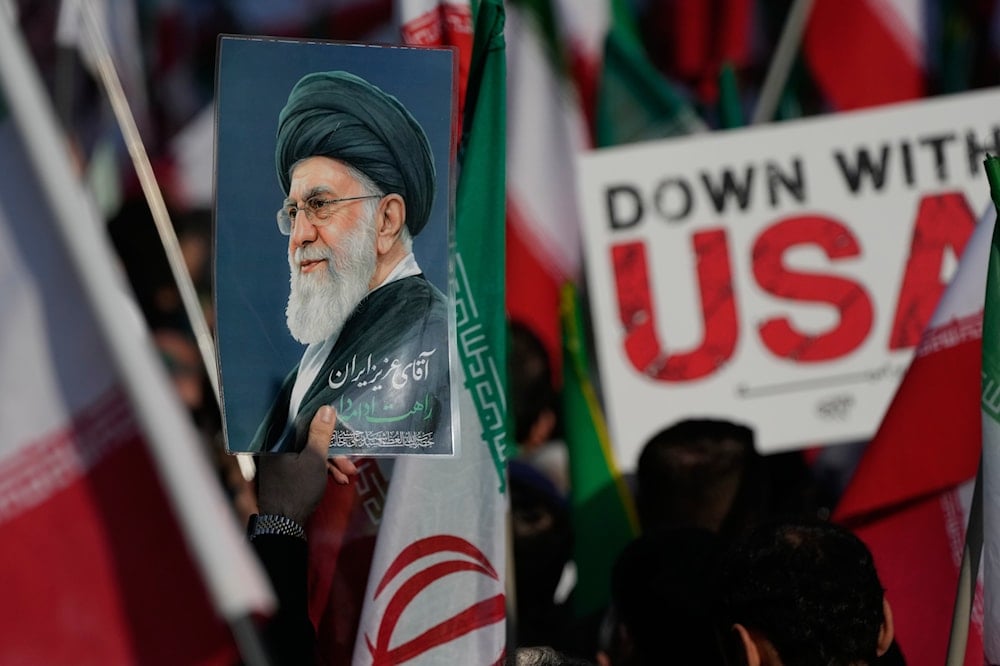
A poster of the late Iranian Leader Sayyed Ali Khamenei and an anti-US placard are carried in Tehran, Iran, on Wednesday, April 1, 2026 (AP)
Mohsen Rezaei, a member of Iran’s Expediency Discernment Council, has delivered a sharp warning to the United States, urging the senior officials and figures to step in and prevent the region from sliding into a full-scale war.
In a statement, Rezaei cautioned that the United States should not assume that a single “spectacular” military action would bring an end to the war.
“Do not think that the matter will end simply by carrying out a ‘remarkable’ act and then everything stops,” Rezaei said, addressing American officials.
He further stressed that Iran would continue its course of action until its adversaries “regret their actions,” vowing that Tehran would fully reclaim its rights, stating, “Reason does not permit us to give the enemy an opportunity to catch its breath."
No political process until sanctions are lifted, compensation provided
On the prospect of diplomacy, Rezaei questioned the feasibility of negotiations or a ceasefire under current conditions. He emphasized that no political process could begin unless "sanctions are lifted, and compensation is provided for damages" sustained by the Islamic Republic.
Rezaei also emphasized that if Iran were to close the vital shipping route, the global community would be unable to reopen it, and world powers would hesitate to take such a risk.
Highlighting domestic sentiment, he pointed to large public gatherings across Iran as a decisive message to the international community that national interests remain the top priority for Iranians.
Rezaei concluded by asserting that no political system other than the Islamic Republic could have successfully navigated such severe challenges.
Iran's largest barrage in weeks shatters 'Israel'
On April 1, Iran launched a wave of at least 10 ballistic missiles toward Tel Aviv as part of Operation True Promise 4, in what Israeli media described as one of the largest barrages in recent weeks, as strikes from both Iran and Hezbollah in southern Lebanon intensify.
The strikes reportedly caused direct impacts and resulted in confirmed casualties, including the collapse of a building in Petah Tikva. Several vehicles were also set ablaze, while additional impacts were reported in Ramat Gan and Holon. Extensive damage was also recorded in Rosh Haayin following missile strikes.
Air raid sirens sounded across Tel Aviv during the attack, interrupting live broadcasts as reporters at the i24NEWS studio were forced to halt coverage and seek shelter. The broadcast was subsequently transferred to an external correspondent.
Israeli emergency services reported operational difficulties as sirens continued to blare, complicating response efforts.
More than two million settlers reportedly fled to shelters, while military analysts acknowledged that the Israeli occcupation's air defense systems were facing an unprecedented challenge from the scale and intensity of the Iranian missiles.
Channel 14, citing military experts, described the barrage as the “most significant” since the second week of the war, noting that it coincided with a surge in rocket fire targeting northern areas from southern Lebanon, further escalating the security situation.


