
Iran rejects trap as Netanyahu seeks political gain: Israeli media
 3 Min Read
Iran avoids escalation with "Israel" as Israeli media reports Tehran is seeking to prevent provocations from benefiting Netanyahu politically.
-
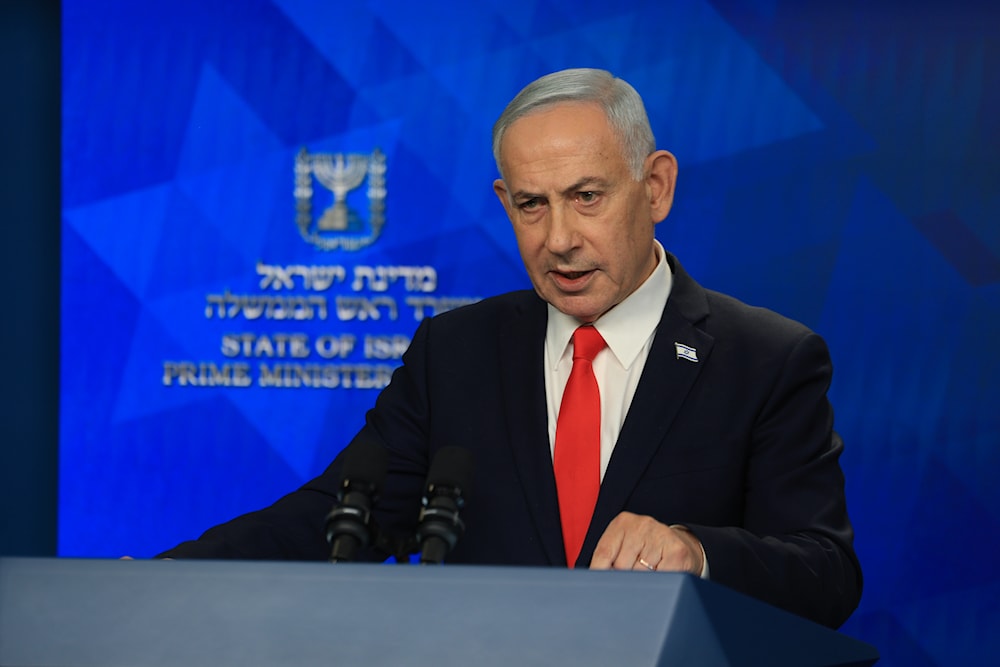
Israeli Prime Minister Benjamin Netanyahu holds a news conference in al-Quds, Occupied Palestine, June 15, 2026 (AP)
Iran is deliberately refusing to be drawn into provocations that could politically benefit Israeli Prime Minister Benjamin Netanyahu's government, according to Israeli media, which stated that Tehran’s approach is a tactic worthy of admiration.
Citing foreign sources, the site reported that Iranian Revolution Guard Corps (IRGC) officials are carefully refraining from opening fire on "Israel", determined not to “fall into the trap” of intentional provocations designed to pull "Israel" into a wider confrontation.
According to Israeli media, two strategic goals underpin this restraint: preserving global sympathy for Iran and continuing to isolate "Israel" diplomatically, including within the US political arena. The report also noted that US President Donald Trump has effectively prevented "Israel" from directly intervening in ongoing attacks, further reinforcing Tehran’s calculation to hold back.
Iran refusing to be dragged into an internal Israeli manoeuvre
At the same time, the site emphasised that Iranian leaders clearly understand that a renewed state of war with Israel would serve primarily as a political boost for Netanyahu. As such, the report stated, they "refuse to be dragged into an internal Israeli political manoeuvre".
The report also addressed the broader regional impact of US strikes against Iran and Tehran’s retaliatory responses, warning that the exchanges have expanded the confrontation and risked escalating into a wider regional crisis. These actions, the site added, have undermined efforts to restart diplomatic channels between Washington and Tehran.
On the economic front, the report reiterated concerns over global market stability and energy security, expressing fear of long-term damage to oil supplies through the strategic Strait of Hormuz, a critical chokepoint for global petroleum shipments.
US launches new aggression on Iran
The United States launched a new round of strikes against Iran on July 13, with CENTCOM stating the operation was ordered by President Donald Trump to degrade Tehran's ability to target vessels in the Strait of Hormuz.
The command said the strikes were directed to hold Iranian forces accountable, following days of escalating tensions due to US aggression attempting to challenge Iran's maritime role in the strategic waterway.
Iranian media reported multiple explosions across southern Iran, with state television confirming blasts near Tahrovi in Sirik, west of Bandar Abbas, and in Jask, where additional strikes followed at least three initial explosions.
Explosions were also reported on Qeshm Island, while Al Mayadeen's correspondent in Tehran said the attacks targeted transport routes, major ports, communications infrastructure, and economic facilities across the country.
Key ports, including Chabahar and Bandar Abbas, were hit, along with communications sites in Hormozgan Province and petrochemical areas in Khuzestan. At the same time, reports also indicated strikes near the Arak nuclear facility in Markazi Province.


