
Iran war reveals limits of international law framework: Report
 3 Min Read
A Washington Post opinion argues that the US strikes on Iran expose deeper limitations in international law’s ability to meaningfully distinguish between different types of armed conflicts.
-
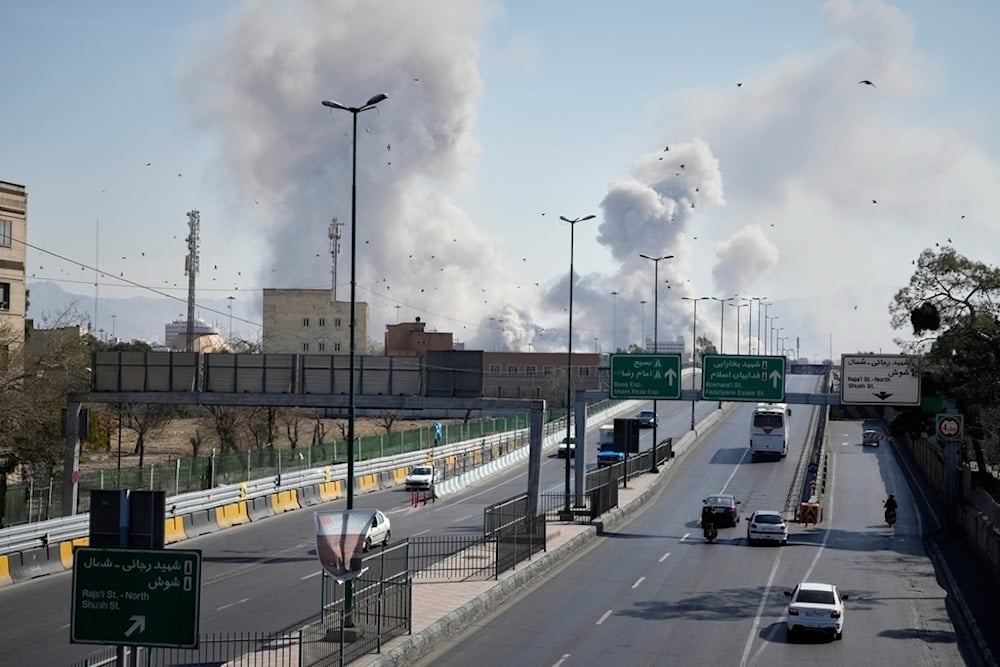
Plumes of smoke rise as strikes hit the city during the U.S.–Israeli aggression on Tehran, Iran, Thursday, March 5, 2026 (AP)
An opinion article published in The Washington Post argues that the ongoing US strikes on Iran have exposed what the author describes as deeper weaknesses in the international legal framework governing the use of force between states.
The piece, written by Hofstra University constitutional law professor Julian Ku, suggests that debates over the legality of the attacks on Iran reveal broader credibility problems within the current structure of international law.
Debate over legality of the strikes
According to Ku, a large segment of the international legal community views the US strikes as illegal under the United Nations Charter.
He cited Yale law professor Oona Hathaway, who described the attacks as “blatantly illegal.”
Many legal scholars argue that the UN Charter strictly prohibits the use of force except in cases of self-defense following an armed attack or when authorized by the UN Security Council.
Because neither condition clearly applies to the strikes on Iran, critics contend that the operations violate the core principles of the international legal system established after World War II.
However, the article notes that the US government and some legal analysts have advanced counterarguments. One argument frequently cited in Washington is that repeated attacks by Iranian-backed resistance groups could trigger the right to collective self-defense. Others point to evolving interpretations of international law suggesting that force may be justified when a state is unwilling or unable to prevent armed groups operating from its territory.
Ku wrote that even these arguments struggle to overcome what he described as the “plain meaning” of the UN Charter’s restrictions on the use of force.
While acknowledging that the strikes may violate traditional interpretations of the charter, Ku argued that the larger issue lies with the structure of international law itself.
According to the article, the current legal framework treats all uses of force outside the charter’s narrow exceptions as equally illegal. Ku suggested this creates what he described as a “flattening effect,” where vastly different military actions are judged under the same legal category.
Call for a broader legal approach
The article concludes that international law may need to evolve beyond what the author described as rigid formalism.
Ku argued that legal analysis of war should incorporate broader normative considerations, including the severity of threats faced by states, the proportionality of military responses, the risks to civilians, and the wider consequences for international stability.
According to the author, international law’s authority ultimately depends on its ability to align legal judgments with widely shared moral intuitions about war and aggression. If the framework fails to distinguish meaningfully between different conflicts, Ku warned, it risks losing credibility as a mechanism for restraining powerful states.


