Iran will not negotiate with the United States: Larijani
 4 Min Read
Larijani says Tehran will not negotiate with Washington, rejecting Trump's claims that Iranian officials sought dialogue and accusing the US of sacrificing its soldiers for "Israel."
-
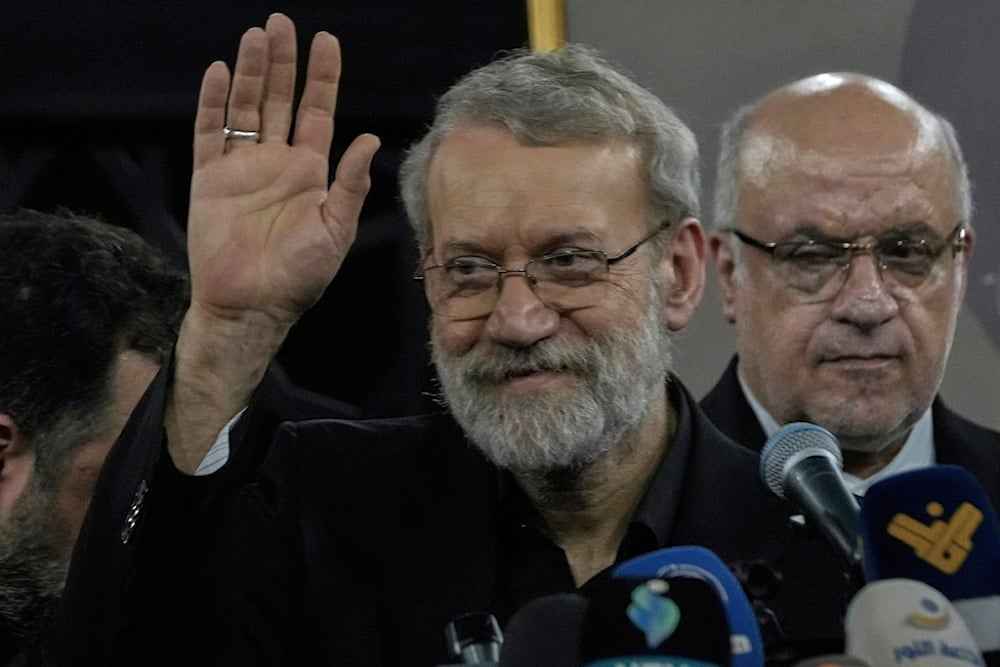
Iranian Secretary of Supreme National Security Council Ali Larijani, waves as he leaves the grave of Martyred Hezbollah leader Sayyed Hassan Nasrallah, in Beirut, Lebanon on August 13, 2025 (AP)
Ali Larijani, Secretary of Iran's Supreme National Security Council, flatly rejected any negotiations with the United States on Monday, pushing back against reports that Tehran had signaled openness to talks with Washington and accusing US President Donald Trump of turning the region into chaos.
"We will not negotiate with the US," Larijani wrote on X, directly contradicting Trump's claim in an interview with The Atlantic that Iran's new leadership had sought to engage with him. Trump told the magazine that Iranian officials "want to talk" and that he had agreed to dialogue, though he offered no timeline or specifics.
لن نتفاوض مع الولايات المتحدة https://t.co/cvEweU8ODj
— Ali Larijani | علی لاریجانی (@alilarijani_ir) March 2, 2026
The statement was a direct rebuttal to a Wall Street Journal report claiming Larijani himself had been involved in an initiative to resume talks with Washington through Omani intermediaries.
Larijani went further in another post, accusing Trump of having turned his "America First" slogan into "Israel First" and sacrificing American soldiers in pursuit of Israeli regional ambitions.
ترامپ با "آرزوهای واهی" منطقه را به آشوب کشاند و حالا نگران تلفات بیشتر نیروهای امریکایی است.
— Ali Larijani | علی لاریجانی (@alilarijani_ir) March 2, 2026
وی با عملکرد متوهمانه، شعار خودساخته "اول امریکا" را به "اول اسرائیل" تبدیل کرد و سربازان امریکایی را فدای قدرت طلبی اسرائیل نمود... ۱/۲
"With delusional actions and new lies, Trump is once again making US soldiers and their families pay the price for his personality cult," he wrote, adding that Iran was acting in self-defense. "The Iranian people are defending themselves, and the Iranian armed forces have not started the invasion."
Ongoing US-Israeli aggression against Iran
The exchange comes as the United States and "Israel" continue their joint aggression against Iran, which has led to the martyrdom of Sayyed Ali Khamenei and several senior Iranian officials.
Iranian President Masoud Pezeshkian has said a temporary leadership council, comprising himself, the judiciary chief, and a member of the Guardian Council, has assumed the duties of the martyred leader in the interim.
Trump, speaking separately to the Daily Mail and the New York Times, suggested the military campaign could last around four to five weeks. "It's always been a four-week process," he told the Daily Mail, adding that Iran's size meant operations could take that long or less.
Araghchi: Iran was attacked twice during negotiations
Iranian Foreign Minister Abbas Araghchi said Sunday that Iran had engaged in talks with the United States twice over the past 12 months, only to be attacked during both rounds, an experience he described as "very bitter."
He said the most recent round in Geneva last Thursday had been productive, with both delegations satisfied after seven hours of talks and a deal seemingly within reach, before it collapsed.
"Those who oppose peace, diplomacy, and negotiations, when they saw that the diplomatic track was going well, decided to destroy it," Araghchi said in a statement to ABC News, accusing Washington and Tel Aviv of manufacturing a hostile media environment and spreading disinformation to derail the process.
Araghchi stressed that Iran reserves the right to defend itself without limitation. "We will defend ourselves at any cost and will not set any limits for ourselves to defend and protect our people," he said, framing Iran's military posture as self-defense against what he called outright US aggression.
The foreign minister also wrote to the UN Security Council and UN Secretary-General, calling on them to hold the United States and the Israeli regime accountable, warning that failure to do so would "further undermine international law."
He described the killing of Khamenei as "a cowardly act of terrorism and a flagrant violation of international law," and called on the international community to uphold the principles of sovereign equality among states.