
Iran will target enemy infrastructure if war escalates: Ghalibaf
 3 Min Read
Mohammad Bagher Qalibaf warned that Iran would respond decisively to continued attacks, including by targeting enemy infrastructure.
-
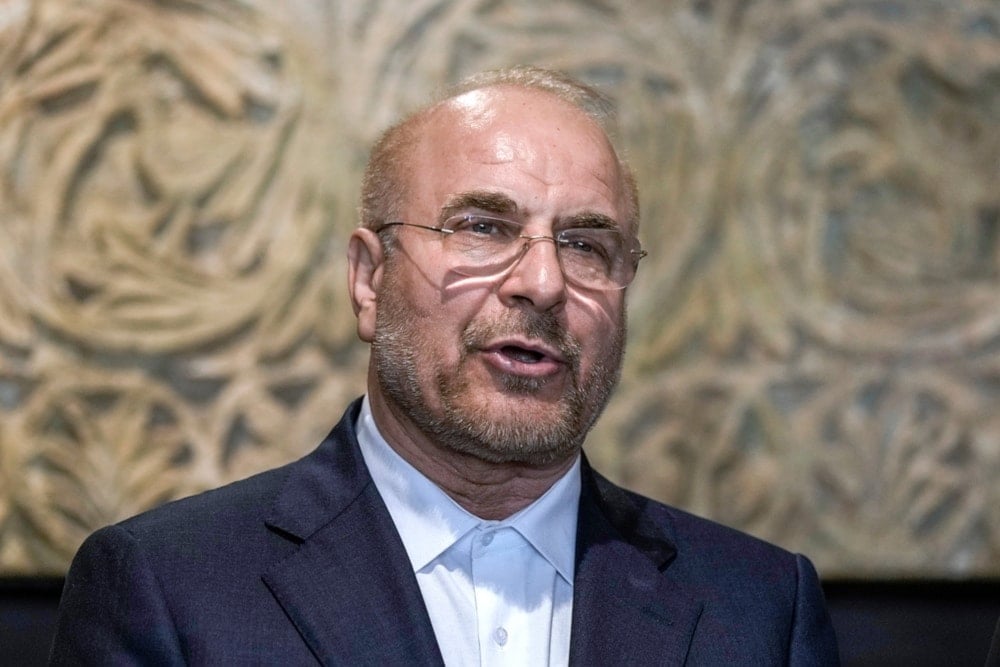
Iran's Parliament Speaker Mohamed Baqer Ghalibaf speaks during a press conference in Beirut, Lebanon, on October 12, 2024. (AP)
Speaker of Iran’s Parliament Mohammad Bagher Ghalibaf said the ongoing confrontation represents a fundamental struggle between justice and oppression, stressing that Iranians remain committed to defending their country with determination and faith.
Speaking amid the ongoing war that began after the US-Israeli assault on Iran on February 28, Ghalibaf said the conflict reflects a broader existential challenge facing the country. The initial strikes targeted senior Iranian leadership and an elementary school, triggering a wider regional escalation.
According to Ghalibaf, Iran’s military capabilities provide a counterbalance to the technological advantages of its adversaries. While the enemy relies heavily on air power, he said Iran possesses a missile force capable of striking through multiple operational methods.
He noted that Israeli strategy over the past decades has followed a cycle based on “war – negotiations – truce – war,” arguing that the current confrontation seeks to force Iran into the same pattern. Tehran, however, does not intend to pursue a ceasefire under such conditions and views the conflict as an existential struggle against efforts aimed at weakening and fragmenting the country.
Ghalibaf also warned that the economic consequences of the conflict will extend beyond Iran, urging regional governments and the international community to recognize that the war imposed by Washington and "Israel" will carry global repercussions.
“Washington has become a tool in Netanyahu’s hands”
In an interview with Iranian television, Ghalibaf sharply criticized US policy, claiming that Washington is effectively acting in the interest of the Israeli leadership.
He said the United States has become a tool in the hands of Israeli Prime Minister Benjamin Netanyahu, adding that “Netanyahu is managing US President Donald Trump as he wishes.”
According to Ghalibaf, the war began based on what he described as a mistaken assumption by Israel that assassinating senior Iranian leaders during the opening phase would quickly lead to victory through a short and decisive military campaign.
Instead, he said Iran has been following a structured strategy since the beginning of the conflict and that operations carried out during the first ten days were implemented according to a pre-established plan.
Warning of infrastructure retaliation
Ghalibaf warned that the confrontation could shift toward what he described as “infrastructure warfare” after the enemy began targeting Iranian energy facilities.
He said that if attacks on Iranian infrastructure continue, Tehran will respond in kind.
“If the enemy begins this type of war, Iran will target the enemy’s infrastructure without delay,” he said.
The warning comes as Iranian forces continue launching missile and drone operations against US military positions and Israeli targets across the region despite the ongoing offensive against the country. Reports indicate that strikes on Iranian energy sites and infrastructure have intensified during the conflict, raising concerns about broader regional escalation and disruptions to global energy markets.
Iranian officials have repeatedly stated that any country allowing its territory to be used for attacks against Iran will face a direct response, while maintaining that relations with neighboring states will remain based on cooperation and friendship unless they become involved in hostilities.
Meanwhile, Iran’s wartime command structure, including the Khatam al-Anbiya Central Headquarters, has warned that continued attacks on Iranian infrastructure could lead to reciprocal measures as the confrontation with the United States and "Israel" continues to unfold.


