
Iranian strikes damage US missile defense radars in Jordan, UAE
 3 Min Read
Satellite images show Iranian strikes damaging US THAAD missile defense radars in Jordan and the UAE, potentially weakening regional air defenses.
-
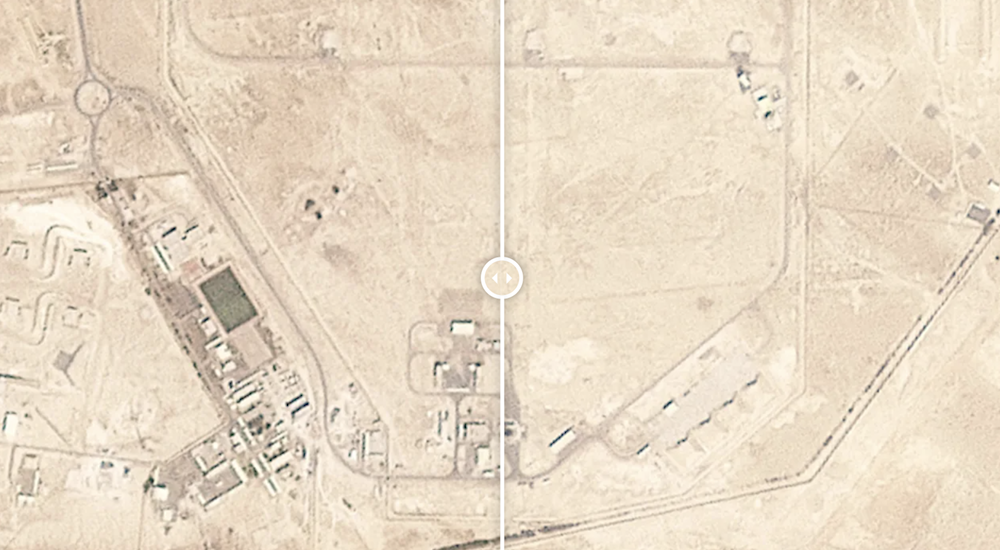
Satellite images show dark markings from apparent strikes on four buildings at a THAAD battery near Al Sader, UAE, including a pair of pull-through vehicle shed used to store radar systems. The pattern of strikes is nearly identical to those on the Al Ruwais site. Date: February 27, 2026 (before) and March 1, 2026 (after) (Planet Labs PBC)
Satellite imagery indicates that Iranian strikes have damaged key radar systems linked to US-made missile defense batteries in Jordan and the United Arab Emirates, suggesting an effort to weaken regional air defenses.
Images reviewed by analysts show that the radar system of a US THAAD missile defense battery at Muwaffaq Salti Air Base in Jordan was struck and likely destroyed during the early days of the US-Israeli war on Iran.
The facility is located more than 800 kilometers away from Iran and serves as an important hub for US military operations in the region.
Satellite photos taken on March 2 show debris and burn marks around the radar installation, along with two large craters nearby, indicating multiple strike attempts.
Radar systems critical to missile interception
The damaged radar appears to be the AN/TPY-2 transportable radar, produced by the US company Raytheon and considered the core detection system for THAAD missile defense batteries.
The radar helps detect and track ballistic missiles and drones, enabling interceptors to engage targets before they reach their destination.
According to US missile defense budget estimates, a single AN/TPY-2 radar costs nearly $500 million, making it one of the most valuable components of the THAAD system.
Experts say damaging such systems significantly degrades missile defense capabilities even if the interceptor launchers remain operational.
“The AN-TPY/2 radar is essentially the heart of the THAAD battery," said munitions specialist N.R. Jenzen-Jones. “The loss of even a single radar of this type would be an operationally significant event."
Additional damage reported in the UAE
Satellite imagery also indicates that military installations hosting THAAD batteries in the UAE may have been targeted.
Buildings at sites near Al Ruwais and Al Sader showed damage between February 28 and March 1, including vehicle sheds typically used to store radar components.
However, analysts said it remains unclear whether the radar systems themselves were destroyed.
Wider campaign against US military infrastructure
The radar strikes appear to be part of a broader Iranian strategy aimed at degrading US surveillance, communications, and intelligence capabilities across the Arabian Peninsula.
Additional satellite imagery suggests damage to a US-made early-warning radar system in Qatar at the Umm Dahal facility.
The Pentagon declined to comment on the status of specific systems in the region, citing operational security.
Regional air defenses under pressure
The UAE, which hosts US forces at Al Dhafra Air Base, has been among the most heavily targeted states in the Gulf.
According to Emirati figures, the country has faced more than 1,000 drone attacks and nearly 200 ballistic missiles since the start of the war.
While missile launches toward the UAE have recently declined, drone attacks continue to increase, placing sustained pressure on regional air defense systems.


