
Iraq's Al-Nujaba rejects disarmament calls as 'red line'
 4 Min Read
Harakat Hezbollah al-Nujaba leader Akram al-Kaabi rejected calls for disarmament, saying the Resistance's weapons remain essential to defending Iraq's sovereignty and confronting occupation.
-
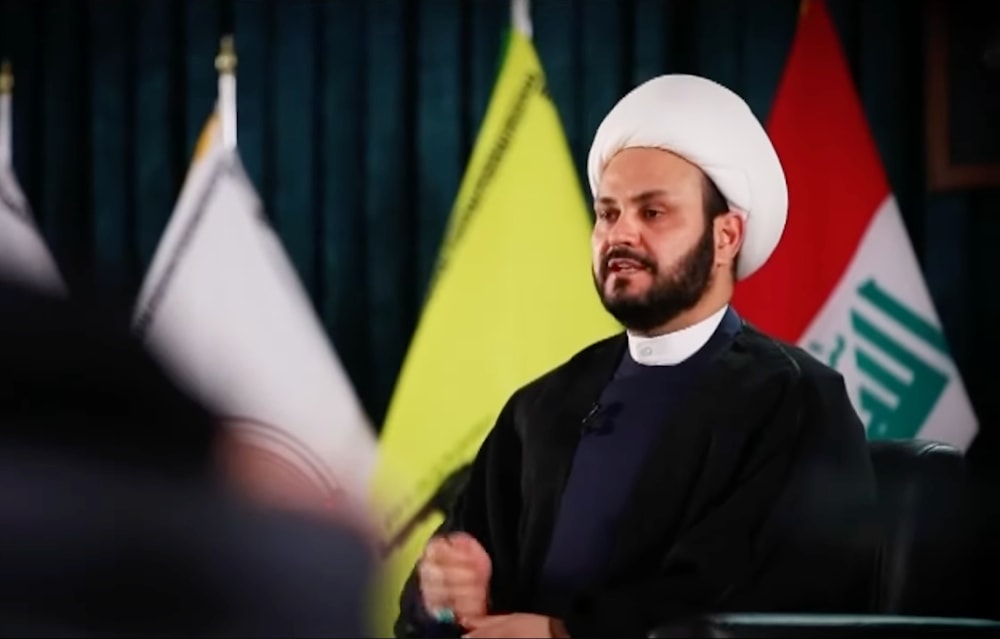
Harakat Hezbollah al-Nujaba Secretary General, Sheikh Akram al-Kaabi, during an address regarding disarmament on December 9, 2021 (YouTube/almayadeentv)
Harakat Hezbollah al-Nujaba Secretary-General Akram al-Kaabi has reaffirmed that the weapons of the Iraqi Resistance constitute a "red line," rejecting mounting calls for Resistance factions to surrender their arms and warning against efforts taht serve US and Israeli interests in Iraq.
In a statement issued Wednesday, al-Kaabi stressed that the movement's position on disarmament remains firm and unchanged, describing the Resistance's weapons as indispensable for defending Iraq, protecting its people, and safeguarding national sovereignty.
The Iraqi Resistance leader said the issue had already been settled by the movement, noting that al-Nujaba publicly declared its position weeks ago and would not retreat from it.
According to al-Kaabi, calls for disarmament ignore the continuing challenges facing Iraq, including foreign interference, violations of national sovereignty, and the continued presence of US forces in the country.
Al-Kaabi says Resistance weapons defend Iraq from occupation
Al-Kaabi argued that demands targeting the weapons of the Islamic Resistance in Iraq are being advanced under pressure from Washington and in coordination with the Israeli occupation.
He accused officials connected to the US Embassy in Baghdad of promoting narratives aimed at weakening Iraqi Resistance groups that played a central role in confronting both foreign occupation and terrorism.
The Nujaba leader also criticized Iraqi political figures, whom he accused of aligning themselves with foreign agendas at the expense of Iraq's national interests.
Calling on all factions within the Iraqi Resistance front to maintain unity, al-Kaabi warned that surrendering weapons would leave Iraq vulnerable to external pressure and intervention.
"These demands come at a time when Iraq is still under occupation, its airspace is violated, and its sovereignty has been taken away through open, public, and continuous interventions," he said.
Resistance leader invokes struggle against ISIS
Al-Kaabi framed the debate over disarmament within the context of Iraq's battle against ISIS, emphasizing the role Resistance forces played in confronting the Takfiri terrorist organization during some of the country's most difficult years.
"Everyone should know that the weapons of the Resistance front are the red line," he stated. "The arms serve as the trust of martyrs, and the honor of the original Iraqi tribes. It was with these weapons that we cleansed Iraq from the stain of ISIS and its American sponsors. We will not hand over our arms as long as we are alive."
His remarks reflect a broader position held by many Iraqi Resistance factions that view their military capabilities as a strategic necessity rather than a temporary wartime measure.
For these groups, the preservation of Resistance arms remains closely linked to protecting Iraq from renewed foreign intervention and confronting regional threats.
Read more: Iraq probes 1,300 ISIS detainees moved from Syria under US pressure
Debate over arms intensifies among Iraqi factions
Al-Kaabi's comments come amid growing debate within Iraq regarding the future status of armed Resistance organizations.
In recent days, several groups have reportedly signaled a willingness to transfer their weapons to the Iraqi state, including Saraya al-Salam, Asa'ib Ahl al-Haq, and Kata'ib Imam Ali.
The developments have generated discussion across Iraq's political landscape regarding the relationship between state institutions and Resistance factions that emerged as major forces during the fight against ISIS.
While some actors advocate integrating armed groups more fully into state structures, others argue that Resistance formations remain necessary given ongoing regional tensions and continued foreign military influence inside Iraq.
Nujaba's latest position signals that some factions remain firmly opposed to any effort to dismantle Resistance capabilities.


