
Israeli forces ram UNIFIL vehicles, restrict movement in South Lebanon
 3 Min Read
Israeli forces have escalated actions against UN peacekeepers in southern Lebanon, including ramming vehicles, firing near personnel, and obstructing operations.
-
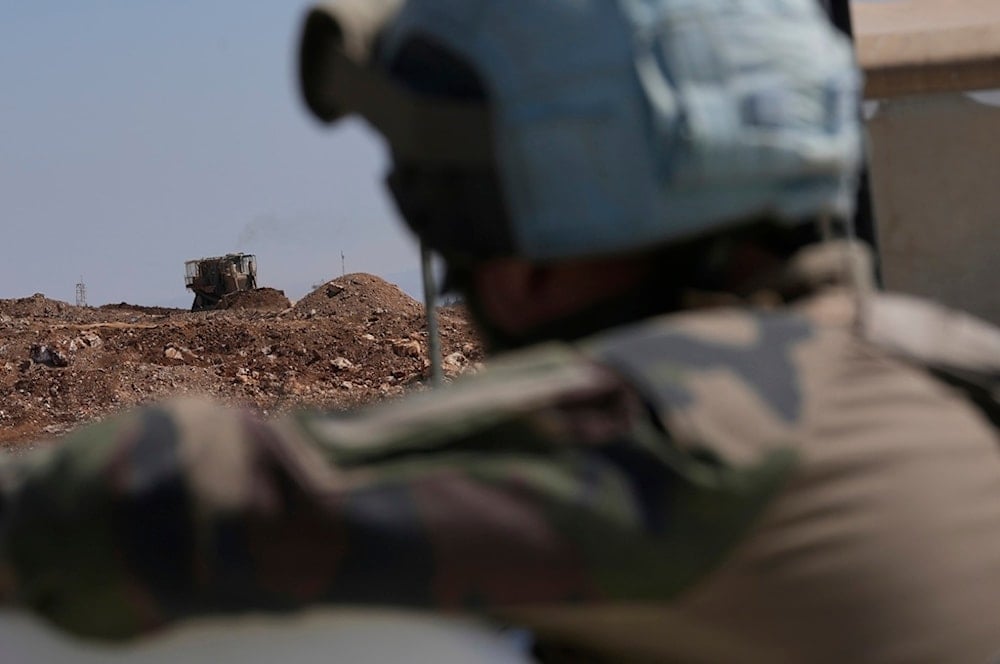
A French U.N. peacekeeper, foreground, watches an Israeli bulldozer building a sand barrier at one of five new Israeli army positions along the road between Houla and Kfar Kila, southern Lebanon, Wednesday, Aug. 20, 2025 (AP Photo/Hussein Malla)
Israeli forces have intensified actions against United Nations peacekeepers in southern Lebanon, ramming UN vehicles, firing near personnel, and obstructing operations, according to a series of statements issued by the United Nations Interim Force in Lebanon (UNIFIL) on Sunday.
In its initial statement, UNIFIL reported that “on two occasions today, Israel Defense Forces (IDF) soldiers rammed UNIFIL vehicles with a Merkava tank, in one case causing significant damage,” adding that Israeli troops had also “blocked a road in Bayada that is used to access UNIFIL positions.”
The incidents are part of a broader pattern of Israeli aggression targeting the UNIFIL’s presence on the ground.
Over the past week, Israeli soldiers have fired so-called “warning shots” in the vicinity of UN positions, with UNIFIL noting that the rounds “struck and damaged clearly identifiable UNIFIL vehicles.” In one particularly dangerous incident, a shot landed “a metre away from a peacekeeper who had dismounted his vehicle,” raising serious concerns over the safety of personnel.
Systematic obstruction of UN operations
UNIFIL further stated that Israeli troops have “continually blocked peacekeepers’ movements on this road in recent days,” alongside additional restrictions on freedom of movement recorded across multiple areas in southern Lebanon.
The force also reported deliberate damage to its infrastructure. Since early April, Israeli soldiers have “destroyed force protection cameras in UNIFIL’s Naqoura headquarters and five other positions on the Blue Line from Ras Naqoura to Maroun ar Ras,” undermining the mission’s ability to monitor developments along the sensitive frontier.
In another incident, Israeli troops “spray-painted the windows of the headquarters’ pedestrian access gate, denying visibility to the external perimeter,” a move that further restricts situational awareness at the main UNIFIL base.
Violation of international obligations
UNIFIL stressed that these actions are “inconsistent with Israel’s obligations under [UN Security Council] Resolution 1701 and the requirement to ensure the safety and security of peacekeepers, as well as their freedom of movement at all times.”
The force warned that such measures directly hinder its operational mandate, noting that they “hamper peacekeepers’ ability to report violations by both sides on the ground” to the UN Security Council.
Despite the escalating pressure, UNIFIL affirmed it would maintain its deployment, stating that peacekeepers “will remain in position and will continue to impartially report violations we observe.”
Late last month, a UNIFIL patrol was subjected to an Israeli attack on the Bani Hayyan-Tallouseh road, resulting in two peacekeepers killed and two others injured, with a helicopter from the Naqoura area intervening to evacuate the wounded.
Read more: Indonesians protest US embassy over Israeli killing of UN peacekeepers


