
Israeli regime deploys police at Al Aqsa for Ramadan
 4 Min Read
"Israel" police announced a large deployment at al-Aqsa Mosque during Ramadan as Palestinian officials warned of renewed permit restrictions and curbs on Waqf activities in occupied al-Quds.
-
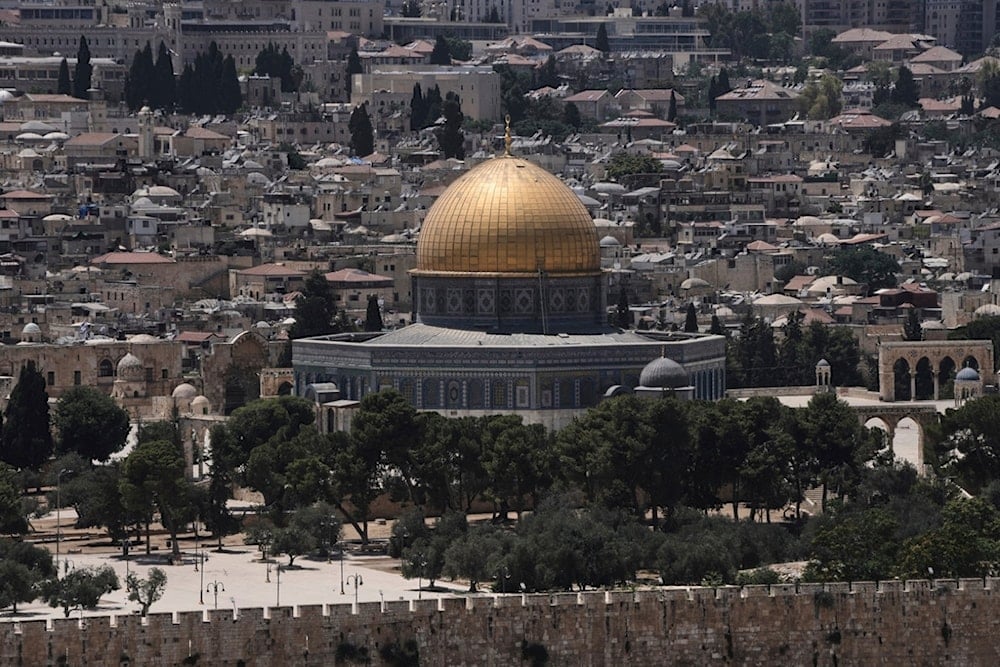
Dome of the Rock shrine at the al-Aqsa Mosque compound, which has been closed to worshippers after the Israeli Home Front Command banned public gatherings following an Israeli military strike on Iran, Friday, June 13, 2025. (AP)
"Israel" police announced Monday a large-scale deployment around the Al Aqsa Mosque compound in occupied al-Quds ahead of the Muslim holy month of Ramadan, as Palestinian officials warned of renewed restrictions at the site.
The move comes as part of what authorities described as security preparations for Ramadan, during which hundreds of thousands of Palestinians traditionally gather at Al Aqsa Mosque for prayers, which are aimed at further curbing the freedom of Palestinians under the guise of "security". The compound, Islam’s third-holiest site, is located in occupied al-Quds, which "Israel" captured in 1967 and later annexed.
Arad Braverman, a senior police officer, said forces would be deployed "day and night" across the compound. He added that thousands of police officers would be on duty during Friday prayers, which typically draw the largest crowds of worshippers.
Braverman said police had recommended issuing 10,000 permits for Palestinians from the occupied West Bank, who require special permission to enter al-Quds. He did not specify whether age restrictions would apply, noting that the final number of permits would be determined by the government.
Palestinians report age limits and permit curbs
In a separate statement, the Palestinian al-Quds Governorate said it had been informed that permits would again be limited to men over 55 and women over 50, mirroring last year’s criteria.
Palestinian officials have repeatedly criticized what they describe as West Bank permit restrictions that limit access to Al Aqsa Mosque during Ramadan, a period of increased religious significance.
The governorate’s statement suggested that final decisions were still pending, but expressed concern over the continuation of restrictive measures.
Restrictions on Islamic Waqf activities
The Palestinian al-Quds Governorate also said Israeli authorities had blocked the Islamic Waqf, the Jordanian-run body responsible for administering the site, from carrying out routine Ramadan preparations.
According to the statement, the Waqf was prevented from installing shade structures and setting up temporary medical clinics inside the compound.
A Waqf source confirmed the restrictions, adding that 33 of its employees had been barred from entering the site in the week leading up to Ramadan.
The Islamic Waqf al-Aqsa administration plays a central role in maintaining religious and logistical arrangements at the compound, particularly during periods of high attendance.
Status quo concerns and growing tensions
Al-Aqsa compound remains a central symbol of Palestinian identity and a frequent flashpoint.
Under long-standing arrangements, Jews are permitted to visit the compound, which they revere as the site of their second temple, destroyed by the Romans in 70 AD, but are not allowed to pray there.
"Israel" says it remains committed to preserving this status quo, though Palestinians have voiced concern that it is being gradually eroded.
Braverman reiterated Monday that no changes were planned.
In recent years, however, a growing number of Jewish ultranationalists have challenged the prayer ban. Among them is far-right politician Itamar Ben-Gvir, who prayed at the site while serving as national security minister in 2024 and 2025.
The issue of Al Aqsa Mosque Ramadan restrictions continues to be closely watched, with access to the compound often serving as a barometer of broader tensions in occupied al-Quds and the occupied West Bank.
As the situation escalates throughout occupied Palestine, 13 Palestinians were killed today and several others wounded across the Gaza Strip on Monday as Israeli occupation forces launched a wave of attacks across the besieged territory, continuing to violate the ceasefire agreement on its 129th day.


