
Journalist shot by ICE, left untreated nears 300 days in detention
 8 Min Read
A Los Angeles journalist says he has endured poor medical care and degrading conditions at the Adelanto detention facility, including contaminated drinking water and insects in his cell.
-
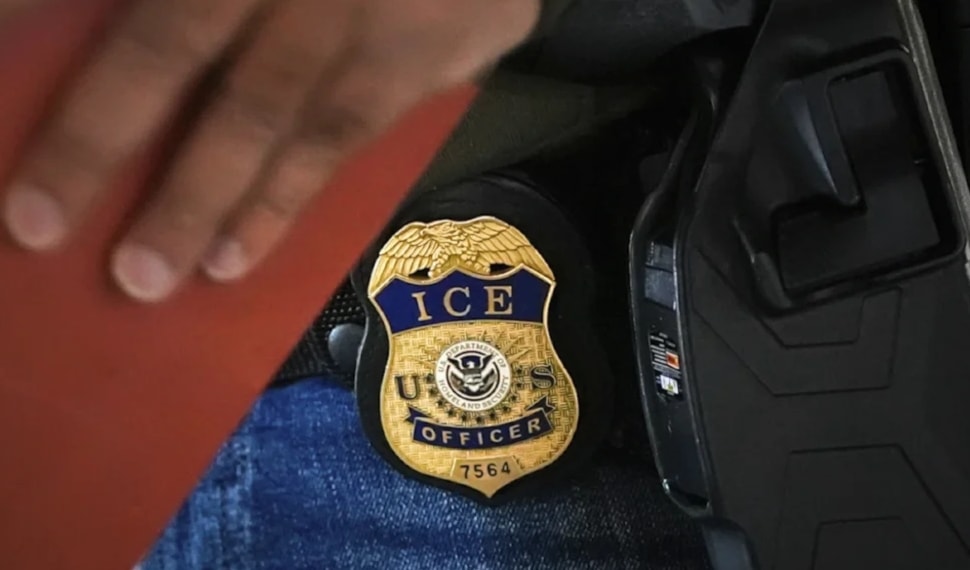
A deportation officer with ICE conducts a briefing before an early morning operation on December 17, 2024, in New York (AP)
Carlitos Ricardo Parias has spent nearly 300 days in Immigration and Customs Enforcement custody at a California detention facility where he says he has endured severe conditions, including cockroaches in his cell, worm-like organisms in his drinking water, and inadequate treatment for a gunshot wound that has left his arm turning purple.
The Los Angeles-based journalist was shot and detained by ICE officers last October and is being held in Adelanto, about an hour and a half from Disneyland. According to reporting by The Intercept, Parias’ case stands out even among the troubling conditions faced by immigrant detainees, involving a prolonged sequence of violence, prosecution, and imprisonment by the US government.
Several American journalists have spent months behind bars to protect confidential sources. New York Times reporter Judith Miller was jailed for 85 days in 2005, writer Vanessa Leggett spent 168 days in custody before her release in 2002, and freelance journalist Josh Wolf was imprisoned for 226 days before his release in 2007. Last year, Emmy-winning journalist Mario Guevara spent more than 100 days in immigration detention before being deported, sparking widespread national outrage.
Parias has long since exceeded Wolf’s record for the longest known period a journalist has spent in US custody.
From social media journalist to immigration detainee
By the time the immigration enforcement surge began last summer, Parias had already established a substantial presence on social media. He worked independently under the name Richard Noticias LA and had more than 100,000 followers on TikTok. He built his following by covering crime in California neighborhoods that often received little attention from larger news organizations.
Around this time last year, the Los Angeles City Council issued a proclamation recognizing his work.
Federal authorities maintain that Parias is an undocumented immigrant who had previously avoided arrest. But that account does not address a growing body of evidence surrounding his case.
The first encounter with immigration agents
On June 13, 2025, Parias went to an immigration raid in South LA intending to record the operation as he routinely did.
Witnesses said a federal agent struck him with a vehicle. Parias was subsequently handcuffed and left on a sidewalk as agents continued carrying out the raid. Video showed him crying out in pain and clutching his injured leg.
The agents did not provide medical treatment. A Good Samaritan eventually arrived in a private vehicle and transported Parias to a hospital. An agent briefly stopped the vehicle but ultimately allowed Parias to continue, with the handcuffs still on him.
Shooting during a second arrest attempt
Four months later, Parias was driving on a quiet street near downtown Los Angeles when several unmarked vehicles surrounded his car. Masked men emerged and were later identified as federal agents.
Bodycam footage showed agents immediately breaking one of the vehicle’s windows. Panicked, Parias pressed the accelerator, but the maneuver had little effect because several large SUVs had physically trapped his much smaller car. The tires spun, the vehicles remained in place, and Parias soon released the gas pedal.
One agent struggled to open the passenger-side door. His bodycam showed him handling his firearm between his hands before he fired, striking Parias in the elbow. A US marshal was also struck and was expected to recover.
After the shooting sent Parias back to the hospital, federal immigration agents went into the security office of a nearby strip mall to review surveillance footage. They copied the recording to a thumb drive and deleted the footage from the mall’s system.
Prosecutors’ account of the arrest
Prosecutors charged Parias with assault on a federal officer, presenting an account that left out key elements of what had happened. US Attorney Bill Essayli posted on social media, portraying Parias as someone who had been attempting to evade immigration authorities for months.
“This morning, Parias rammed his car into agents’ vehicles after they boxed him in and ordered him to submit to arrest. Parias, who had previously avoided capture by immigration authorities, refused to comply with agents’ orders and escalated what could have been a simple arrest into a life-threatening situation,” Essayli wrote.
Essayli’s post contained a single screenshot taken from the only copy of the mall’s surveillance footage held by authorities. The complete recording could have presented a substantially different account, but it was not released.
Medical treatment denied in custody
The withholding of evidence was not the only issue Parias faced. He was released from the hospital several days after the shooting while still taking morphine and was transferred directly to a federal criminal detention facility in downtown Los Angeles.
He was supposed to receive high doses of ibuprofen. But during his initial criminal hearing, the judge discovered that Parias was not receiving the prescribed treatment for his gunshot wound.
Parias writhed in his chair from the pain. The judge, visibly troubled by the situation, asked a US marshal to speed up his transfer to a facility where he could receive his medication. The marshal refused.
Shortly afterward, Parias’ attorney asked whether his teenage son, who had been unable to communicate with his father since the shooting, could hug him. The marshal rejected the request, citing security procedures.
As Parias was taken from the courtroom, his son called out to him in Spanish: “te amo” (“I love you”).
Criminal charges dismissed
Parias was eventually granted bond in the criminal case. But accepting it would have resulted in marshals transferring him to immigration authorities, who could have moved him immediately to another remote facility where he might have received even poorer medical care. He declined the offer.
The government transferred him to immigration custody regardless.
Adelanto is difficult for Parias’ family and attorneys to reach, sitting hours away from Los Angeles and the court. Prosecutors had still not produced the mall surveillance footage. Meanwhile, videos recorded by bystanders began challenging the government’s version of events.
The judge ultimately dismissed all criminal charges with prejudice, concluding that the government had violated Parias’ constitutional rights.
His deportation proceedings remain ongoing. For now, he remains detained in Adelanto.
Reporting from inside Adelanto
Despite being imprisoned, Parias has continued to work as a journalist. His detention has effectively given him a new beat: documenting the conditions he and other detainees face.
Videos recorded by visitors, along with accounts that Parias conveyed through other reporters, have brought attention to worm-like organisms found in drinking water and cockroaches inside detainees’ cells.
His gunshot wound was being treated with vitamin D and Bengay.
“What I saw looked like an arm that was on the verge of being amputated,” said Rep. Sydney Kamlager-Dove, D-Calif., who visited Parias at Adelanto in May.
His condition prompted Kamlager-Dove to propose legislation aimed at addressing medical neglect in immigration detention facilities.
A possible transfer farther from his family
The government recently said it intends to transfer Parias even farther away, to a facility in San Diego where he can receive medical treatment.
Such a move would make it more difficult for his relatives and attorneys to visit him and would also prevent him from continuing to report on the conditions inside Adelanto.
Parias and his work from detention have begun attracting greater media attention. But that coverage does not always acknowledge that the circumstances began with his work as a journalist.
A broader question about press freedom
The United States has imprisoned journalists before and has even killed them. But Parias’ case presents a different sequence of events.
He was injured while documenting government activity, shot during an attempt to arrest him, prosecuted, and repeatedly denied medical care. He was then placed in immigration detention, where he continued documenting the conditions surrounding him.
The government’s authority to enforce immigration laws and prosecute crimes does not override the First Amendment. A journalist does not give up constitutional rights because of his immigration status. Nor can the government simply make a journalist disappear by placing him behind bars.
The question, eventually, is no longer only what might happen next to Parias. It is what the United States is prepared to allow to happen to a journalist.


