
Lockheed Martin to boost THAAD interceptor production fourfold
 4 Min Read
Lockheed Martin signs a deal with the US Department of Defense to increase THAAD interceptor production from 96 to 400 annually.
-
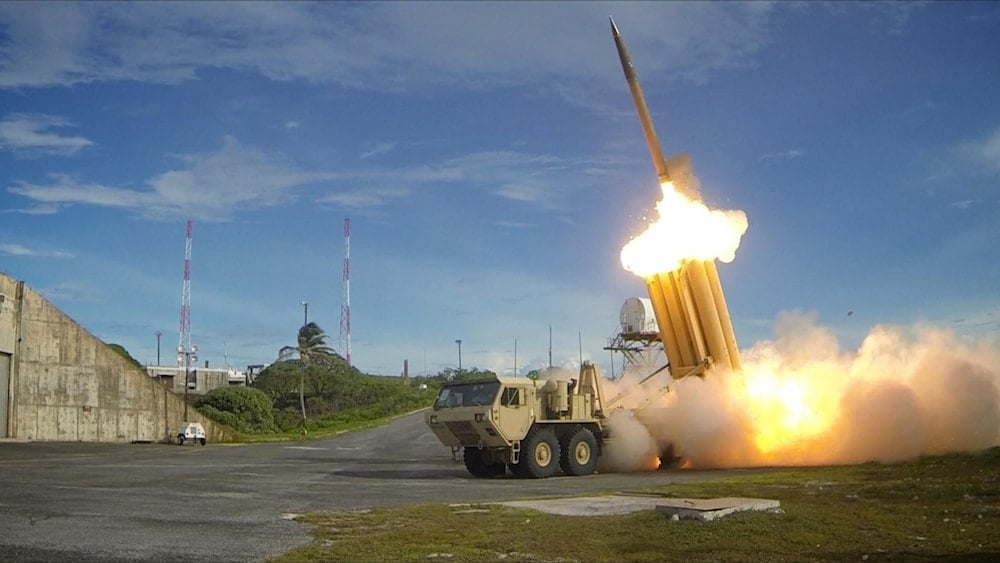
The first of two Terminal High Altitude Area Defense (THAAD) interceptors is launched during a successful intercept test, September 10, 2013 (Wikimedia Commons/ US Army)
Lockheed Martin announced Thursday that it has signed a framework agreement with the US Department of Defense to increase production of Terminal High Altitude Area Defense (THAAD) interceptors from 96 to 400 per year.
The move follows a similar framework agreement earlier this month aimed at accelerating production of PAC-3 Missile Segment Enhancement (MSE) interceptors, the company said in a statement.
“We are committed to further building on the Department of War's vision for advancing acquisition reform with additional framework agreements for the critical munitions needed by the US military and our allies,” Lockheed Martin CEO Jim Taiclet said.
He added that the agreement “means we will have more interceptors available than ever before to deter our adversaries.”
US depleted its THAAD stockpile for 'Israel'
In 2025, the US saw a significant drawdown of its Terminal High Altitude Area Defense (THAAD) interceptor inventory, raising concerns within defense circles about the nation’s missile‑defense readiness. During the 12‑day war in June on Iran, US forces fired more than 100, and possibly up to 150, defending "Israel" in the face of Iranian retaliation strikes.
Analysts estimate that this expenditure accounted for roughly a quarter of the United States’ existing THAAD stockpile, the highest use rate in recent history. Such heavy use depleted inventories that had been built up over years of procurement, but were under strain due to limited recent production levels.
Experts have warned that the rapid depletion highlights vulnerabilities in US missile defenses if faced with sustained high‑volume attacks. Historically modest annual procurement rates meant that stocks used during the conflict exceeded what industry had been producing in a year, deepening concerns about readiness.
Defense analysts also cautioned that replenishing THAAD inventories could take years without accelerated production and increased funding, particularly given competing budget priorities. The Pentagon’s efforts to boost procurement have become central to discussions in Congress and the defense community.
The stockpile depletion has prompted broader debate about the US strategy for missile defense in the face of evolving threats, with calls for faster production rates and expanded industrial capacity. As a result, policymakers are under pressure to ensure that future conflicts do not leave US and allied forces under‑protected due to interceptor shortages.
Why is THAAD important?
The Terminal High Altitude Area Defense (THAAD) system is a cornerstone of the United States’ missile defense strategy, designed to intercept short, medium, and intermediate-range ballistic missiles during their terminal phase.
Its high-altitude intercept capability allows it to destroy incoming missiles before they can reach populated areas or critical military assets, providing a crucial layer of protection for both US forces and allied nations.
THAAD interceptors are equipped with hit-to-kill technology, meaning they destroy incoming missiles through direct impact rather than explosives, minimizing the risk of collateral damage. This precision, combined with advanced radar and tracking systems, enables rapid detection and engagement of multiple targets simultaneously, making it a vital deterrent against missile attacks from hostile states or non-state actors.
The significance of the THAAD system crystallizes when the rise of ballistic missiles is taken into consideration. Countries like Iran and Russia continue to pioneer and develop ballistic missiles with newer and more advanced technologies, with Tehran holding one of the largest missile arsenals in the region, while Moscow continues to produce hypersonic missiles like the Oreshnik and the Kinzhal.
Russia first revealed its Oreshnik intermediate-range ballistic missile in November 2024, showcasing it during a strike on Ukraine. Officials highlighted the missile’s advanced capabilities, and by late 2025, Russia announced it would enter serial production, signaling its growing role in the country’s arsenal.
During the 12‑day war in June 2025, Iran launched large barrages of ballistic missiles at "Israel" in retaliation for Israeli strikes on Iranian nuclear and military sites, firing dozens to over a hundred missiles at cities and strategic targets across the country, demonstrating Iran's capability of striking deep within "Israel".


