
Lula, Pezeshkian discuss US-Israeli war on Iran, Hormuz, trade ties
 3 Min Read
Brazilian President Lula and Iran's Masoud Pezeshkian discuss the US-Israeli war on Iran, mediation efforts, the Strait of Hormuz, and expanding bilateral trade, which reached $3 billion in 2025.
-
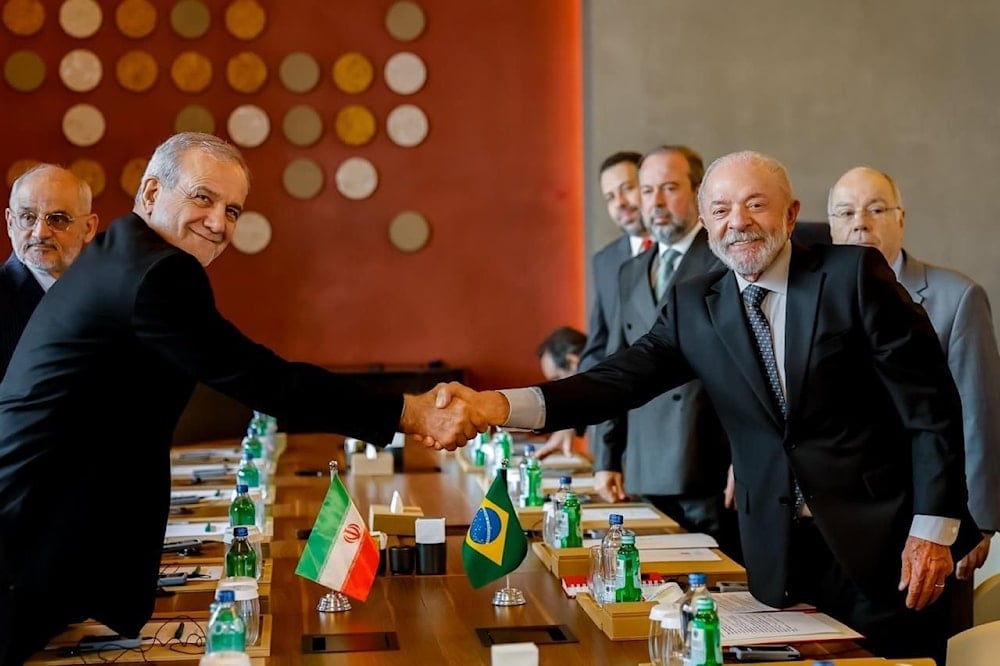
Brazilian President Luiz Inacio Lula da Silva and Iranian President Masoud Pezeshkian shake hands during a meeting on the sidelines of COP31 in Antalya, Turkey, on Thursday, November 12, 2026. (X/ @LulaOficial )
Brazilian President Luiz Inacio Lula da Silva and Iranian President Masoud Pezeshkian discussed the war on Iran, efforts to reach a peaceful settlement, the situation in the Strait of Hormuz, and economic cooperation between their countries during a meeting in Turkey on Thursday.
The meeting took place on the sidelines of the 31st Conference of the Parties (COP31) climate summit in Antalya.
Lula said Pezeshkian briefed him on negotiations with the United States, particularly mediation efforts led by Qatar and Pakistan.
The Brazilian president recalled his country's role in negotiating the 2010 Tehran Declaration, saying he "encouraged continued efforts to find a peaceful solution to the conflict and defended Iran's right to the peaceful and civilian use of nuclear energy."
Lula also expressed concern over the war's impact on global fuel and food prices, stressing "the need to ensure freedom of navigation in the Strait of Hormuz."
Me reuni, na tarde desta quinta (12), com o presidente do Irã, Masoud Pezeshkian, à margem da COP31, em Antália, na Turquia. Conversamos sobre os conflitos no Oriente Médio, em especial a guerra no Irã. O presidente Pezeshkian falou sobre as negociações de paz com os Estados Unidos, em especial os esforços de mediação promovidos por Catar e Paquistão. Ao recordar o papel do Brasil na negociação da Declaração de Teerã, em 2010, encorajei a busca por uma solução pacífica para o conflito, e defendi o direito ao uso pacífico e para fins civis da energia nuclear. Manifestei preocupação com o impacto da guerra sobre os preços globais dos combustíveis e dos alimentos, e defendi a livre navegação no Estreito de Ormuz. Também tratamos da diversificação e ampliação do comércio bilateral, que somou 3 bilhões de dólares em 2025. Destaquei que o Brasil tem interesse em ampliar as importações de fertilizantes do Irã. 📸 @ricardostuckert
— Lula (@LulaOficial) November 12, 2026
Brazil, Iran discuss expanding economic cooperation
The two presidents also discussed ways to diversify and expand bilateral trade, which reached $3 billion in 2025.
Lula reaffirmed Brazil's interest in increasing its imports of Iranian fertilizers, as the two sides explored opportunities to strengthen economic ties.
Pezeshkian had congratulated Lula following his victory in Brazil's October elections, expressing hope that friendly relations between Tehran and Brasilia would expand further and lead to deeper cooperation.
Erdogan urges US, Iran to return to talks
Pezeshkian also met with Turkish President Recep Tayyip Erdogan on the sidelines of the UN climate conference in the Turkish province of Antalya, as reported by Erdogan's office.
President @RTErdogan met with President Masoud Pezeshkian of Iran on the sidelines of the 31st Conference of the Parties to the United Nations Framework Convention on Climate Change (COP31) in Antalya. https://t.co/X7uetfHVXM
— Presidency of the Republic of Türkiye (@trpresidency) November 12, 2026
Following talks with the Iranian president, Erdogan called for the resumption of diplomatic efforts to end the US war on Iran, urging both sides to return to talks without further delay.
During the meeting, Erdogan stressed "the importance of getting to the negotiating table without further delay" and reaffirmed Turkey's support for initiatives aimed at securing peace.
"Common ground for agreement must be strengthened and diplomacy given a chance," Erdogan said, expressing hope that the war with the United States "would end as soon as possible".
The war began on February 28 with a US-Israeli aggression on Iran that led to the martyrdom of the country's Leader, Sayyed Ali Khamenei, prompting Iran to retaliate with strikes against US and Israeli assets across the region.


