
MBS reportedly urging Trump to continue war on Iran: NYT
 4 Min Read
NYT reports Saudi Crown Prince Mohammed bin Salman pressured Donald Trump to continue the war on Iran, warning of regional risks and pushing for escalation.
-
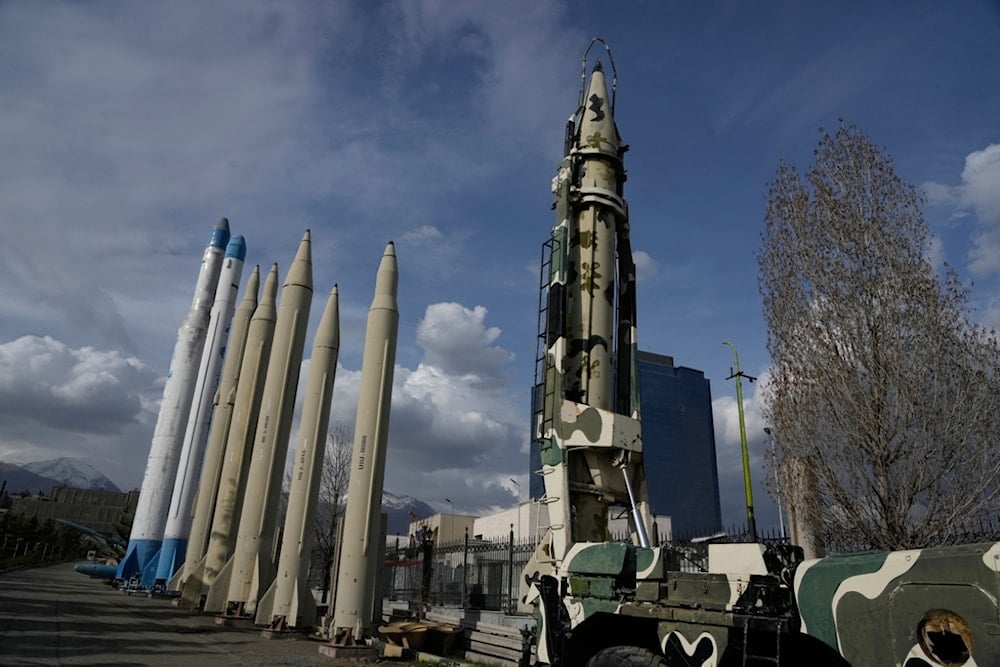
Iran's domestically built missiles and satellite carriers are displayed in a permanent exhibition at a recreational area in northern Tehran, Iran, Tuesday, March 24, 2026 (AP)
Saudi Crown Prince Mohammed bin Salman urged US President Donald Trump to continue and escalate the war against Iran, viewing the ongoing US-Israeli aggression as a “historic opportunity” to reshape West Asia, according to US sources cited by The New York Times.
During several conversations last week, bin Salman reportedly pressed Trump on the need to go as far as dismantling the Iranian government, which he considers a long-term threat to Gulf countries. Sources said he argued that this threat could only be eliminated by toppling the Iranian government.
According to the report, the Saudi crown prince also encouraged targeting Iranian energy infrastructure as a means to weaken the government. He further raised the possibility of ground operations, including seizing strategic locations such as Kharg Island, a key hub for Iranian oil exports.
The New York Times also reported, citing analysts familiar with Saudi thinking, that Mohammed bin Salman is concerned that if Donald Trump backs down now, Saudi Arabia and the wider region could be left to face a "furious Iran on their own."
In this view, they argue that an incomplete attack would "expose Saudi Arabia to frequent Iranian attacks. Such a scenario could also leave Iran with the power to periodically close the Strait of Hormuz."
Iran wants to 'review' ties to Gulf states
Tehran’s ties with Gulf states will require a “serious review” in light of the ongoing US-Israeli aggression on Iran, Iran’s ambassador to Saudi Arabia, Alireza Enayati, told Reuters Sunday, emphasizing that limiting the influence of external powers is necessary for the region to achieve long-term prosperity.
When asked whether the war might harm regional relations, Enayati said, “We are neighbors, and we cannot do without each other; we will need a serious review.”
He also criticized decades of exclusionary policies and excessive reliance on foreign powers, calling for stronger cooperation among the six members of the Gulf Cooperation Council, as well as Iraq and Iran.
Growing frustration with US security role
Analysts say Gulf states are increasingly frustrated with the United States, their long-time security guarantor, for drawing them into a war they did not endorse but are paying a heavy price for. In Saudi Arabia, attacks have mainly targeted the eastern oil-producing region, the Prince Sultan Airbase hosting US forces, and the Diplomatic Quarter in Riyadh.
Speaking to Reuters, Enayati rejected claims that Iran is behind attacks on Saudi oil infrastructure, including the Ras Tanura refinery and drone strikes on the Shaybah oil field near the UAE border. “Iran is not the party responsible for these attacks, and if Iran had carried them out, it would have announced it,” he said, asserting, yet again, that Iran is targeting only US and Israeli interests in the region.
Nevertheless, Enayati said he maintains active communication with Saudi officials and that bilateral relations are “progressing naturally” in several areas, including facilitating the departure of Iranians on pilgrimage and providing medical assistance. He also noted discussions on Saudi Arabia’s pledge that its territory would not be used against Iran, though he gave no further details.
The Iranian envoy said the war “has been imposed on us and the region.” He called for the US and "Israel" to halt attacks, for Gulf countries to avoid involvement, and for international guarantees to prevent future war.
“Only then can we focus on building a prosperous region,” he concluded.


