
NATO advances AI-controlled militarized zone near Russia's borders
 4 Min Read
NATO is moving to entrench a heavily automated, AI-assisted military buffer along Europe's eastern frontier, further militarizing the region and escalating tensions with Russia under the banner of defense.
-
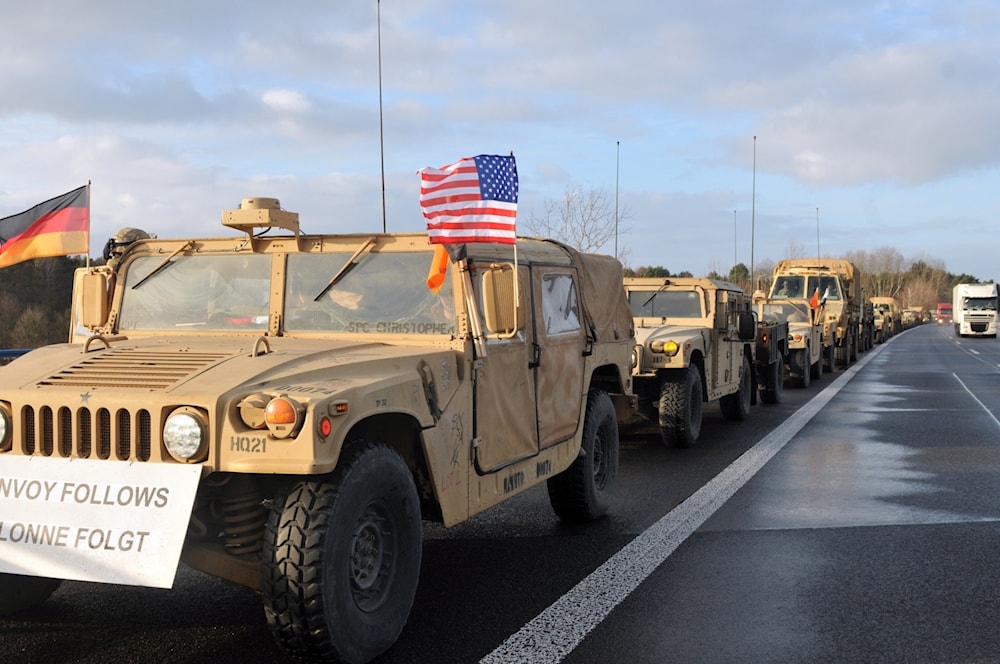
3rd Armored Brigade Combat Team, 4th Infantry Division pull over on the shoulder of the highway on the final day of their convoy crossing into Poland from Germany, Jan. 12, for their nine-month deployment training alongside multinational partners (Photo Credit: U.S. Army)
NATO is pressing ahead with plans to deploy a vast AI-assisted military surveillance and weapons network along Europe’s eastern frontier, a move likely to deepen tensions with Russia and entrench the bloc’s long-standing policy of military expansion toward Russian territory.
The project would establish what NATO officials describe as an “automated zone” stretching thousands of kilometres across Europe, effectively transforming large swathes of the continent into a permanently monitored and militarized buffer aimed at detecting and confronting Russian forces before any direct engagement takes place.
Preemptive Automation
The concept was outlined by NATO Deputy Chief of Staff for Operations Thomas Lowin, who said the system would operate in advance of conventional forces and precede “a sort of hot zone” where traditional combat could unfold. His comments were published in the German newspaper Welt am Sonntag.
Lowin said the automated belt would be equipped with an extensive array of sensors positioned “on the ground, in space, in cyberspace and in the air,” allowing NATO to monitor movements and weapons deployments across a vast area and relay data “to all NATO countries in real time”.
The system would activate defences including drones, semi-autonomous combat vehicles, land-based robots, and automated air-defence and missile-interception platforms. Lowin claimed that while the technology would rely heavily on automation and artificial intelligence, decisions involving lethal force would “always be under human responsibility”.
Automated Escalation
While NATO presents the initiative as defensive, the scale and automation of the project mark a significant escalation in military posture along Russia’s borders, raising concerns about increased risks of miscalculation, rapid escalation, and the normalization of AI-driven warfare in Europe.
According to the report, NATO has already begun testing elements of the system in Poland and Romania, two frontline states that have hosted a growing concentration of NATO troops, missile systems, and military infrastructure since the alliance expanded eastward in the years following the Cold War.
NATO reportedly intends to make the system fully operational by the end of 2027, further consolidating a military architecture that critics argue locks Europe into a permanent confrontation model with Moscow rather than addressing the alliance’s own role in regional destabilization.
Militarization Despite Warnings
The push comes as NATO governments cite Russia’s conflict in Ukraine to justify unprecedented levels of defence spending, weapons procurement, and technological militarization, despite repeated Russian warnings that NATO’s expansion and forward deployments pose a direct threat to its security.
Poland, one of NATO’s most vocal advocates of confrontation with Russia, is simultaneously moving to expand its own military capabilities. Polish Defence Minister Wladyslaw Kosiniak-Kamysz said Warsaw is preparing to sign a contract for what he called “the biggest anti-drone system in Europe”.
Speaking to Gazeta Wyborcza, Kosiniak-Kamysz said the agreement would involve “different types of weaponry” and is expected to be finalized at the end of January. He did not disclose the cost of the deal or identify the firms involved, describing the procurement as necessary to meet “an urgent operational demand”.
Analysts have warned that NATO’s accelerating shift toward AI-assisted surveillance and automated defence systems risks lowering the threshold for conflict, embedding perpetual militarization along Russia’s borders and sidelining diplomatic avenues in favor of algorithm-driven security doctrines.
Read more: Russia, Ukraine talks resume in Abu Dhabi under US mediation


