
Ofer detainees face dire health conditions: Detainees' Commission
 3 Min Read
Palestinian Commission of Detainees says three Ofer Prison detainees face deteriorating health amid beatings, medical neglect, and scabies outbreak.
-
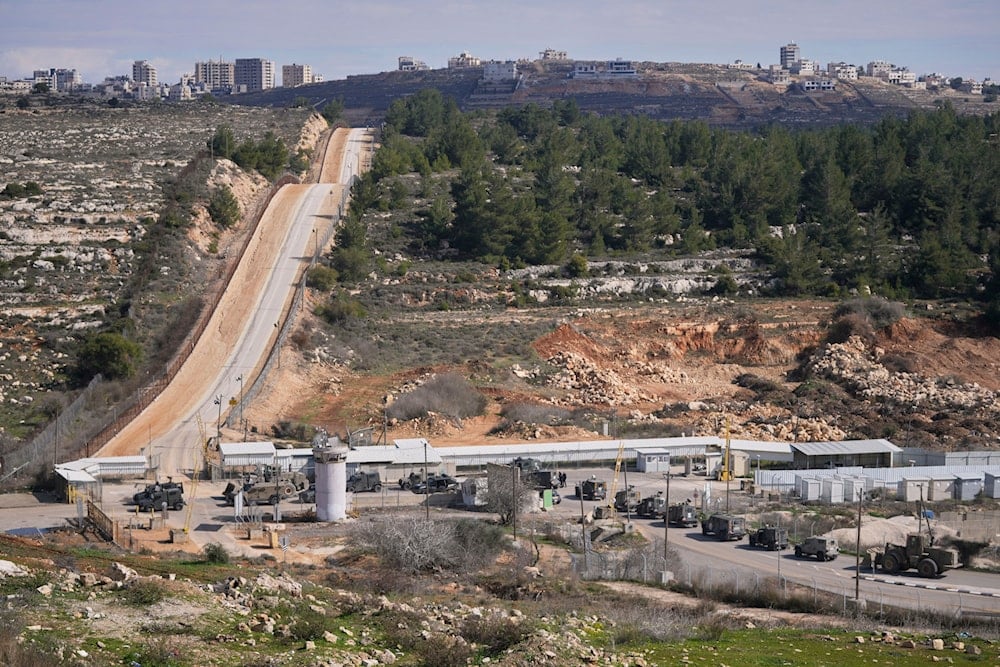
Military vehicles are lined up at the Israeli Ofer prison in the West Bank city of Beitunia, on Saturday, Jan. 25, 2025 (AP)
The Palestinian Commission of Detainees' and Ex-Detainees' Affairs announced Sunday that the health and humanitarian conditions of three detainees held in Ofer Prison have sharply deteriorated, among them an elderly man suffering from chronic illnesses and injuries sustained during his arrest.
The commission called for urgent intervention to secure the detainees' access to necessary medical care and to improve their detention conditions.
In a statement, the commission said Maher Rizq Abed al-Naasan, 60, from the village of al-Mughayyir, was detained at 1 pm on July 6, 2026, while sitting in his vehicle at a temporary checkpoint in the Ein Sinya area. Contact with him was lost for several hours before his detention was confirmed.
"خلال اعتقـــاله تعرّض للضرب المبرح، وأُبقي لساعات تحت أشعة الشمس، كما أُطفئت سجائر على جسده".. الأسير ماهر النعسان
— ق.ض 𓂆 (@qadeyah_) September 13, 2026
مسن يواجه المرض وآثار الاعتداء داخل «عوفر».
اعتقلت قوات الاحتلال الأسير ماهر رزق عبد النعسان (60 عامًا)، من قرية المغير، في 6 تموز/يوليو 2026، عند الساعة الواحدة… pic.twitter.com/H2X4Xu99tu
According to testimonies from released detainees who met him, al-Naasan was severely beaten at the time of detention, left under the sun for hours, and had cigarettes extinguished on his body. His vehicle was confiscated for a week, and personal papers, identification documents, and land deeds in his possession were seized.
The commission said Naasan suffers from chronic illnesses that have worsened due to his detention conditions and medical neglect, including a herniated disc affecting his fourth vertebra, for which he had been scheduled to undergo surgery before his arrest.
He also suffers from inflammation in a leg joint, colon problems, abdominal pain, and persistent pain in his shoulder, back, and chest from the assault. Marks from the beating remain visible on his body, the commission said.
Al-Naasan, a former brigadier general in the Palestinian security services, is in the second month of a four-month administrative detention order. He is the father of seven.
Pharmacy student contracts scabies
In a separate case, the commission revealed that Rafiq Raed Rafiq Qabaj, 23, from al-Bireh, has suffered from an elevated heart rate since before his detention and requires medication to regulate it.
He has also contracted scabies, which the commission said has spread throughout the entire prison section due to a lack of hygiene.
Qabaj was detained on February 12, 2026, and has since been issued two consecutive four-month administrative detention orders. He is a university student studying pharmacy.
In testimony relayed by the commission, detainee Ali Abed Eid al-Barghouti, from the town of Beit Rima, described the difficulty of maintaining personal hygiene inside the prison.
He said detainees are unable to change their clothes regularly and are forced to wash them in the prison yard without detergent, as the available quantities fall short of what a single cell's occupants need. A shortage of underwear, he added, is contributing to the spread of scabies.
Al-Barghouti, detained since December 15, 2025, said raids and punitive operations inside the section are carried out repeatedly at set times, including the storming and searching of cells, the tampering with detainees' belongings, and the confiscation of some of them.
He further revealed that the prison administration bars detainees from performing congregational prayers and punishes anyone who leads them.
The commission renewed its call for urgent intervention to ensure that detainees, particularly the sick and elderly, receive necessary medical care, and demanded an end to assaults and medical neglect, and improvements to humanitarian conditions inside prisons in line with international humanitarian law and standards.


