
Over 60 US warplanes deployed in Jordan as threats rise against Iran
 3 Min Read
Satellite images show dozens of US warplanes in Jordan at Muwaffaq Salti Air Base amid rising US-Iran tensions and regional military buildup.
-
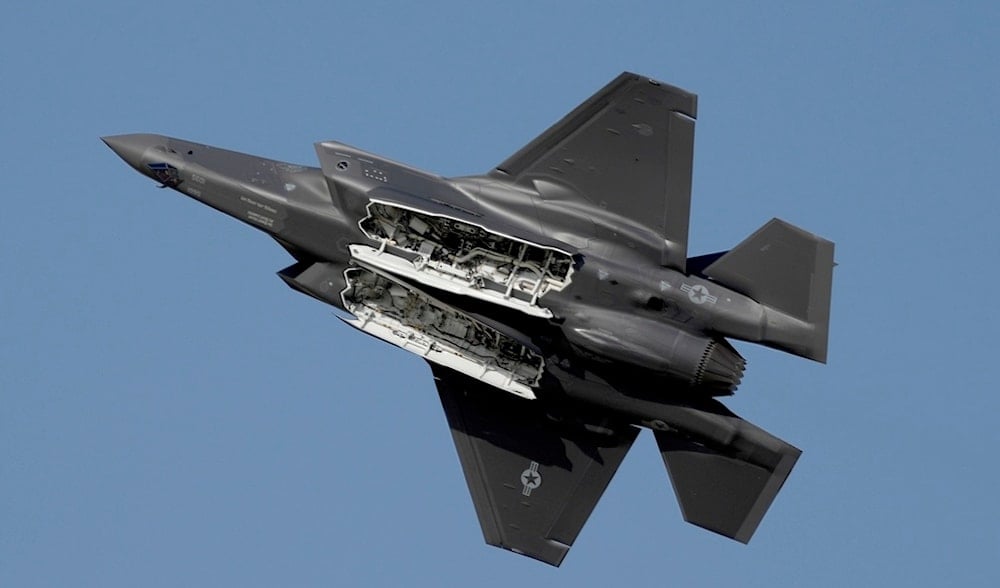
A US F35 fighter jet performs during the opening day of the Dubai Air Show, United Arab Emirates, Monday, Nov. 13, 2023. (AP)
US warplanes in Jordan have significantly increased in number at Muwaffaq Salti Air Base, according to satellite imagery and flight tracking data cited by The New York Times, as tensions between the United States and Iran continue to rise.
Images taken on Friday show more than 60 attack aircraft stationed at Muwaffaq Salti Air Base, roughly three times the usual number typically deployed at the facility.
Flight tracking data further indicate that at least 68 transport aircraft have landed at the base since February 15. Additional fighter jets are believed to be housed in aircraft shelters, suggesting a broader expansion of the US military presence.
F-35 fighter jets and additional assets deployed
Satellite imagery also shows the presence of F-35 stealth fighter jets, considered more advanced than aircraft normally stationed at the base. The buildup reportedly includes several drones, helicopters, and newly deployed air defense systems.
The increased concentration of aircraft and equipment suggests elevated operational readiness, amid large-scale military buildups in the region as Washington escalates threats against Iran.
However, Jordanian officials claimed that the US aircraft and equipment are stationed at the base under a defense agreement between Washington and Amman. Muwaffaq Salti Air Base has long served as a key location for joint military coordination between the two countries, making it a strategic site within broader regional security arrangements.
Rising US-Iran tensions
Tensions are still rising between Tehran and Washington, particularly following a report that US officials discussed the assassination of Iran’s Leader, Sayyed Ali Khamenei, and his son, Mojtaba.
According to Axios, citing an unnamed adviser to President Donald Trump, contingency plans targeting Iran’s leadership were presented to Trump several weeks ago.
The report, if confirmed, signals a dramatic escalation in Washington’s aggressive posture toward Iran, raising concerns about the normalization of assassination as a policy instrument.
At the same time, Trump has faced bipartisan criticism in the US over increasingly confrontational rhetoric toward Iran and reported military deployments to the region, including additional naval and air assets.
The US-backed unrest and the amplification of disputed casualty figures form part of a broader campaign to manufacture consent for war against Iran, even as substantial segments of the US public and political establishment push back against the prospect of another conflict that could escalate into regional war.
Read more: Behind US war drums against Iran: No goals, no plan, no off-ramp


