
Palestinian Scholars Association urges Azerbaijan to rescind Hijab ban
 3 Min Read
Protests erupt in Azerbaijan against Hijab ban measures affecting female students.
-
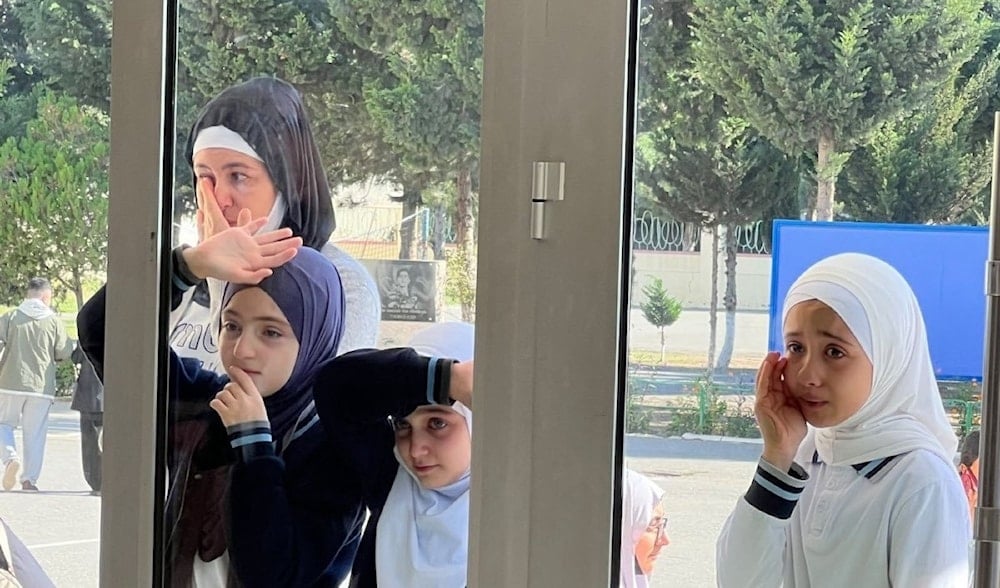
Schoolgirls cry outside of their school after being prevented from entering over their hijab, in Azerbaijan, October 13, 2026 (Social media)
The Palestinian Scholars Association has urged Azerbaijani authorities to review restrictions on wearing the hijab in schools and reverse measures preventing female students who wear it from attending classes.
In a statement addressing the case, the authority said the restrictions had also affected teachers, raising concerns over the freedom to practice religious rituals.
The authority called on Islamic scholars and scientific, human rights, women's, and media organizations to engage with the issue, contact Azerbaijani authorities and provide legal, human rights, and media support to those affected.
Protests erupt over Hijab restrictions in Azerbaijan
The restrictions have triggered protests across Azerbaijan, particularly in the capital, Baku, against new rules governing the wearing of hijabs in public schools.
Azerbaijan's Interior Ministry announced the arrest of dozens of people in connection with the demonstrations. It accused some participants of "clashing with employees of educational institutions, damaging schools, and attempting to disrupt their work and traffic."
In the Khokhmeli area, parents threatened to withdraw their sons from school in protest against the restrictions imposed on female students. Reports also indicated that some girls had been given a deadline to decide whether to remove their hijabs or face consequences affecting their education.
Azerbaijan bans Hijab despite being Muslim majority
Azerbaijan’s latest restrictions on wearing the hijab in public schools stem from a government decision adopted on September 21, 2026, introducing amendments to school uniform regulations. The rules prohibit clothing that departs from prescribed uniforms or conflicts with the secular principles of state education, without explicitly naming the hijab.
The government said the changes were intended to establish a uniform dress code reflecting Azerbaijan’s secular education system. Despite the country’s constitution defining Azerbaijan as a secular state while guaranteeing freedom of conscience and religion, the school clothing dispute sits at the intersection of these principles.
The controversy intensified after the Baku City Education Department began checking compliance with the rules on October 9, 2026. Reports emerged that schools were refusing entry to girls wearing headscarves, while some female teachers were also prevented from entering their workplaces unless they removed their hijabs.
The dispute also revived longstanding tensions over religious clothing in Azerbaijani schools. Similar restrictions were enforced in 2010, when education officials argued that the hijab was not part of the prescribed school uniform. Reports of renewed restrictions had circulated earlier in 2026, including cases involving students barred from classes in March.
Protests spread to Baku and other areas, with students and parents demanding that girls wearing hijabs be allowed to attend lessons. Some male students boycotted classes in solidarity, while parents in the Khokhmeli area threatened to withdraw their sons from school in opposition to the restrictions.


