
Pentagon: Hormuz mine clearance could take six months: WaPo
 3 Min Read
The Pentagon says clearing Hormuz mines could take six months after the war, but Iran controls the strait and the war shows no sign of ending.
-
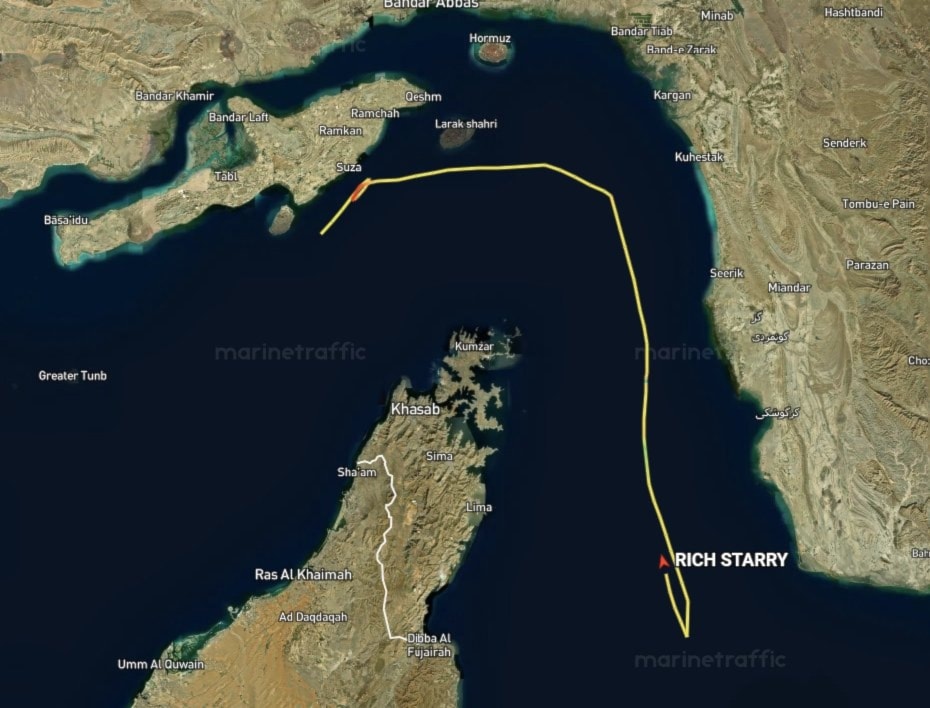
Tracking data shows the route of the tanker Rich Starry transiting the Strait of Hormuz after the US-announced blockade, as vessels linked to Iran continue navigating the strategic waterway (Source: Marinetraffic via social media)
The Pentagon has told the US Congress that fully clearing the Strait of Hormuz of naval mines could take up to six months, and that any such operation is unlikely to begin until after the war on Iran has ended. This assessment implies the conflict's economic toll could extend well into 2027.
A senior Defense Department official shared the estimate during a classified briefing on Tuesday for members of the House Armed Services Committee, according to three officials familiar with the discussion cited by the Washington Post.
The timeline drew frustration from both Democrats and Republicans, two of those officials said, and stands as perhaps the starkest signal yet that oil and gasoline prices could remain elevated long after any peace agreement is reached.
What Congress was told
Lawmakers were informed that Iran may have deployed 20 or more mines in and around the Strait of Hormuz. Some mines were reportedly floated using GPS technology, complicating detection efforts by US forces. Others are believed to have been laid by small boats operated by Iranian forces.
US officials raised the possibility of deploying helicopters, drones, and explosive ordnance disposal divers to conduct any future clearance operation, though no concrete plan has been outlined.
The assessment was shared with Congress even as Trump posted on Truth Social on Friday that "Iran, with the help of the U.S.A., has removed, or is removing, all sea mines" from the strait, a claim directly at odds with what his own Pentagon was telling lawmakers.
The Pentagon spokesman Sean Parnell issued a brief statement calling the disclosed information "inaccurate" and accusing the Washington Post, which first reported the briefing, of "advancing an agenda." He did not deny that the classified briefing took place or that the six-month timeline was discussed.
Previously, US officials had told the New York Times that Iran might be unable to locate all of the mines it deployed, alleging that the mining operation was carried out without a clear command chain or documentation, an account Iran has denied. Iran's Deputy Foreign Minister Majid Takht-Ravanchi has also denied that Iran laid any mines at all.
The Pentagon's assessment rests on a foundational assumption that the United States will have the access, conditions, and cooperation necessary to carry out mine clearance once the war ends. That assumption is far from certain.
Talks deadlocked, clock not yet started
Meanwhile, the diplomatic track that would need to precede any clearance operation remains effectively frozen. Iran informed Pakistan, which is mediating negotiations, that it would not send a delegation to a planned second round of talks in Islamabad. Tehran has said it will not negotiate under the current conditions, citing the US naval blockade, which is a violation of the ceasefire, along with excessive US demands. The first round of talks on 11-12 April ended without an agreement.
The Pentagon's six-month estimate, in other words, describes a phase that has not begun and for which no clear starting point yet exists.
The economic consequences for global energy markets, and for American consumers paying over four dollars a gallon at the pump, will persist for as long as that remains the case.


