
Poland backs national nuclear research capabilities
 3 Min Read
Poland’s defense minister voiced support for expanding national nuclear research and development as Warsaw debates its role in NATO’s evolving deterrence framework.
-
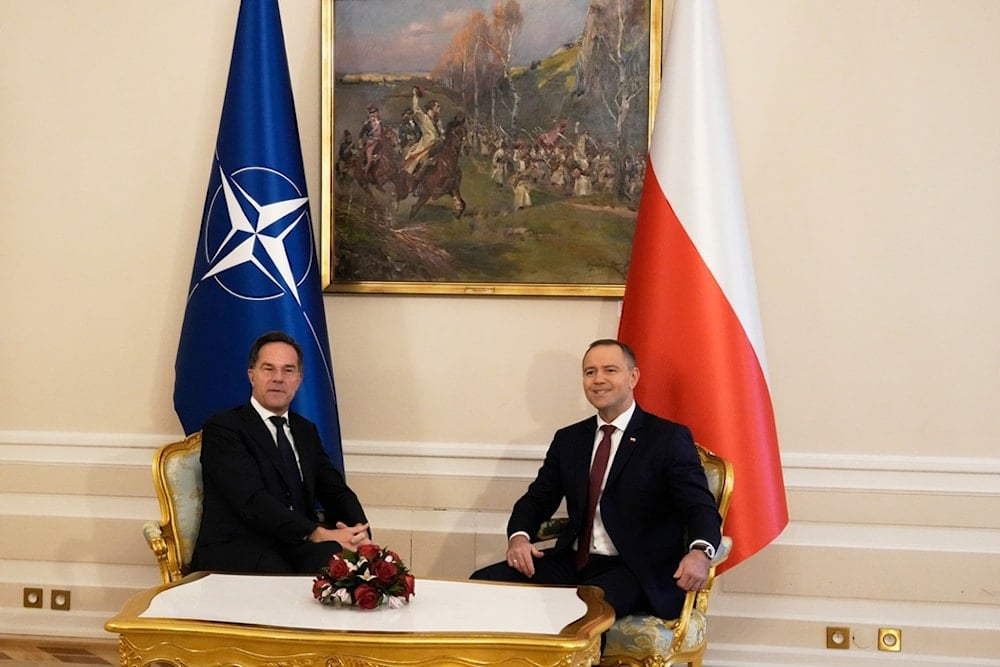
Poland's President Karol Nawrocki, right, sits with NATO Secretary General Mark Rutte during talks at the Presidential Palace, in Warsaw, Poland, Thursday, Dec. 18, 2025. (AP)
Polish Deputy Prime Minister and Defense Minister Wladyslaw Kosiniak-Kamysz voiced support for advancing Poland's nuclear weapons program, emphasizing the need to strengthen national research and development capacities in the nuclear field.
His remarks come amid broader shifts within NATO’s command structure and growing calls for European allies to assume greater responsibility for continental defense.
Polish president supports expanding nuclear potential
On Sunday, Polish President Karol Nawrocki told the Polsat broadcaster that he supports Poland joining a nuclear project. He added that Poland "should move toward developing its own nuclear potential" while complying with all international norms.
Nawrocki’s position reflects an ongoing discussion in Warsaw about expanding Polish nuclear capabilities as part of long-term deterrence planning, particularly as NATO members reassess burden-sharing and strategic readiness.
NATO restructuring and European burden-sharing
The debate in Poland comes days after reports that the United States plans to transfer control of two key NATO command centers to European allies, including the United Kingdom and Italy, as part of a broader restructuring effort.
Under the proposed changes, Germany and Poland are expected to assume joint leadership of NATO’s Joint Force Command in Brunssum, the Netherlands. The restructuring aims to modernize NATO’s command architecture and increase operational responsibility among European member states.
Kosiniak-Kamysz emphasizes NATO nuclear cooperation
Addressing reporters at a press conference, Wladyslaw Kosiniak-Kamysz underlined that nuclear policy decisions remain subject to NATO consultation and collective agreement.
"Of course, the nuclear cooperation program and the nuclear umbrella are issues that are always subject to NATO analysis and joint decisions by the allies," Kosiniak-Kamysz said.
The minister reiterated his support for expanding Poland nuclear research and development capabilities, framing it as a matter of strategic preparedness rather than rhetoric.
"It is better to achieve results than simply dream in this regard. Dreams are necessary, but the more actions, the more decisions at the NATO level, the greater the effectiveness," he said.
The discussion also touches on Poland NATO nuclear umbrella arrangements, which are determined collectively by alliance members.
Nuclear weapons debate described as 'most sensitive issue'
Kosiniak-Kamysz described nuclear weapons as "perhaps the most sensitive of all sensitive issues," stressing the need for careful and responsible policymaking.
He added that the matter requires "diligence, reliability, and action rather than lengthy discussions."


